Cabello-Alvarado C, Reyes-Rodríguez P, Andrade-Guel M, Cadenas-Pliego G, Pérez-Alvarez M, Cruz-Delgado V J, Melo-López L, Quiñones-Jurado Z V, Ávila-Orta C A
CONACYT-Consorcio de Investigación y de Innovación del Estado de Tlaxcala, C.P. 90000 Tlaxcala, Mexico.
Centro de Investigación en Química Aplicada, Saltillo, 25315 Coahuila, Mexico.
Polymers (Basel). 2019 Jul 19;11(7):1204. doi: 10.3390/polym11071204.
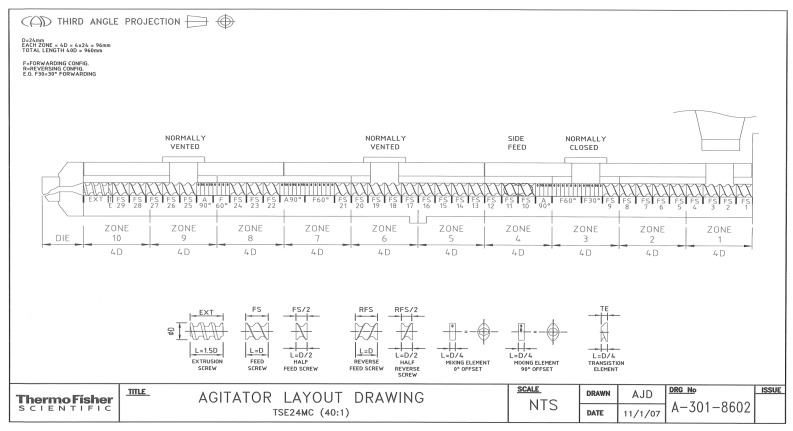
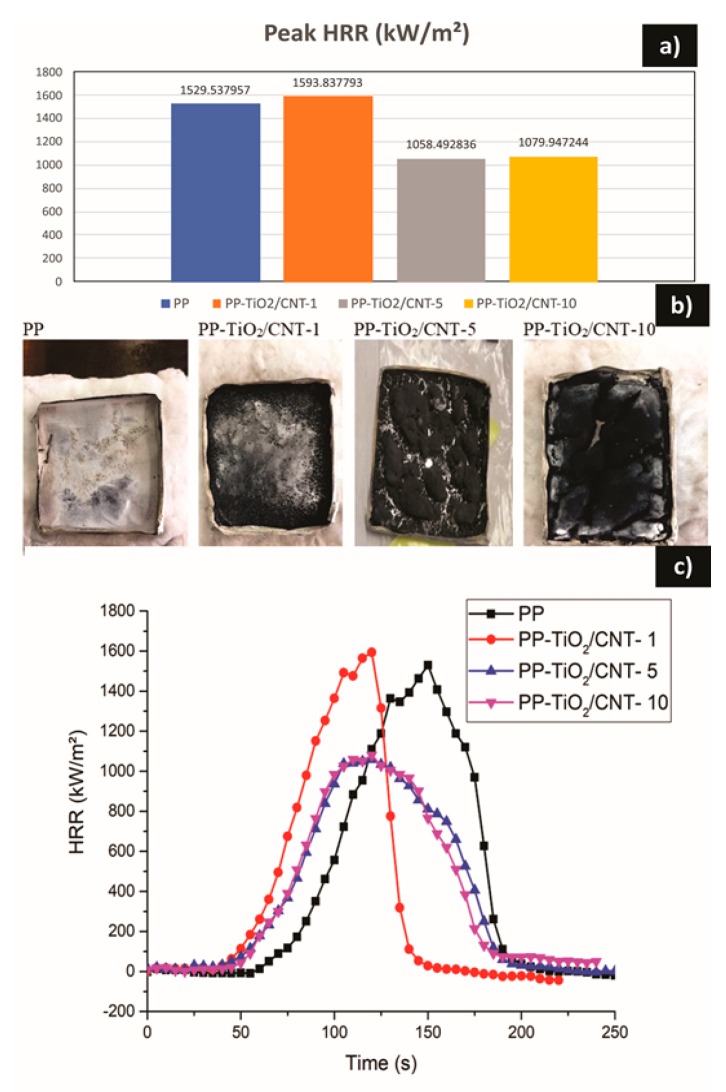
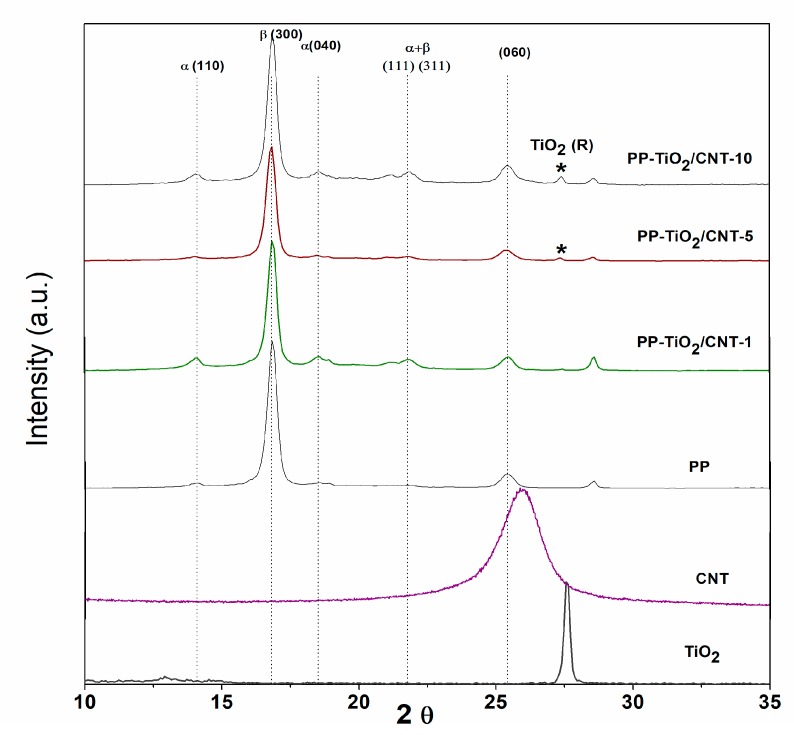
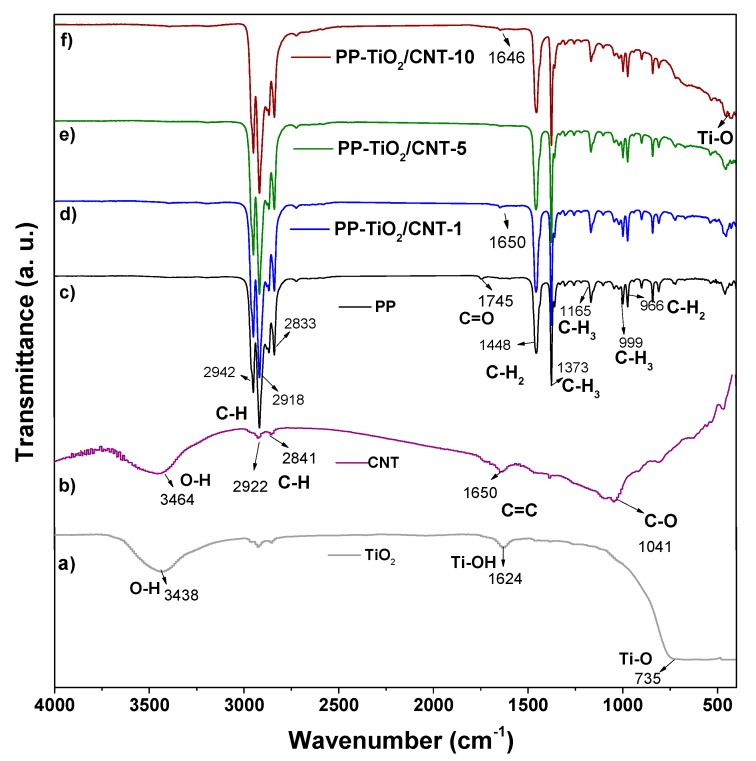
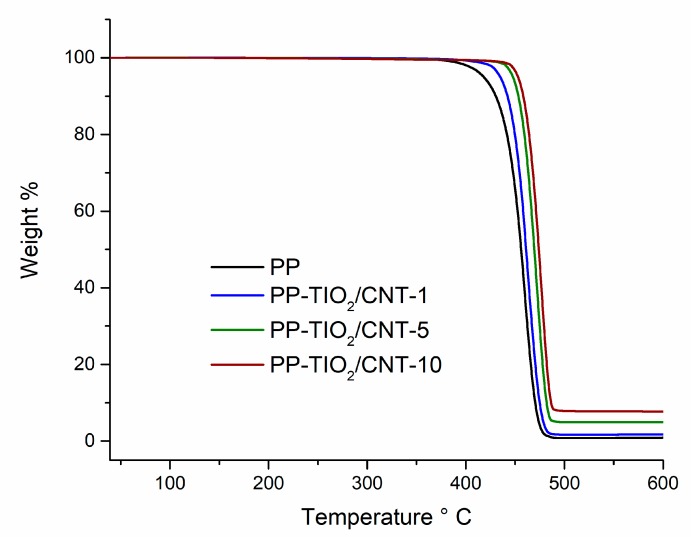
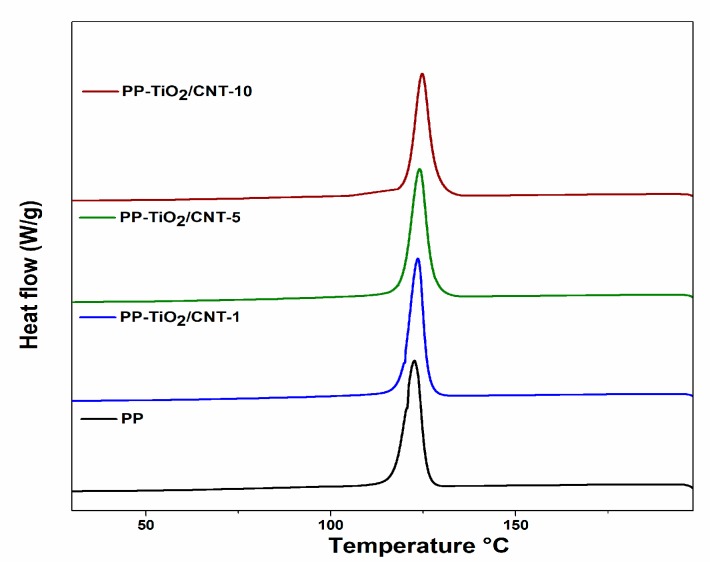
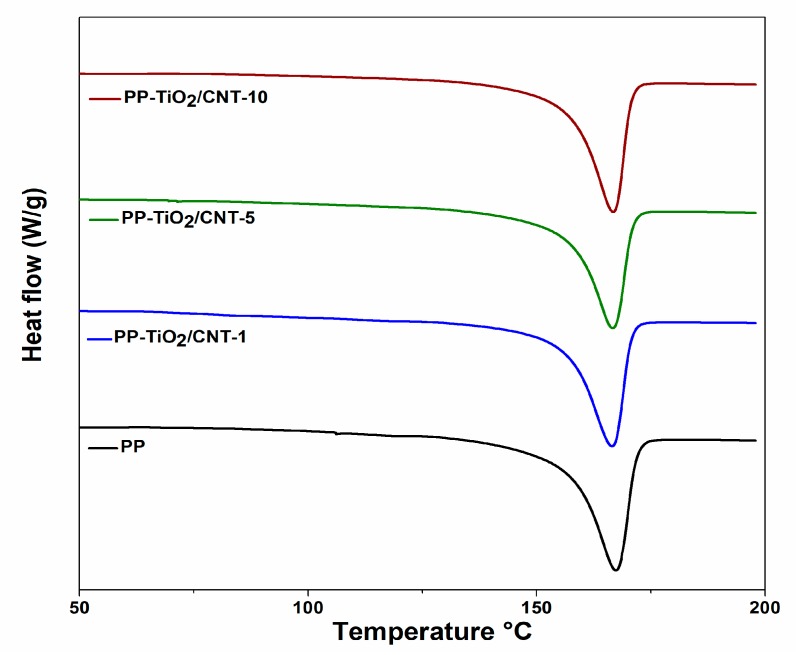
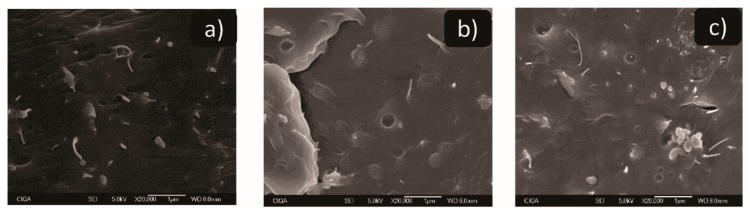
The study of polymeric nanocomposites is a possible alternative to conventional flame retardants. The aim of the present work is to investigate the effects of carbon-nanotubes (CNT) and TiO nanoparticles (NPs) on the thermo-mechanical, flammability, and electrical properties of polypropylene (PP). In this work, PP-TiO/CNT nanocomposites were obtained with TiO/CNT mixtures (ratio 1:2) through the melt extrusion process, with different weight percentage of nanoparticles (1, 5, and 10 wt %). The PP-TiO/CNT nanocomposites were characterized by DSC, TGA, MFI, FTIR, XRD, and SEM. It was possible to determine that the thermal stability of the PP increases when increasing the content of NPs. A contrary situation is observed in the degree of crystallinity and thermo-oxidative degradation, which decreased with respect to pure PP. The TiO NPs undergo coalition and increase their size at a lower viscosity of the nanocomposite (1 and 5 wt %). The mechanical properties decreased slightly, however, the Young's modulus presented an improvement of 10% as well as electrical conductivity, this behavior was noted in nanocomposites of 10 wt % of NPs. Flammability properties were measured with a cone calorimeter, and a reduction in the peak heat release rate was observed in nanocomposites with contents of nanoparticles of 5 and 10 wt.
聚合物纳米复合材料的研究是传统阻燃剂的一种可能替代方案。本工作的目的是研究碳纳米管(CNT)和二氧化钛纳米颗粒(NPs)对聚丙烯(PP)的热机械性能、燃烧性能和电学性能的影响。在本工作中,通过熔融挤出工艺,使用TiO/CNT混合物(比例1:2),制备了不同纳米颗粒重量百分比(1%、5%和10%)的PP-TiO/CNT纳米复合材料。采用差示扫描量热法(DSC)、热重分析法(TGA)、熔体流动指数(MFI)、傅里叶变换红外光谱法(FTIR)、X射线衍射法(XRD)和扫描电子显微镜(SEM)对PP-TiO/CNT纳米复合材料进行了表征。可以确定,随着纳米颗粒含量的增加,PP的热稳定性提高。在结晶度和热氧化降解程度方面观察到相反的情况,相对于纯PP有所降低。在纳米复合材料较低粘度(1%和5%)下,TiO纳米颗粒发生团聚并增大尺寸。力学性能略有下降,然而,10%纳米颗粒含量的纳米复合材料中,杨氏模量提高了10%,电导率也有所提高。用锥形量热仪测量燃烧性能,在纳米颗粒含量为5%和10%的纳米复合材料中观察到峰值热释放速率降低。