Department of Biology, Johns Hopkins University, Baltimore, United States.
Department of Neurobiology, Northwestern University, Evanston, United States.
Elife. 2019 Jul 23;8:e44358. doi: 10.7554/eLife.44358.
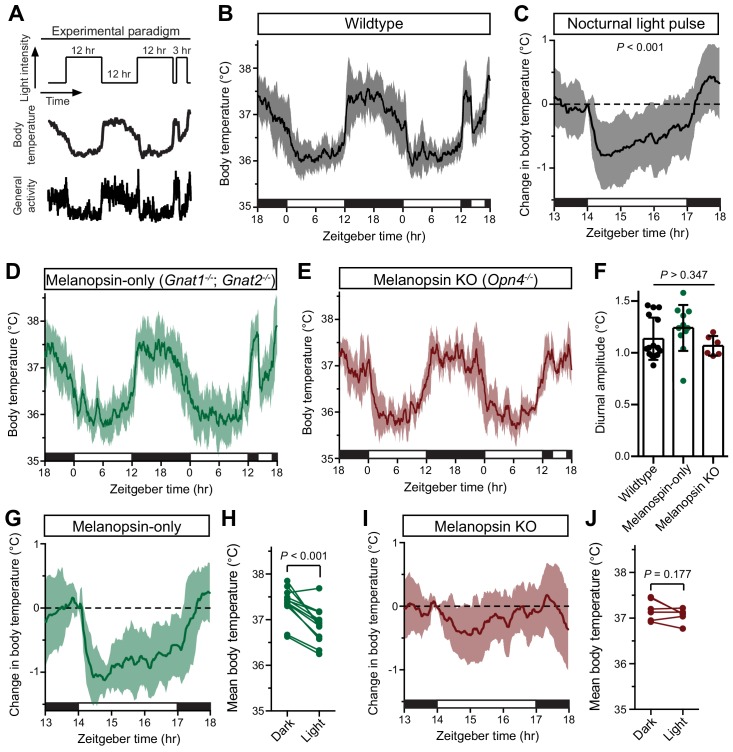
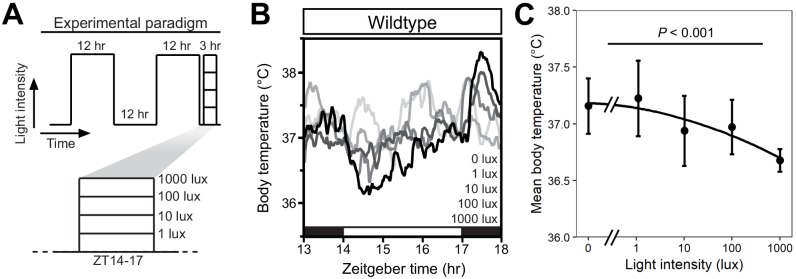
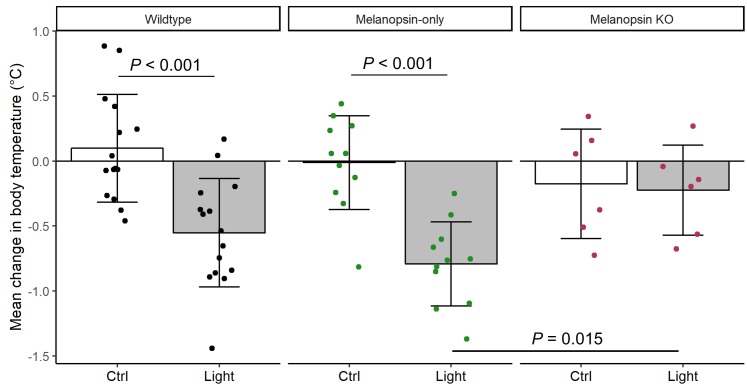
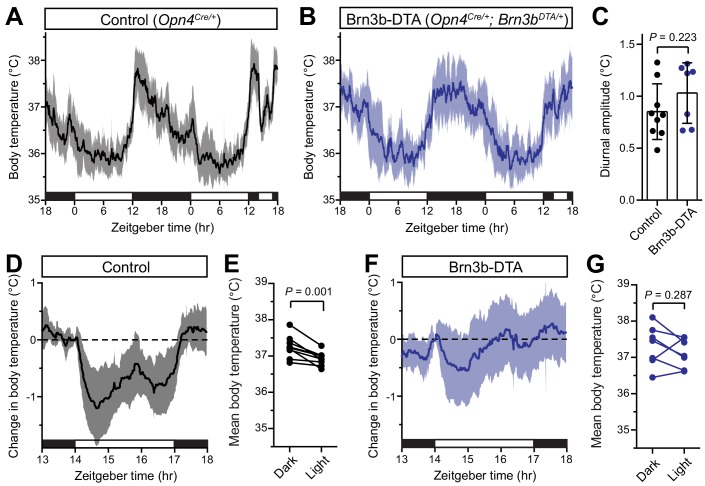
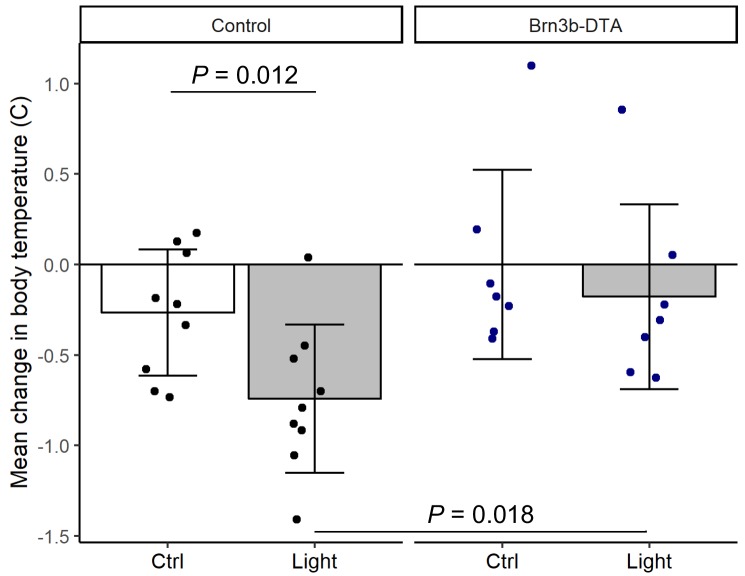
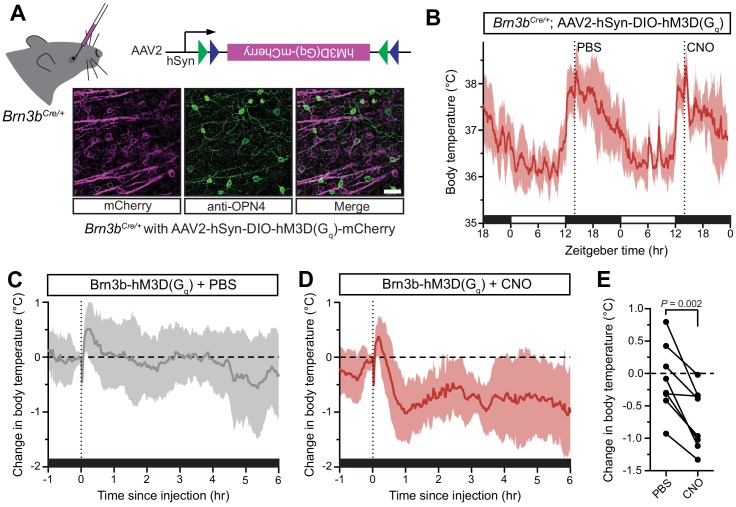
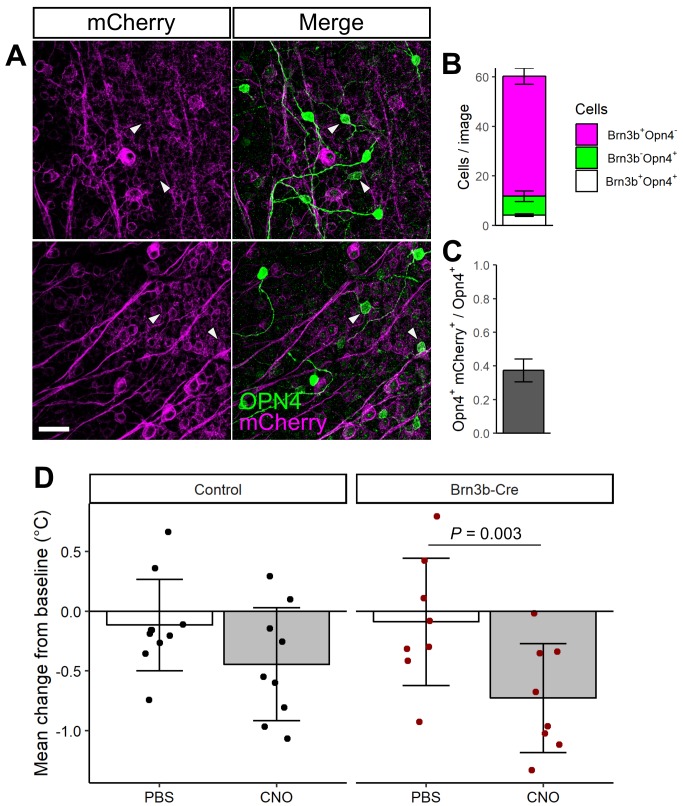
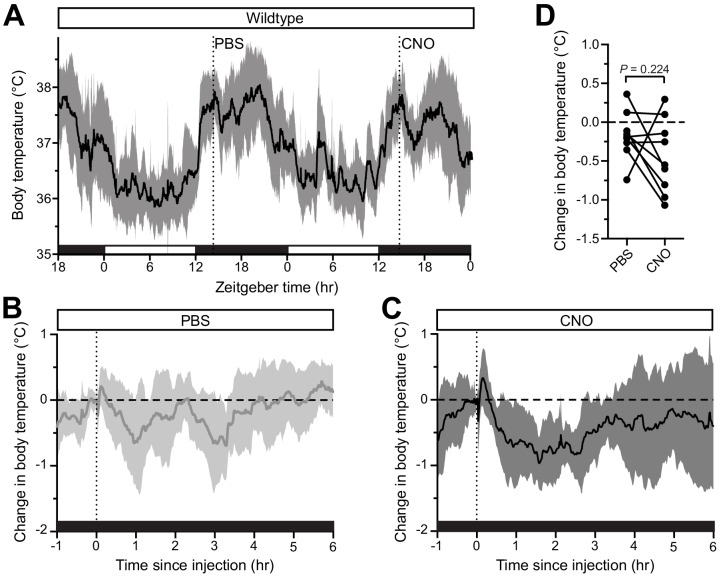
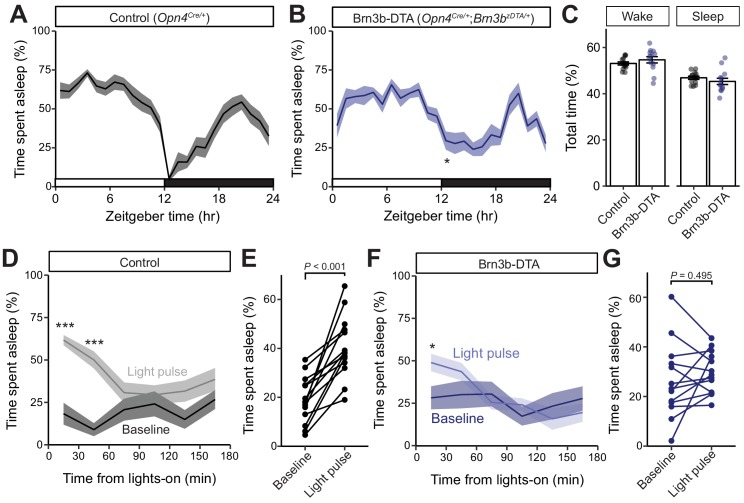
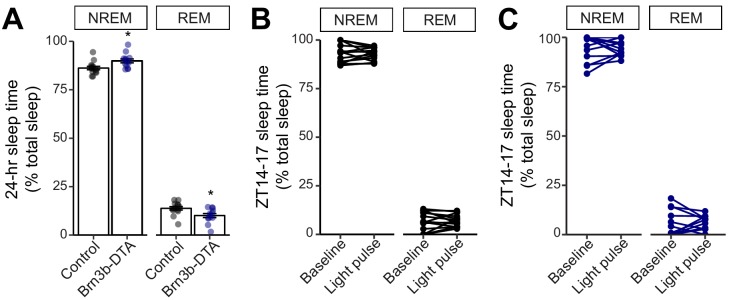
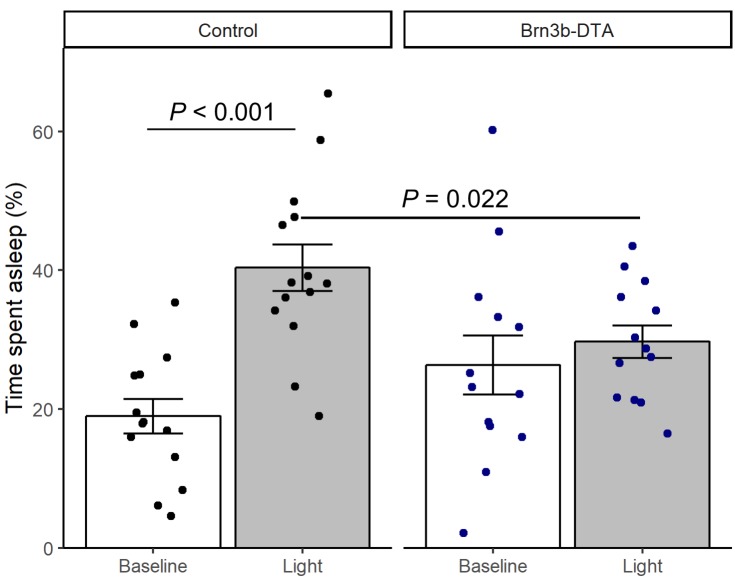
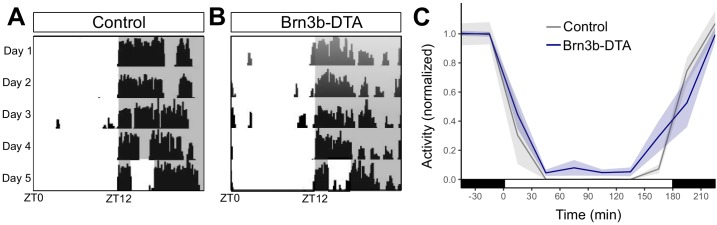
The light environment greatly impacts human alertness, mood, and cognition by both acute regulation of physiology and indirect alignment of circadian rhythms. These processes require the melanopsin-expressing intrinsically photosensitive retinal ganglion cells (ipRGCs), but the relevant downstream brain areas involved remain elusive. ipRGCs project widely in the brain, including to the central circadian pacemaker, the suprachiasmatic nucleus (SCN). Here we show that body temperature and sleep responses to acute light exposure are absent after genetic ablation of all ipRGCs except a subpopulation that projects to the SCN. Furthermore, by chemogenetic activation of the ipRGCs that avoid the SCN, we show that these cells are sufficient for acute changes in body temperature. Our results challenge the idea that the SCN is a major relay for the acute effects of light on non-image forming behaviors and identify the sensory cells that initiate light's profound effects on body temperature and sleep.
光环境通过对生理的急性调节和对昼夜节律的间接调整,极大地影响着人类的警觉性、情绪和认知。这些过程需要表达黑视蛋白的光感受器神经节细胞(ipRGCs),但相关的下游脑区仍难以捉摸。ipRGCs 在大脑中广泛投射,包括向中央生物钟起搏器视交叉上核(SCN)投射。在这里,我们表明,除了投射到 SCN 的亚群外,所有 ipRGCs 的遗传消融后,急性光照暴露对体温和睡眠的反应都消失了。此外,通过化学遗传激活避开 SCN 的 ipRGCs,我们表明这些细胞足以引起体温的急性变化。我们的结果挑战了 SCN 是光对非成像行为的急性影响的主要中继站的观点,并确定了启动光对体温和睡眠的深远影响的感觉细胞。