Huang M C, Dzierlenga A L, Robinson V G, Waidyanatha S, DeVito M J, Eifrid M A, Granville C A, Gibbs S T, Blystone C R
Division of the National Toxicology Program, National Institute of Environmental Health Sciences, National Institute of Health, Department of Health and Human Services, Research Triangle Park, NC 27709, United States.
Battelle Memorial Institute, Columbus, OH, 43201, United States.
Toxicol Rep. 2019 Jun 28;6:645-655. doi: 10.1016/j.toxrep.2019.06.016. eCollection 2019.
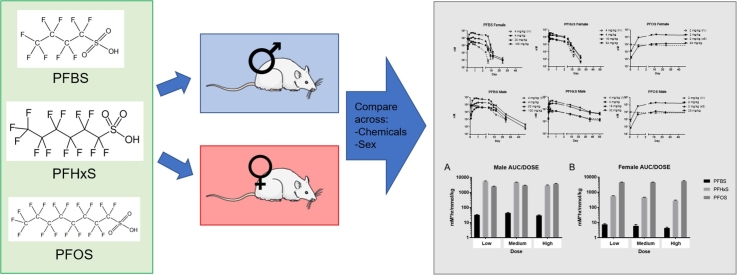
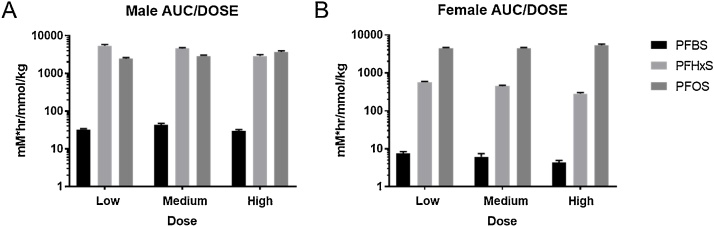
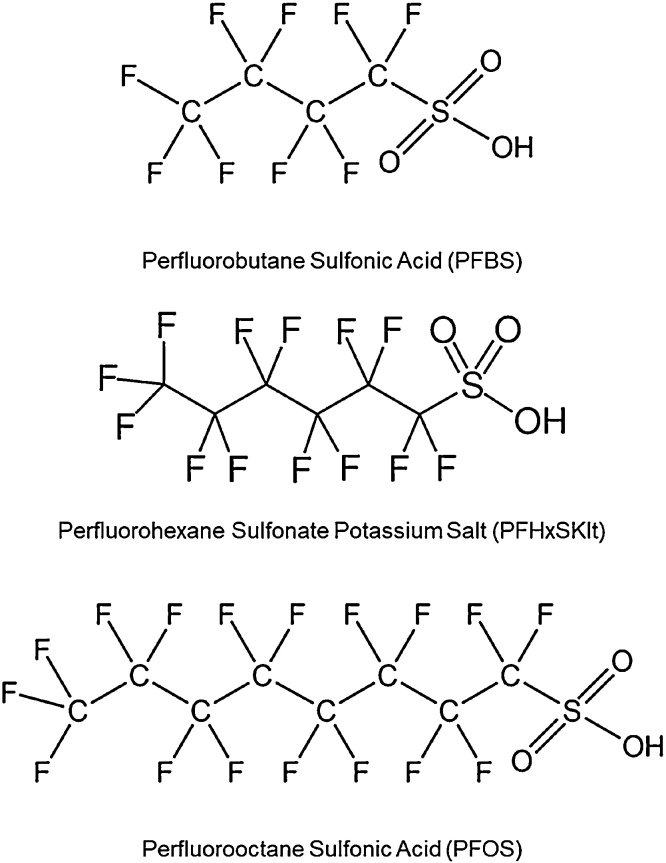
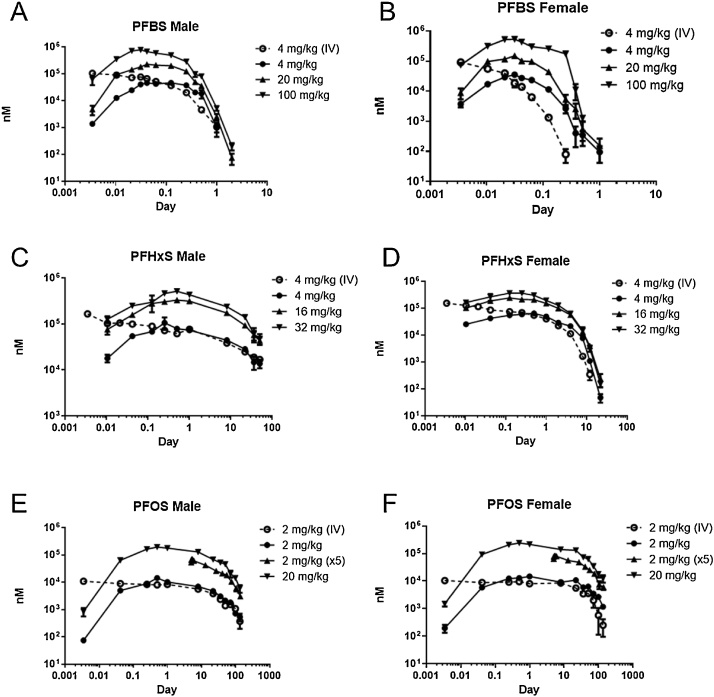
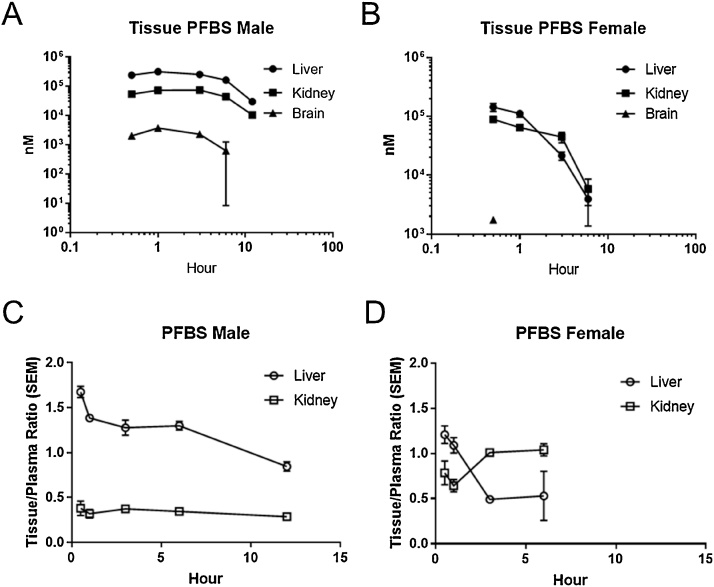
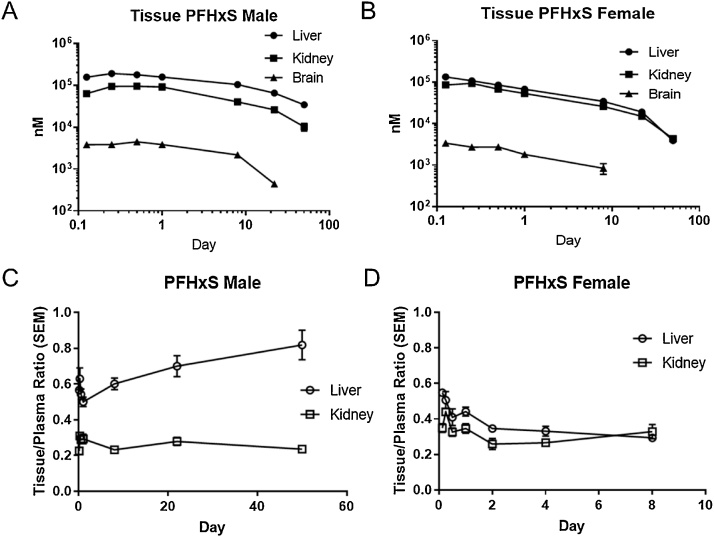
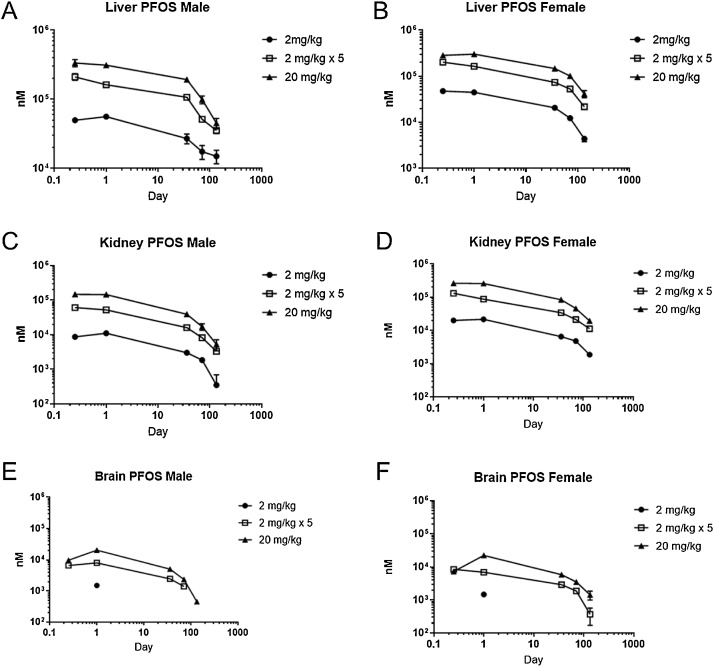
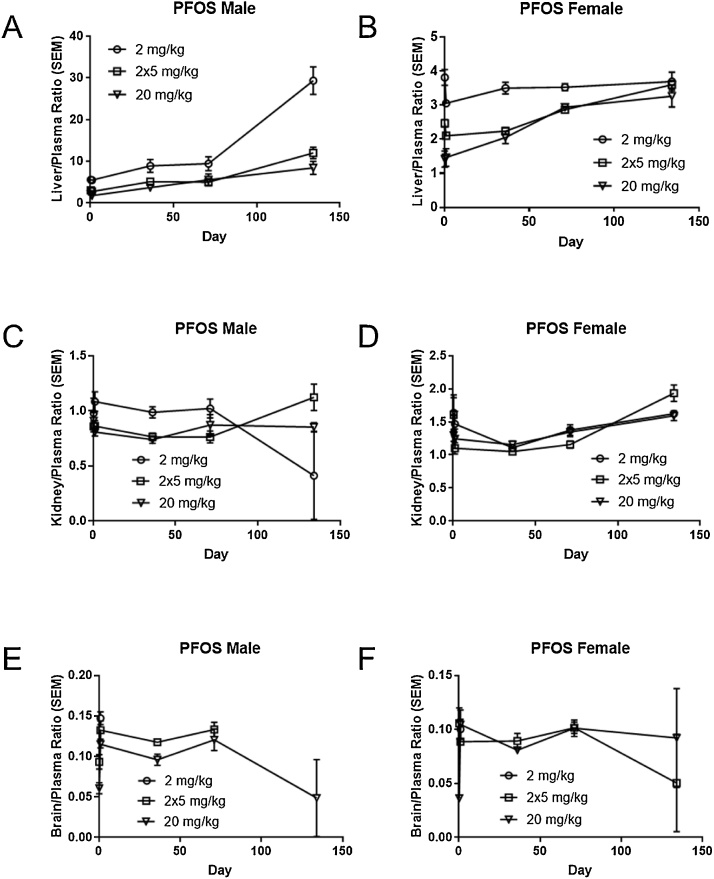
Perfluorinated alkyl substances (PFAS) are persistent contaminants that have been detected in the environment and in humans. With the PFAS chemical class, there are perfluorinated alkyl acids, many of which have been associated with certain toxicities. Because toxicity testing cannot feasibly be conducted for each individual PFAS, the National Toxicology Program (NTP) designed studies to compare toxicities across different subclasses of PFAS and across PFAS of different chain lengths to better understand the structure-toxicity relationship. Pharmacokinetic studies were conducted in parallel to these toxicity studies to facilitate comparisons across PFAS and to provide context for human relevance. Here, the toxicokinetic parameters of perfluorobutane sulfonate (PFBS), perfluorohexane-1-sulphonic acid (PFHxS), or perfluorooctane sulfonate (PFOS) after a single intravenous or gavage administration in male and female Hsd:Sprague-Dawley rats are reported. Concentrations of these PFAS were measured in the liver, kidney, and brain. Plasma half-life increased with longer chain length after gavage administration: PFBS- males averaged 3.3 h, females 1.3 h; PFHxS- males averaged 16.3 days, females 2.1 days; PFOS- males and females averaged ˜ 20 days. There were dose-dependent changes in clearance and systemic exposure for all administered chemicals and the direction of change was different in PFOS compared to the others. Liver:plasma ratios of PFOS were the highest followed by PFHxS and PFBS, while brain:plasma ratios were low in all three sulfonates. Sex differences in plasma half-life and tissue distribution were observed for PFBS and PFHxS, but not PFOS. These data provide a direct comparison of the kinetics of three different perfluoroalkyl sulfonic acids and allow for the contextualization of toxicity data in rats for human risk assessment of this chemical class.
全氟烷基物质(PFAS)是在环境和人体中均被检测到的持久性污染物。在PFAS化学类别中,存在全氟烷基酸,其中许多与某些毒性有关。由于无法对每种单独的PFAS进行可行性的毒性测试,美国国家毒理学计划(NTP)设计了研究,以比较不同PFAS子类以及不同链长PFAS之间的毒性,从而更好地理解结构-毒性关系。与这些毒性研究并行开展了药代动力学研究,以促进不同PFAS之间的比较,并为与人体相关性提供背景信息。在此,报告了在雄性和雌性Hsd:Sprague-Dawley大鼠单次静脉注射或灌胃给予全氟丁烷磺酸(PFBS)、全氟己烷-1-磺酸(PFHxS)或全氟辛烷磺酸(PFOS)后的毒代动力学参数。在肝脏、肾脏和大脑中测量了这些PFAS的浓度。灌胃给药后,血浆半衰期随链长增加而延长:PFBS-雄性平均为3.3小时,雌性为1.3小时;PFHxS-雄性平均为16.3天,雌性为2.1天;PFOS-雄性和雌性平均约为20天。所有给药化学品的清除率和全身暴露均存在剂量依赖性变化,且PFOS的变化方向与其他化学品不同。PFOS的肝脏:血浆比值最高,其次是PFHxS和PFBS,而在所有三种磺酸盐中,大脑:血浆比值均较低。观察到PFBS和PFHxS在血浆半衰期和组织分布方面存在性别差异,但PFOS没有。这些数据提供了三种不同全氟烷基磺酸动力学的直接比较,并为该化学类别在大鼠中的毒性数据用于人体风险评估提供了背景信息。