Department of Pediatrics and Adolescence, Oulu University Hospital, 90029, Oulu, Finland.
PEDEGO Research Unit and Medical Research Center Oulu, University of Oulu, Oulu, 90014, Finland.
Sci Rep. 2019 Jul 23;9(1):10635. doi: 10.1038/s41598-019-46964-5.
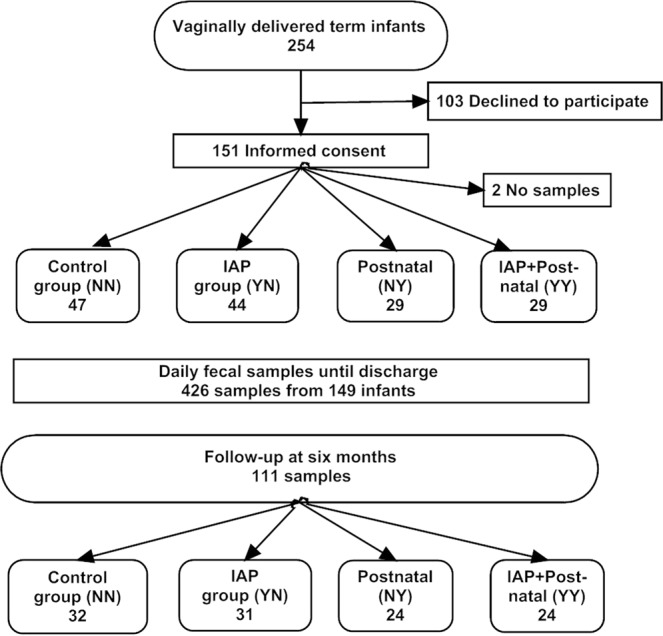
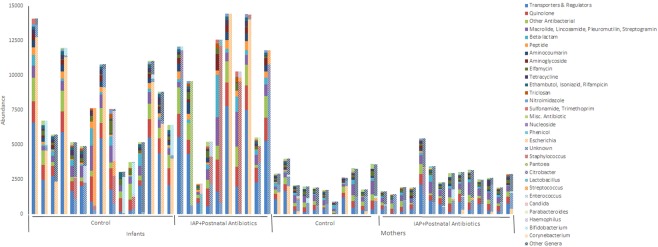
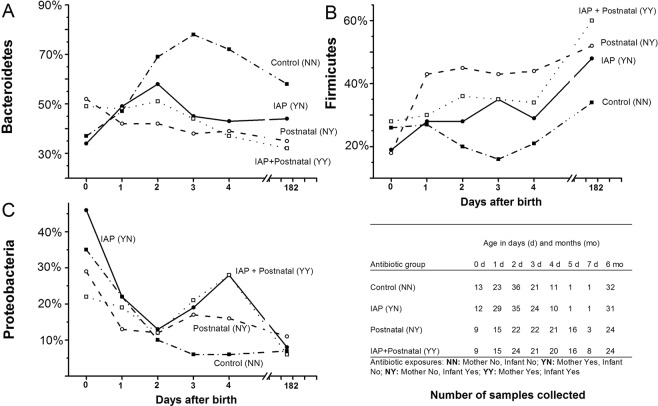
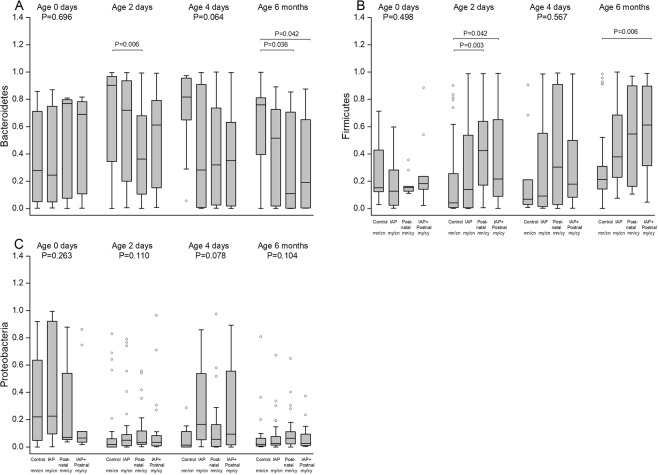
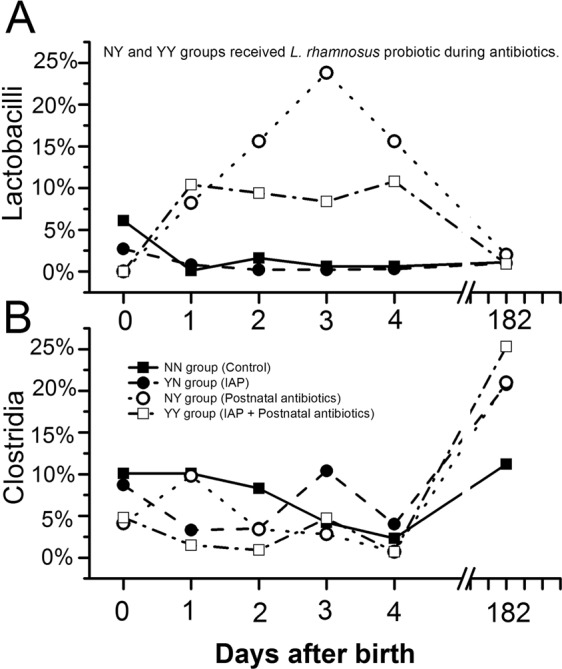
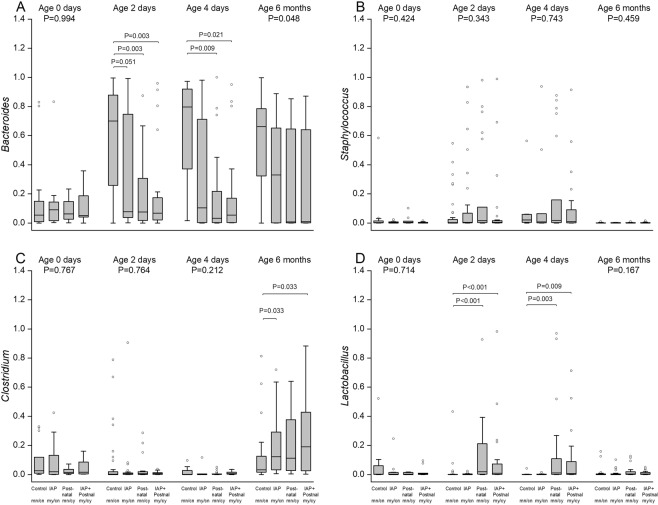
Altogether, 20-30% of women receive intrapartum antibiotic prophylaxis (IAP) to prevent sepsis in infants and 2-5% of newborn infants receive antibiotics due to suspected sepsis. Caesarean section has a long-term impact on the intestinal microbiome but the effects of perinatal antibiotics on gut microbiome in vaginally delivered infants are not well known. We compared the impact of IAP, postnatal antibiotics, or their combination on the gut microbiome and emergence of antimicrobial resistance in a controlled study of 149 newborn infants recruited within 24 hours after birth. We collected 659 fecal samples, including 426 daily samples from infants before discharge from the hospital and 111 follow-up samples at six months. Penicillin was mostly used for IAP and the combination of penicillin and aminoglycoside for postnatal treatment. Postnatal antibiotic groups received Lactobacillus reuteri probiotic. Newborn gut colonization differed in both IAP and postnatal antibiotics groups as compared to that in control group. The effect size of IAP was comparable to that caused by postnatal antibiotics. The observed differences were still present at six months and not prevented by lactobacilli consumption. Given the present clinical results, the impact of perinatal antibiotics on the subsequent health of newborn infants should be further evaluated.
总之,20-30%的女性接受产时抗生素预防(IAP)以预防婴儿败血症,2-5%的新生儿因疑似败血症而接受抗生素治疗。剖宫产对肠道微生物群有长期影响,但围产期抗生素对阴道分娩婴儿肠道微生物群的影响尚不清楚。我们在一项 149 名新生儿的对照研究中比较了 IAP、产后抗生素或其组合对肠道微生物群和抗菌药物耐药性出现的影响,这些新生儿在出生后 24 小时内被招募。我们收集了 659 份粪便样本,包括 426 份新生儿在出院前的每日样本和 111 份 6 个月时的随访样本。青霉素主要用于 IAP,青霉素和氨基糖苷类联合用于产后治疗。接受产后抗生素治疗的婴儿还接受了罗伊氏乳杆菌益生菌。与对照组相比,IAP 和产后抗生素组的新生儿肠道定植情况存在差异。IAP 的效应大小与产后抗生素相当。在 6 个月时仍存在这些差异,而乳酸杆菌的摄入并不能预防这些差异。鉴于目前的临床结果,应进一步评估围产期抗生素对新生儿后续健康的影响。