Department of Oncology, KU Leuven, LKI - Leuven Cancer Institute, 3000 Leuven, Belgium.
Nucleic Acids Res. 2020 Feb 20;48(3):1013-1028. doi: 10.1093/nar/gkz637.
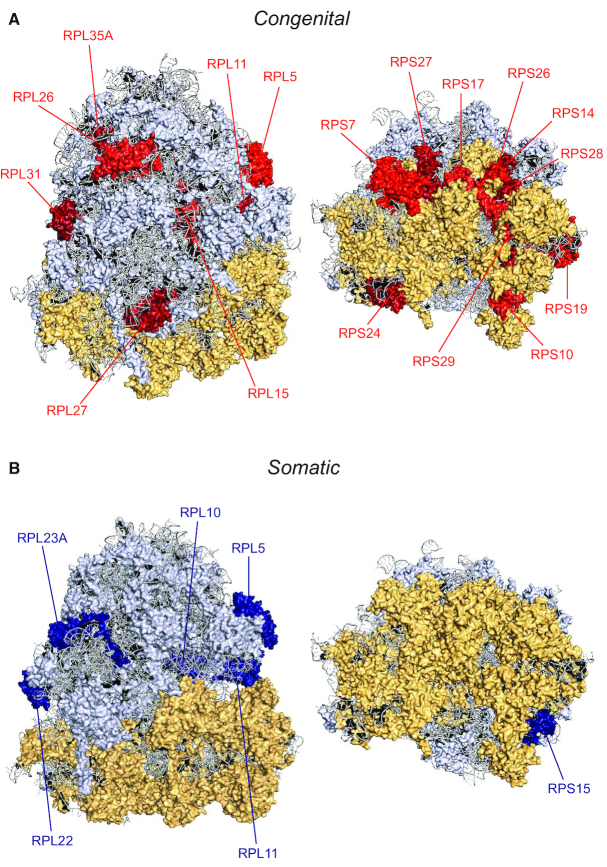
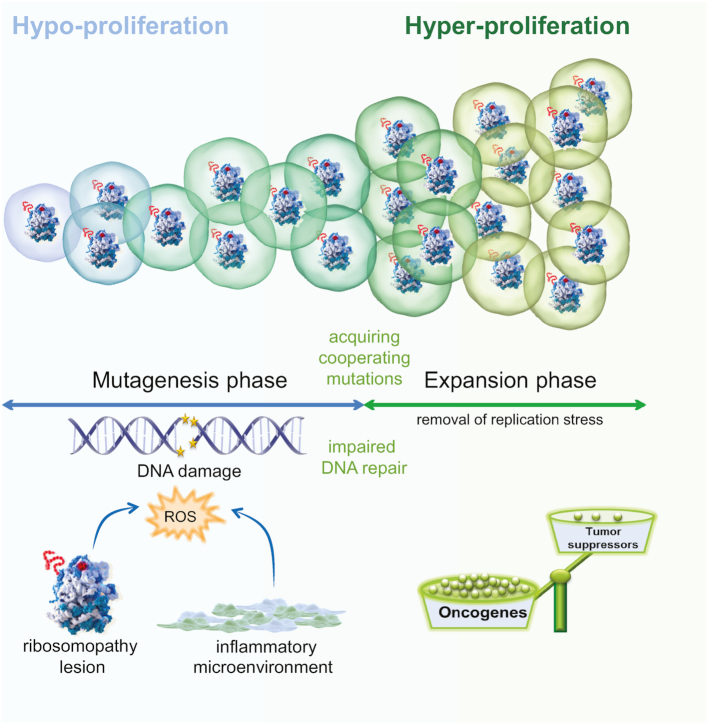
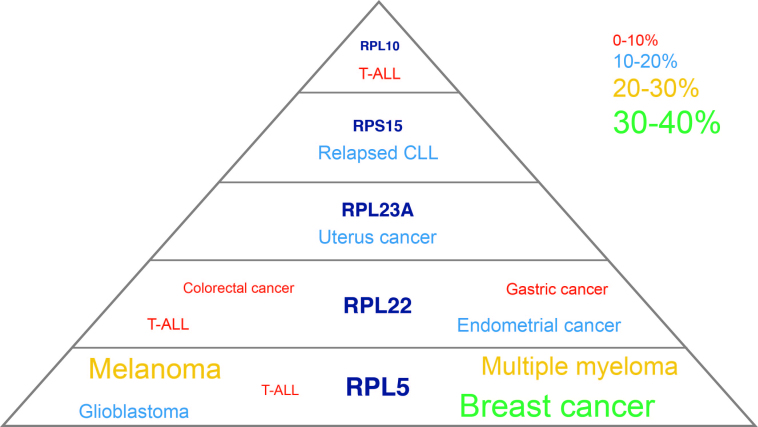
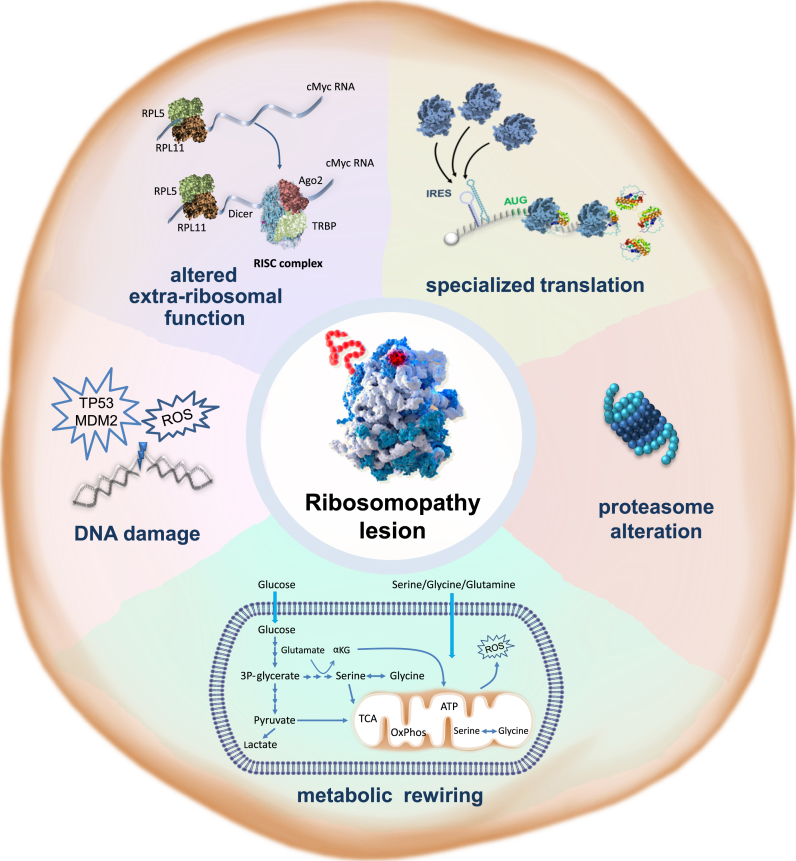
Ribosomopathies are diseases caused by defects in ribosomal constituents or in factors with a role in ribosome assembly. Intriguingly, congenital ribosomopathies display a paradoxical transition from early symptoms due to cellular hypo-proliferation to an elevated cancer risk later in life. Another association between ribosome defects and cancer came into view after the recent discovery of somatic mutations in ribosomal proteins and rDNA copy number changes in a variety of tumor types, giving rise to somatic ribosomopathies. Despite these clear connections between ribosome defects and cancer, the molecular mechanisms by which defects in this essential cellular machinery are oncogenic only start to emerge. In this review, the impact of ribosomal defects on the cellular function and their mechanisms of promoting oncogenesis are described. In particular, we discuss the emerging hallmarks of ribosomopathies such as the appearance of 'onco-ribosomes' that are specialized in translating oncoproteins, dysregulation of translation-independent extra-ribosomal functions of ribosomal proteins, rewired cellular protein and energy metabolism, and extensive oxidative stress leading to DNA damage. We end by integrating these findings in a model that can provide an explanation how ribosomopathies could lead to the transition from hypo- to hyper-proliferation in bone marrow failure syndromes with elevated cancer risk.
核糖体病是由核糖体成分缺陷或核糖体组装因子引起的疾病。有趣的是,先天性核糖体病表现为从早期由于细胞增殖不足引起的症状到生命后期癌症风险升高的矛盾性转变。核糖体缺陷与癌症之间的另一种关联是在最近发现核糖体蛋白的体细胞突变和各种肿瘤类型中 rDNA 拷贝数变化之后出现的,从而产生体细胞核糖体病。尽管核糖体缺陷与癌症之间存在明显联系,但这种关键细胞机制中的缺陷如何致癌的分子机制才刚刚开始显现。在这篇综述中,描述了核糖体缺陷对细胞功能的影响及其促进致癌的机制。特别是,我们讨论了核糖体病的新兴特征,例如专门翻译致癌蛋白的“癌核糖体”的出现、核糖体蛋白翻译独立的额外核糖体功能的失调、细胞蛋白质和能量代谢的重新连接,以及广泛的氧化应激导致 DNA 损伤。最后,我们将这些发现整合到一个模型中,可以解释为什么核糖体病会导致骨髓衰竭综合征中从低增殖到高增殖的转变,同时伴有癌症风险升高。