Department of Bio and Nano Technology, Guru Jambheshwar University of Science and Technology, Hisar 125001, India.
Department of Pharmaceutical Science, Guru Jambheshwar University of Science and Technology, Hisar 125001, India.
Int J Nanomedicine. 2019 Jun 12;14:4383-4395. doi: 10.2147/IJN.S205319. eCollection 2019.
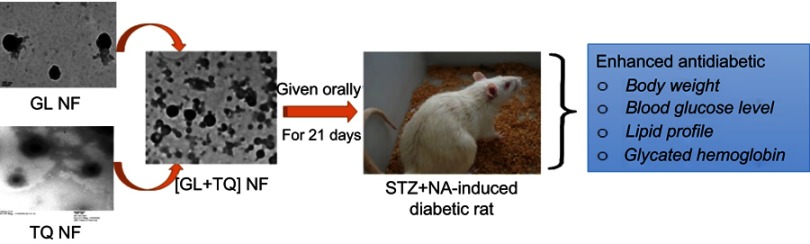
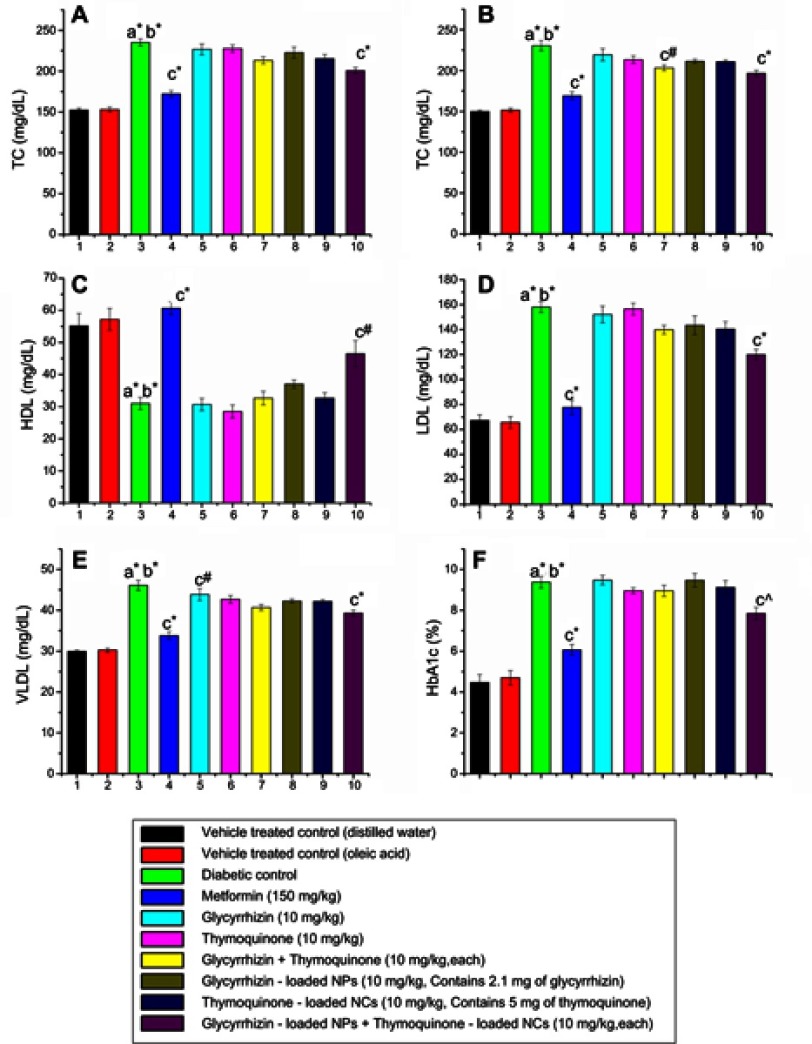
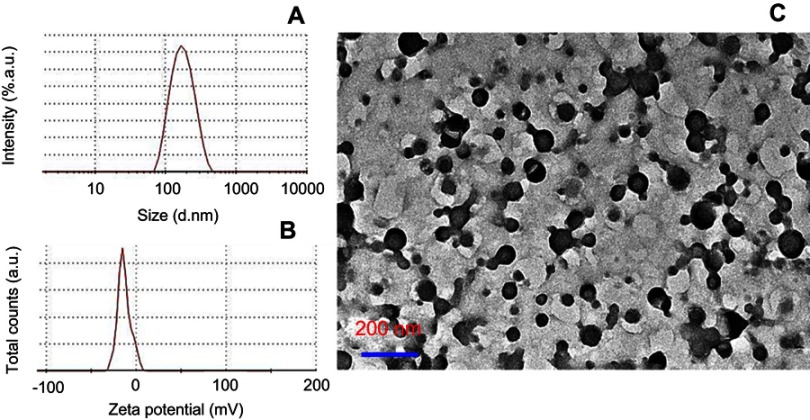
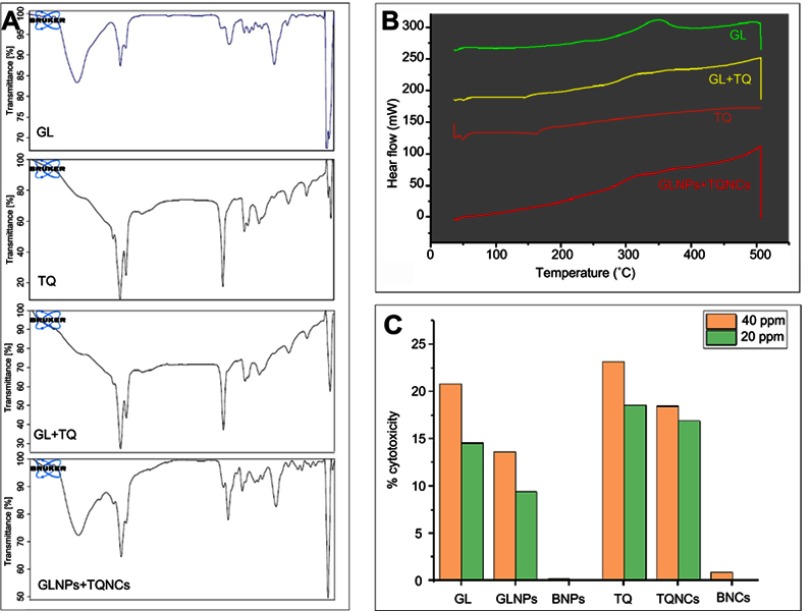
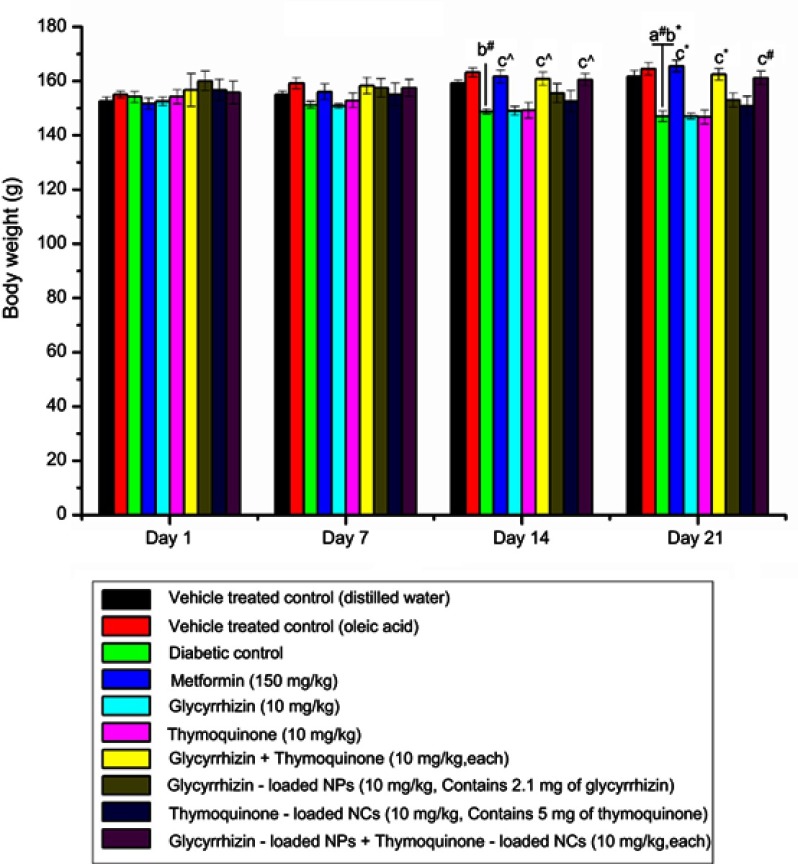
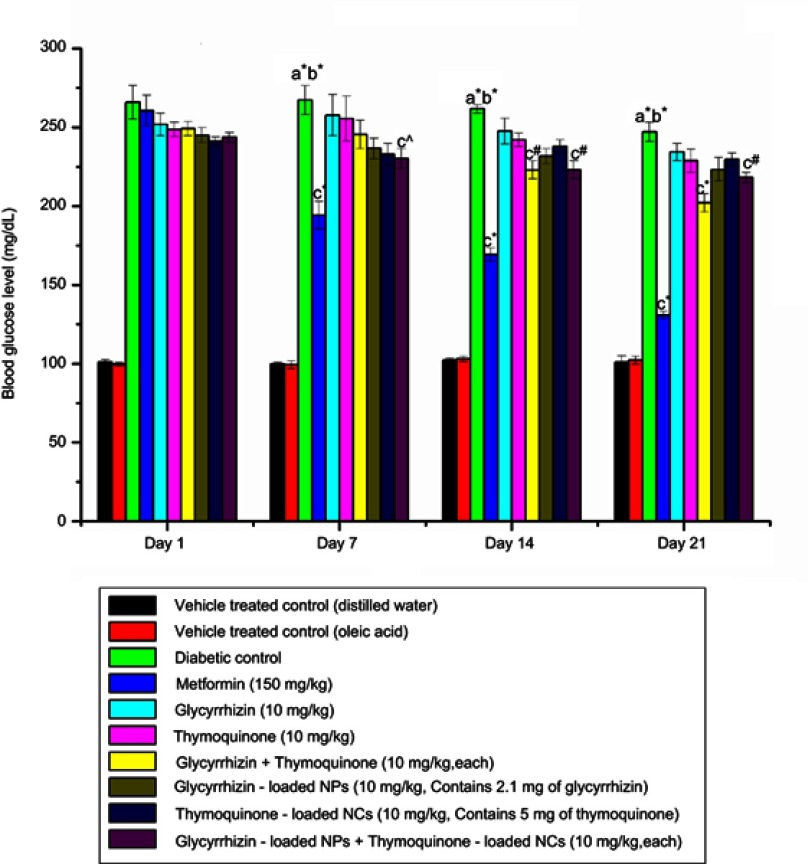
The bioactive compounds glycyrrhizin (GL) and thymoquinone (TQ) have been reported for antidiabetic activity in pure and nanoformulation (NF) form. However, the antidiabetic effect of a combined nanoformulation of these two has not been reported in the literature. Here, a combinational nanomedicine approach was investigated to enhance the antidiabetic effects of the two bioactive compounds of GL and TQ (GT), in type 2 diabetic rats in reference to metformin. Two separately prepared NFs of GL (using polymeric nanoparticles) and TQ (using polymeric nanocapsules) were mixed to obtain a therapeutic cargo of nanomedicine and then characterized with respect to particle size, stability, morphology, chemical interaction, and in vivo behavior. Additionally, NFs were evaluated for their cytotoxic effect on Vero cell lines compared to the pure form. This nanomedicine was administered orally, both independently and in combination (pure form or NF) for 21 successive days to type 2 diabetic rats and the effect assessed in term of body weight, fasting blood-glucose level, and various biochemical parameters (such as lipid-profile parameters and HbA). When these nanomedicines were applied in combined rather than individual forms, significant decreases in blood glucose and HbA and significant improvements in body weight and lipid profile were observed, despite them containing lower amounts than the pure forms. The treatment of diabetic rats with GL and TQ, when administered independently in either pure or NF forms, did not lead to favorable trends in any studied parameters. The administration of combined GT NFs exhibited significant improvement in studied parameters. Improvements in antidiabetic activity could have been due to a synergistic effect of combined NFs, leading to enhanced absorption of NFs and lesser cytotoxic effects compared to pure bioactive compounds. Therefore, GT NFs demonstrated potential as a new medicinal agent for the management of diabetes.
甘草甜素 (GL) 和百里醌 (TQ) 这两种生物活性化合物已被报道具有抗糖尿病活性,无论是在纯品形式还是纳米制剂 (NF) 形式下。然而,这两种化合物的联合纳米制剂在糖尿病治疗中的效果在文献中尚未报道。在这里,我们研究了一种联合纳米医学方法,以增强 GL 和 TQ(GT)这两种生物活性化合物的抗糖尿病作用,方法是将其应用于 2 型糖尿病大鼠,并与二甲双胍进行比较。 我们分别制备了 GL 的 NF(使用聚合物纳米粒)和 TQ 的 NF(使用聚合物纳米胶囊),然后将它们混合以获得治疗用纳米药物,并对其粒径、稳定性、形态、化学相互作用和体内行为进行了表征。此外,我们还评估了 NF 对 Vero 细胞系的细胞毒性作用,与纯品形式进行了比较。这种纳米药物通过口服方式,分别以纯品或 NF 形式连续 21 天给予 2 型糖尿病大鼠,并根据体重、空腹血糖水平以及各种生化参数(如血脂参数和 HbA)来评估其疗效。 当这些纳米药物以联合而非单独的形式应用时,与单独应用相比,尽管其含量低于纯品形式,但血糖和 HbA 显著降低,体重和血脂谱显著改善。单独给予 GL 和 TQ 治疗糖尿病大鼠时,在任何研究参数中均未显示出有利的趋势。 联合 GT NF 的给药表现出研究参数的显著改善。抗糖尿病活性的改善可能是由于联合 NF 的协同作用,导致 NF 的吸收增强,与纯生物活性化合物相比细胞毒性作用更小。因此,GT NF 有望成为治疗糖尿病的新型药物。