Kuznetsov Maksim Sergeevich, Lisukov Artur Nicolaevich, Rizvanov Albert Anatolevich, Tyapkina Oksana Victorovna, Gusev Oleg Aleksandrovich, Rezvyakov Pavel Nicolaevich, Kozlovskaya Inessa Benedictovna, Tomilovskaya Elena Sergeevna, Nikolskiy Evgeny Evgenievich, Islamov Rustem Robertovich
Department of Medical Biology and Genetics, Kazan State Medical University, Kazan, Russia.
Institute of Fundamental Medicine and Biology, Kazan Federal University, Kazan, Russia.
Front Pharmacol. 2019 Jul 11;10:747. doi: 10.3389/fphar.2019.00747. eCollection 2019.
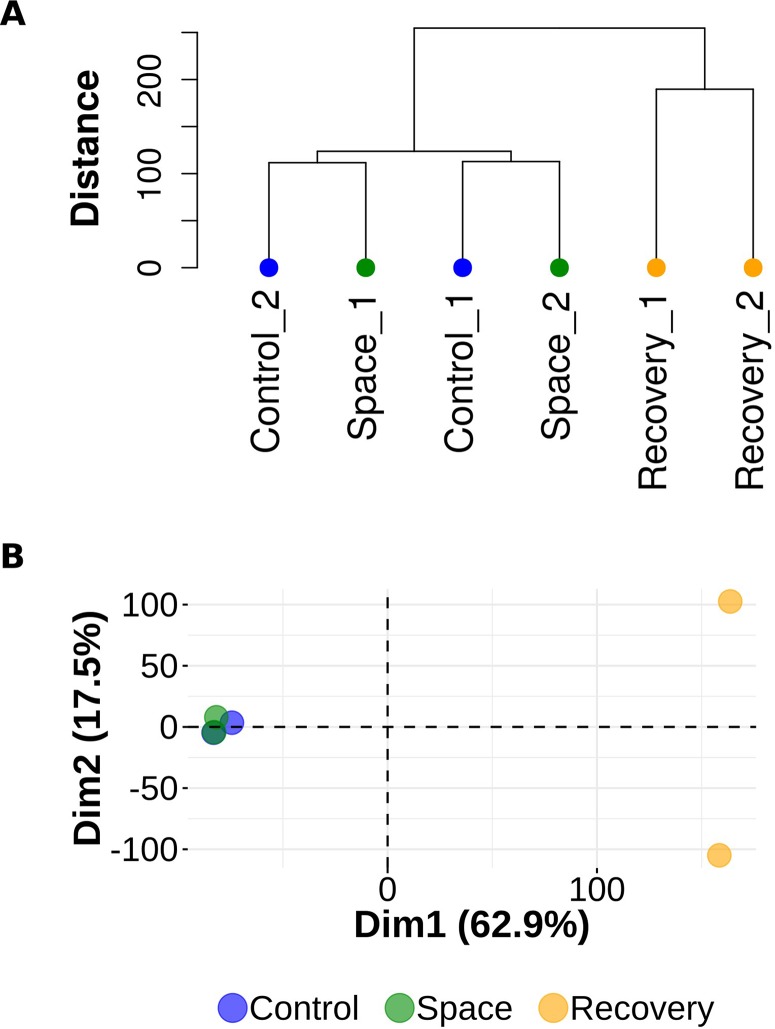
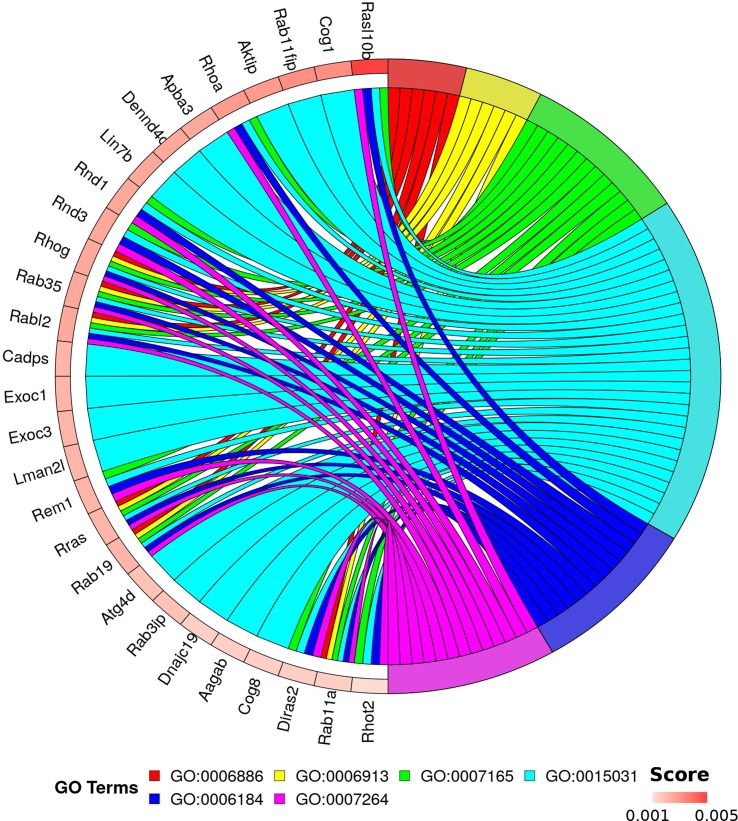
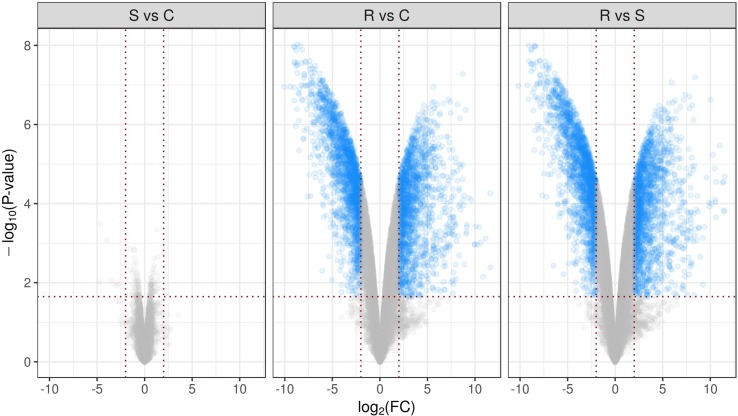
The hypogravity motor syndrome (HMS) is one of the deleterious impacts of weightlessness on the human body in orbital space missions. There is a hypothesis that disorders of musculoskeletal system as part of HMS arise in consequence of changes in spinal motor neurons. The study was aimed at bioinformatic analysis of transcriptome changes in lumbar spinal cords of mice after a 30-day spaceflight aboard biosatellite Bion-M1 (space group, S) and subsequent 7-day readaptation to the Earth's gravity (recovery group, R) when compared with control mice (C group) housed in simulated biosatellite conditions on the Earth. Gene ontology and human phenotype ontology databases were used to detect biological processes, molecular functions, cellular components, and human phenotypes associated with HMS. Our results suggest resemblance of molecular changes developing in space orbit and during the postflight recovery to terrestrial neuromuscular disorders. Remarkably, more prominent transcriptome changes were revealed in R vs. S and R vs. C comparisons that are possibly related to the 7-day recovery period in the Earth's gravity condition. These data may assist with establishment of HMS pathogenesis and proposing effective preventive and therapeutic options.
低重力运动综合征(HMS)是轨道太空任务中失重对人体产生的有害影响之一。有一种假说认为,作为HMS一部分的肌肉骨骼系统紊乱是脊髓运动神经元变化的结果。本研究旨在对生物卫星“生物-M1”号进行30天太空飞行后(太空组,S)以及随后7天重新适应地球重力后(恢复组,R)的小鼠腰脊髓转录组变化进行生物信息学分析,并与在地球上模拟生物卫星条件下饲养的对照小鼠(C组)进行比较。利用基因本体论和人类表型本体论数据库来检测与HMS相关的生物学过程、分子功能、细胞成分和人类表型。我们的结果表明,在太空轨道和飞行后恢复过程中发生的分子变化与陆地神经肌肉疾病相似。值得注意的是,在R组与S组以及R组与C组的比较中发现了更显著的转录组变化,这可能与在地球重力条件下的7天恢复期有关。这些数据可能有助于确定HMS的发病机制,并提出有效的预防和治疗方案。