State Key Laboratory of Oral Diseases and National Clinical Research Center for Oral Diseases, West China Hospital of Stomatology, Sichuan University, No.14, Sec. 3, Renminnan Road, Chengdu, 610041, Sichuan, China.
Department of Stomatology, Zhoushan Hospital, Wenzhou Medical University, No .739, Dingshen Road, Lincheng Street, Zhoushan, Zhejiang, 316021, China.
BMC Cancer. 2019 Jul 29;19(1):743. doi: 10.1186/s12885-019-5925-5.
Salivary adenoid cystic carcinoma (SACC) can recur after removal of the primary tumor and treatment, where they can keep no clinical symptoms and dormant state for 10-15 years. NR2F1 has been demonstrated to regulate the tumor cell dormancy in various malignant tumors and has a potential impact on recurrence and metastasis of carcinoma. However, the role and significance of NR2F1 in SACC dormancy still remain unknown.
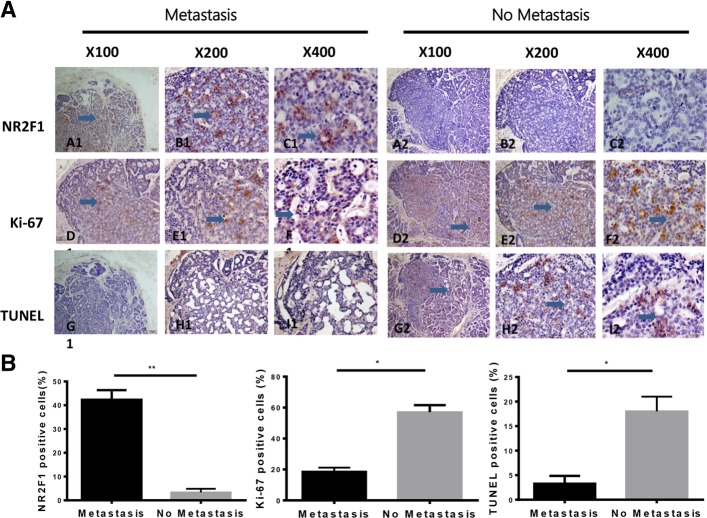
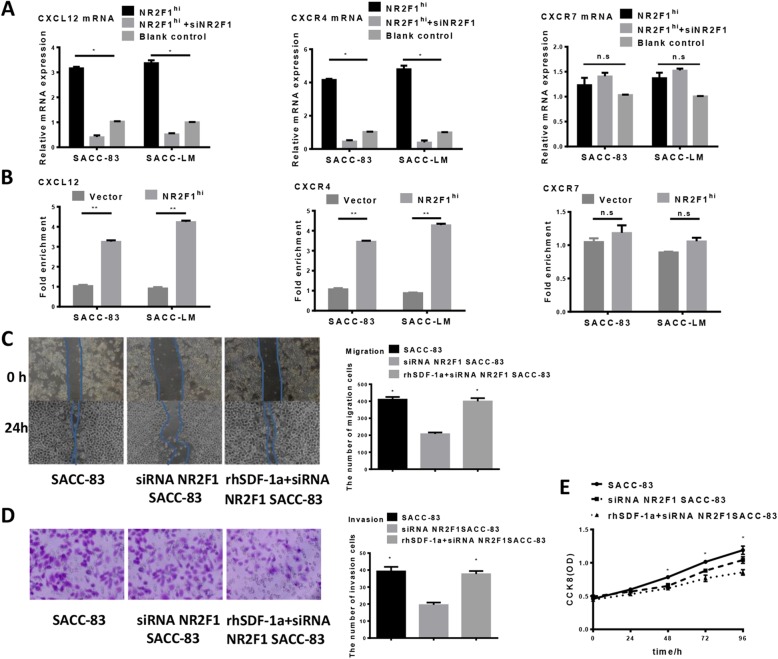
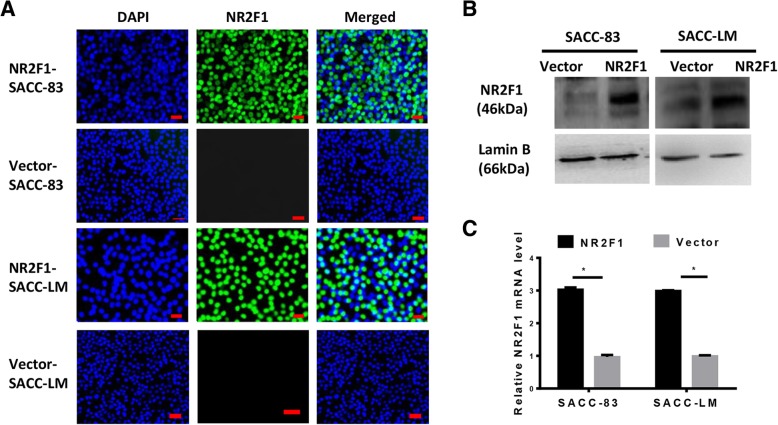
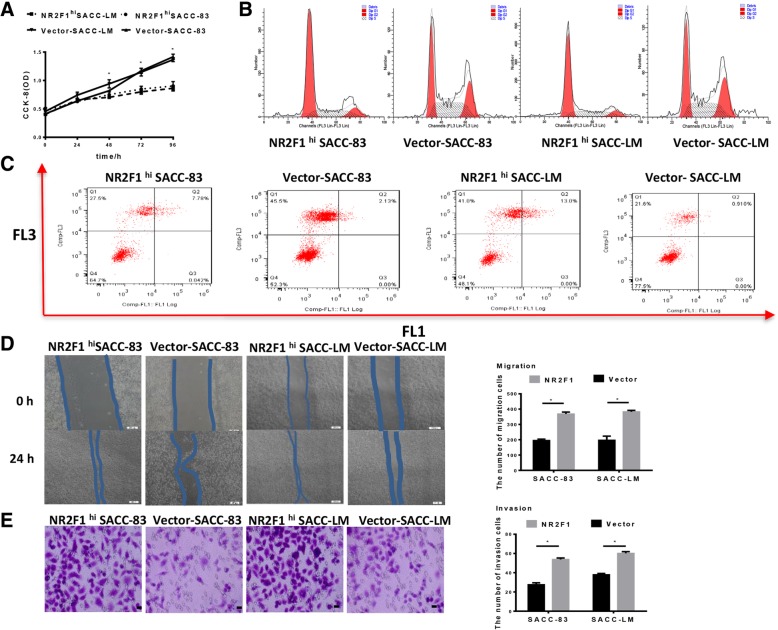
A total number of 59 patients with a diagnosis of SACC were included to detected expression of NR2F1, Ki-67 by immunohistochemical (IHC) staining and terminal deoxynucleotidyl transferase-mediated dUTP nick and labeling (TUNEL). Fisher's exact test was used to examine the NR2F1 expression and clinicopathologic parameters of SACC. In vitro, SACC cell lines were transfected NR2F1 and knockdown NR2F1 respectively. CCK-8, flow cytometry, wound healing assay and transwell invasion determined SACC cell proliferation, apoptosis, cell cycle, migration and invasion respectively. Chromatin immunoprecipitation (ChIP) assays were utilized to demonstrate the potential role of NR2F1 in SACC invasion via CXCL12/CXCR4 axis. In vivo, xenografts of nude mice via subcutaneous injection or tail vein injection were used to testify the results in vitro.
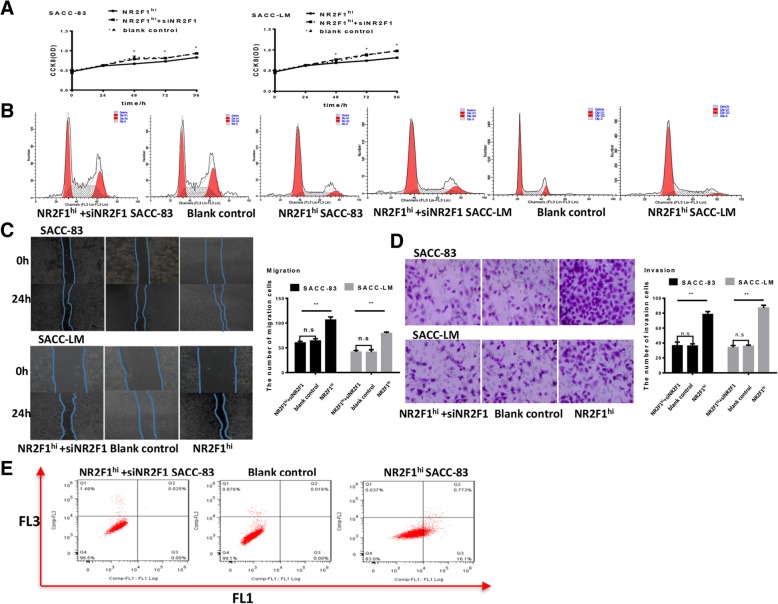
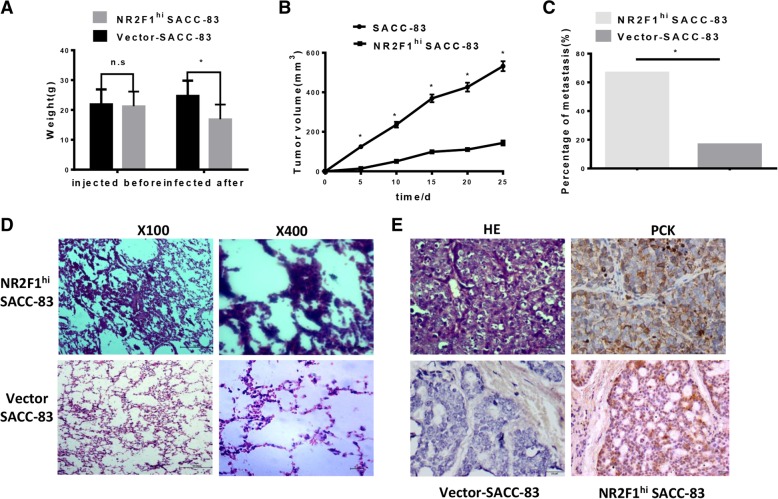
Among the 59 patients with SACC, 23.73% (14/59) were positive to NR2F1 expression, a lower rate of expression compared with 60% (6/10) in normal salivary gland samples. NR2F1 was correlated with metastasis, relapse and dormancy of SACC. SACC cells with transfected NR2F1 remained dormant, as well as enhanced invasion and metastasis. Knockdown of NR2F1 via siRNA after NR2F1 overexpression restored the proliferation and the cell number in G2/M phases, and reduced the abilities of migration and invasion. In addition, NR2F1 promoted the expression of CXCL12 and CXCR4, and overexpression of CXCL12 at least partly rescued the proliferation, migration, and invasion activities induced by NR2F1 silencing.
NR2F1 may be an underlying mechanism of SACC recurrence and metastasis via regulating tumor cell dormancy through CXCL12/CXCR4 pathway.
唾液腺腺样囊性癌(SACC)在原发肿瘤切除和治疗后可能会复发,并且在 10-15 年内可能没有临床症状和潜伏状态。NR2F1 已被证明可调节多种恶性肿瘤中的肿瘤细胞休眠,并且可能对癌的复发和转移产生影响。然而,NR2F1 在 SACC 休眠中的作用和意义仍不清楚。
共纳入 59 例 SACC 患者,采用免疫组织化学(IHC)染色法检测 NR2F1 和 Ki-67 的表达,采用末端脱氧核苷酸转移酶介导的 dUTP 缺口末端标记(TUNEL)法检测细胞凋亡。采用 Fisher 确切检验分析 NR2F1 表达与 SACC 临床病理参数的关系。体外转染 SACC 细胞系 NR2F1 或敲低 NR2F1,分别用 CCK-8 法、流式细胞术、划痕愈合实验和 Transwell 侵袭实验检测 SACC 细胞的增殖、凋亡、细胞周期、迁移和侵袭能力。采用染色质免疫沉淀(ChIP)实验研究 NR2F1 通过 CXCL12/CXCR4 轴在 SACC 侵袭中的潜在作用。体内通过皮下注射或尾静脉注射裸鼠异种移植来验证体外结果。
在 59 例 SACC 患者中,NR2F1 表达阳性率为 23.73%(14/59),低于正常涎腺组织的 60%(6/10)。NR2F1 与 SACC 的转移、复发和休眠有关。转染 NR2F1 的 SACC 细胞处于休眠状态,侵袭和转移能力增强。NR2F1 过表达后,用 siRNA 敲低 NR2F1,恢复了 G2/M 期的增殖和细胞数量,并降低了迁移和侵袭能力。此外,NR2F1 促进了 CXCL12 和 CXCR4 的表达,过表达 CXCL12 至少部分挽救了 NR2F1 沉默诱导的增殖、迁移和侵袭活性。
NR2F1 可能通过调节 CXCL12/CXCR4 通路促进肿瘤细胞休眠,从而成为 SACC 复发和转移的潜在机制。