Institute of Solid Mechanics, School of Aeronautic Science and Engineering, Beihang University, Beijing, 100191, P.R. China.
Sci Rep. 2019 Jul 29;9(1):10987. doi: 10.1038/s41598-019-47435-7.
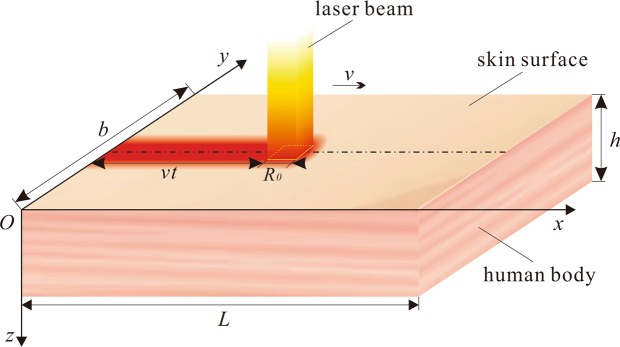
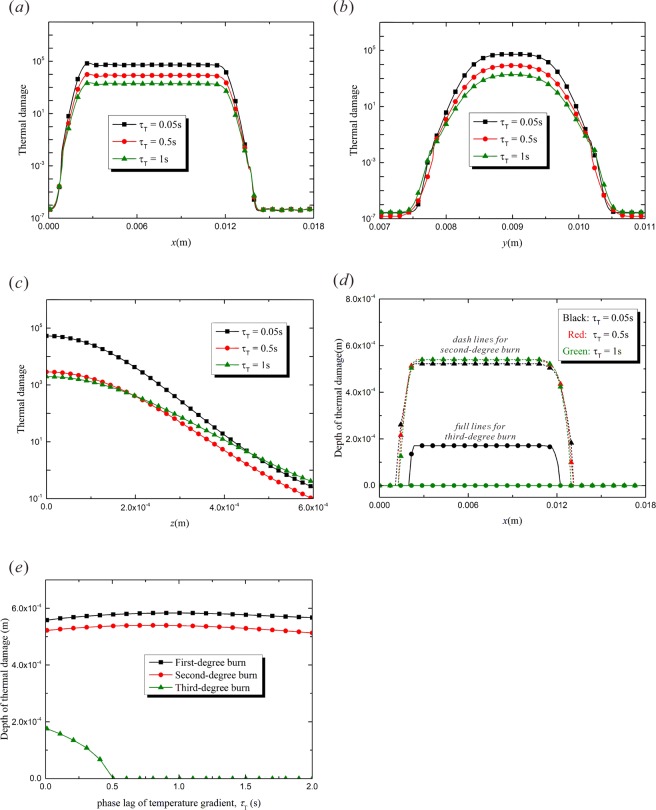
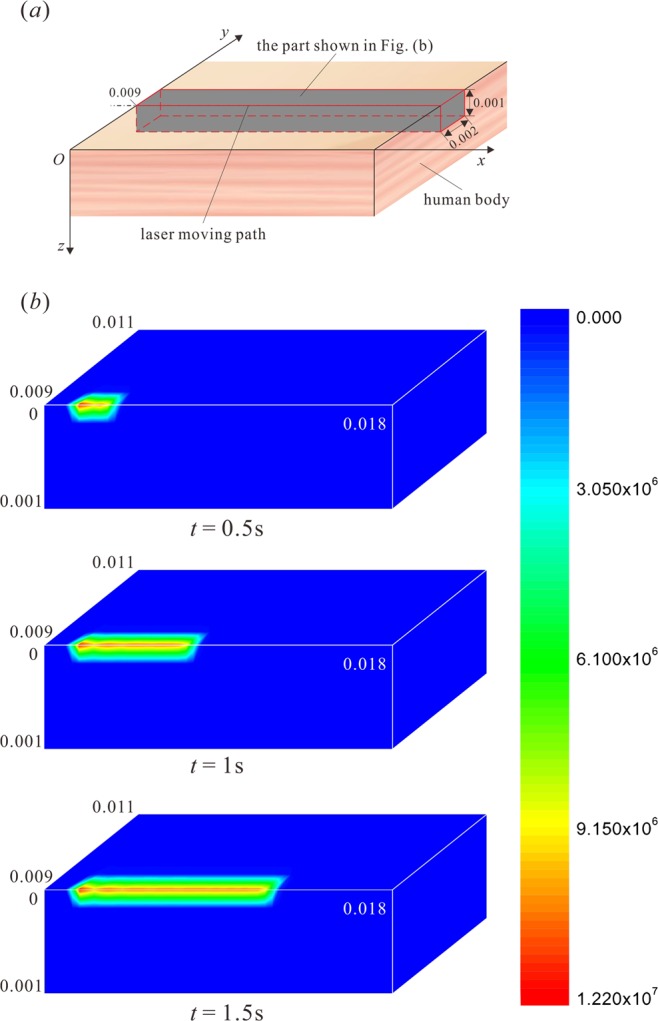
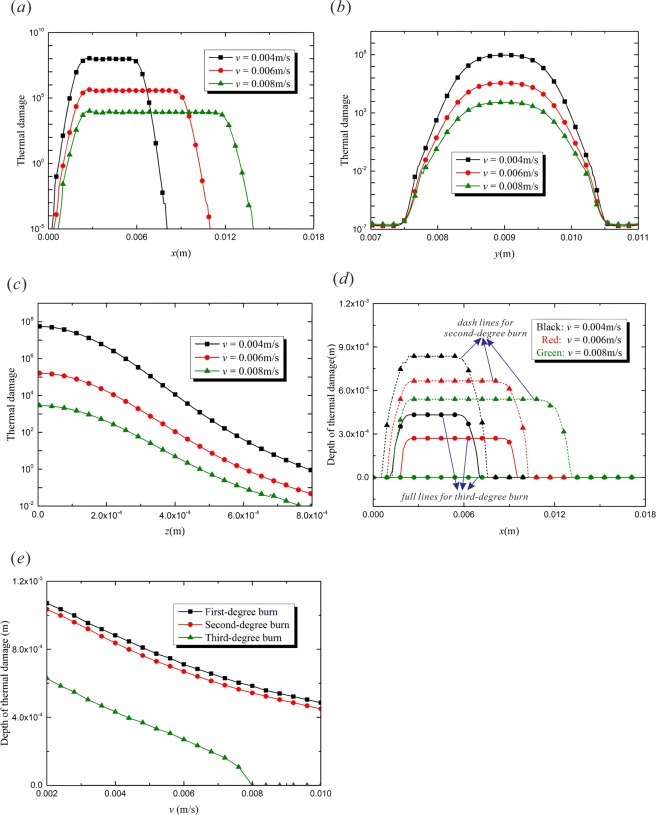
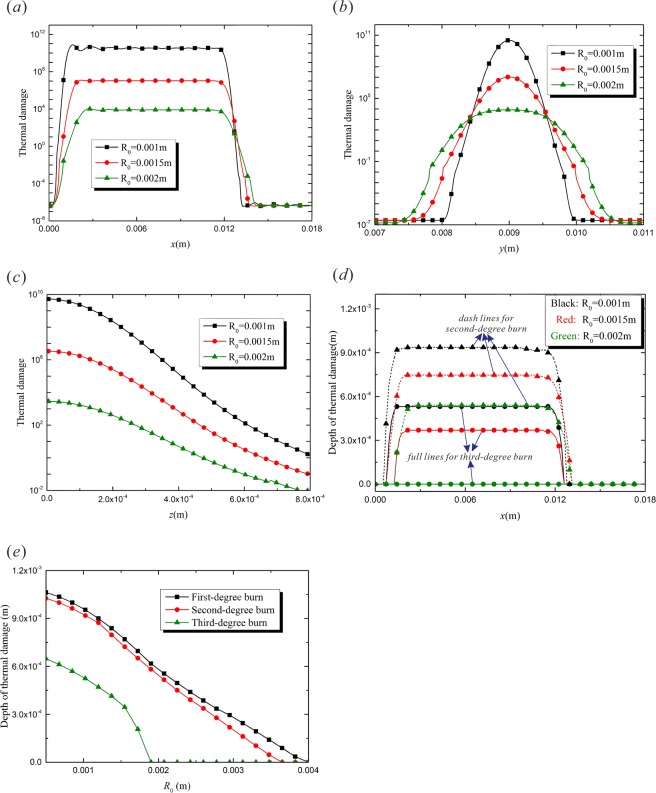
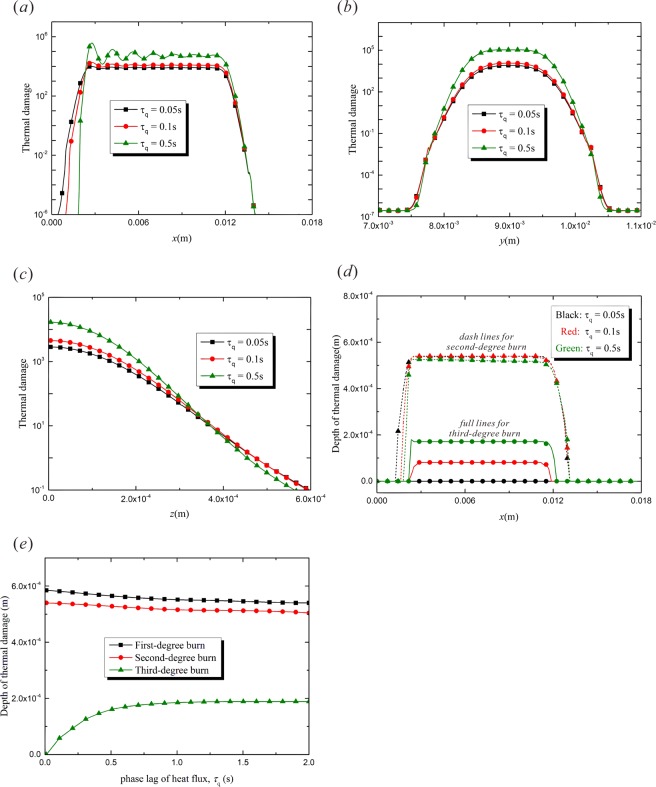
The thermal damage of a three-dimensional bio-tissue model irradiated by a movable laser beam was studied in this work. By employing the DPL biological heat conduction model and Henriques' thermal damage assessment model, the distribution of burn damage of vivo human tissue during laser therapy was analytically obtained. The influences of laser moving velocity, laser spot size, phase lags of heat flux and temperature gradient were discussed. It was found that the laser moving speed and the laser spot size greatly influence the thermal damage degree by affecting the energy concentration degree. The increases of the laser moving speed and laser spot size can enlarge the irradiated region and reduce the burn degree. A greater phase lag of temperature gradient led to lower accumulation of thermal energy and lower burn degree. However, the increment of heat flux phase lag leads to the thermal energy accumulation and more serious burn degree in the irradiated region.
本工作研究了移动激光束辐照下的三维生物组织模型的热损伤。通过采用 DPL 生物热传导模型和 Henriques 的热损伤评估模型,分析得到了激光治疗过程中活体人体组织烧伤损伤的分布。讨论了激光移动速度、激光光斑大小、热流和温度梯度相位滞后对热损伤的影响。结果表明,激光移动速度和激光光斑大小通过影响能量集中程度,对热损伤程度有很大影响。提高激光移动速度和激光光斑大小可以扩大照射区域,降低烧伤程度。较大的温度梯度相位滞后会导致热能积累减少,烧伤程度降低。然而,热流相位滞后的增加会导致辐照区域的热能积累和更严重的烧伤程度。