Department of Haematology, Cambridge Institute for Medical Research, University of Cambridge, Cambridge, UK.
Genome Center, University of California, Davis, California.
Proteins. 2019 Dec;87(12):1249-1262. doi: 10.1002/prot.25794. Epub 2019 Aug 20.
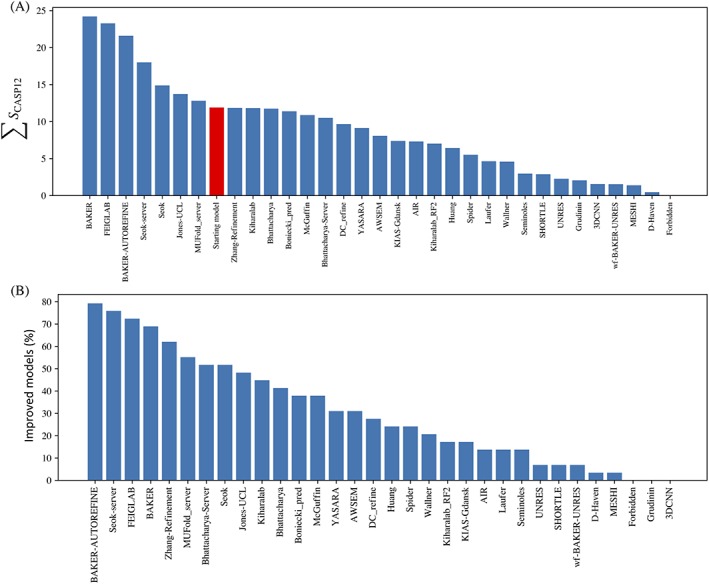
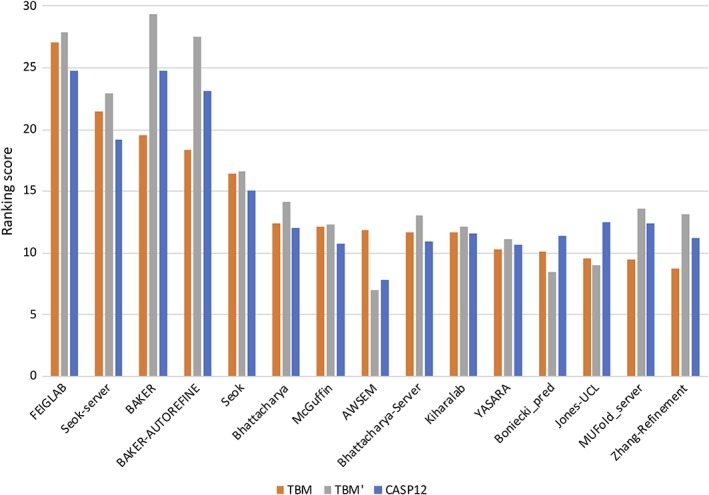
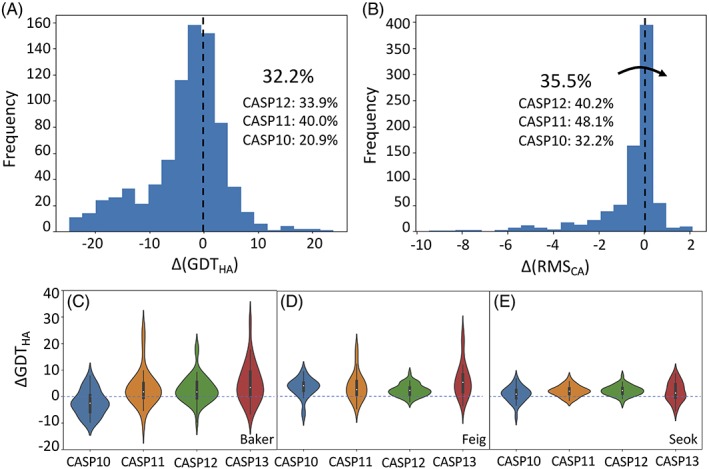
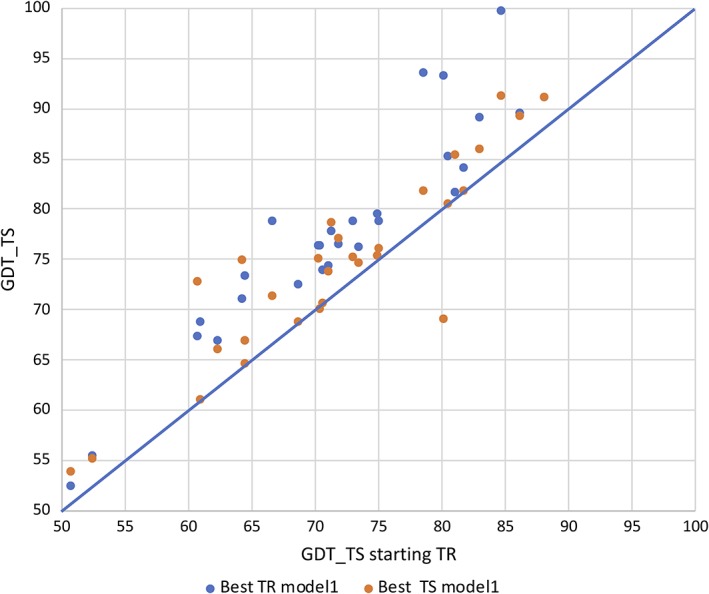
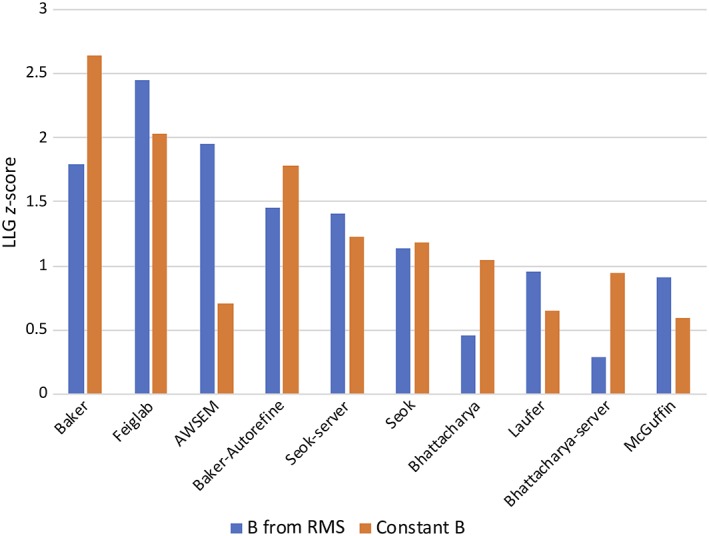
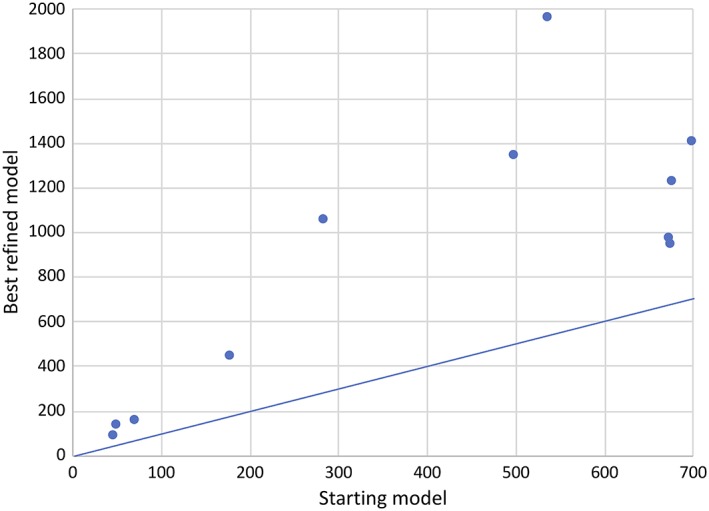
Performance in the model refinement category of the 13th round of Critical Assessment of Structure Prediction (CASP13) is assessed, showing that some groups consistently improve most starting models whereas the majority of participants continue to degrade the starting model on average. Using the ranking formula developed for CASP12, it is shown that only 7 of 32 groups perform better than a "naïve predictor" who just submits the starting model. Common features in their approaches include a dependence on physics-based force fields to judge alternative conformations and the use of molecular dynamics to relax models to local minima, usually with some restraints to prevent excessively large movements. In addition to the traditional CASP metrics that focus largely on the quality of the overall fold, alternative metrics are evaluated, including comparisons of the main-chain and side-chain torsion angles, and the utility of the models for solving crystal structures by the molecular replacement method. It is proposed that the introduction of these metrics, as well as consideration of the accuracy of coordinate error estimates, would improve the discrimination between good and very good models.
评估了第十三轮结构预测关键评估(CASP13)模型精修类别的表现,结果表明,一些团队始终能够改进大多数起始模型,而大多数参与者平均而言仍在降低起始模型的质量。使用为 CASP12 开发的排名公式,结果表明,在 32 个团队中,只有 7 个团队的表现优于仅提交起始模型的“天真预测者”。他们方法中的共同特点包括依赖基于物理的力场来判断替代构象,以及使用分子动力学使模型松弛到局部最小值,通常会施加一些约束以防止过度大的运动。除了主要关注整体折叠质量的传统 CASP 指标外,还评估了替代指标,包括主链和侧链扭转角的比较,以及通过分子置换方法解决晶体结构的模型的实用性。有人提出,引入这些指标,并考虑坐标误差估计的准确性,将提高区分优秀和非常优秀模型的能力。