Gimeno Alejandro, Sohlberg Elina, Pakula Tiina, Limnell Jenni, Keller Beat, Laitila Arja, Vogelgsang Susanne
Ecological Plant Protection in Arable Crops, Research Division Plant Protection, Agroscope, Zurich, Switzerland.
Molecular Plant Biology and Phytopathology, Department of Plant and Microbial Biology, University of Zurich, Zurich, Switzerland.
Front Microbiol. 2019 Jul 16;10:1627. doi: 10.3389/fmicb.2019.01627. eCollection 2019.
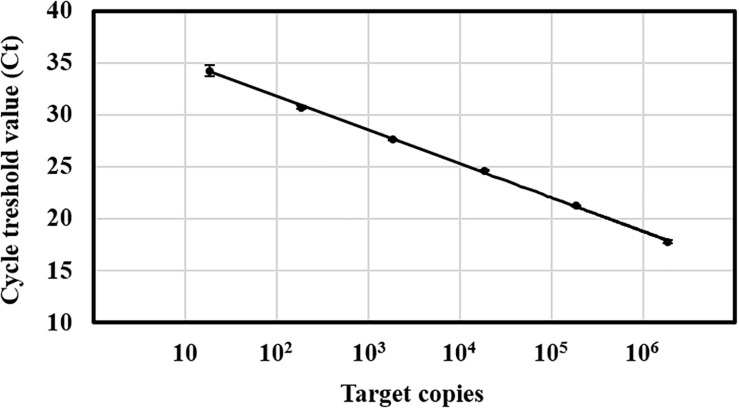
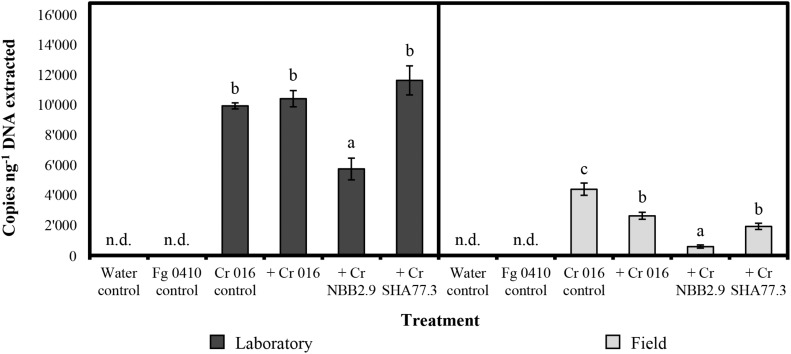
is a biological control agent against in small grain cereals and maize. Infections with do not only reduce the yield but, due to the production of mycotoxins, also affect the entire value chain of food and feed. In addition, production of other secondary metabolites such as hydrophobins, also known as gushing inducers, may cause quality challenges for the malting and brewing industry. Sustainable disease control strategies using are treatment of infected residues of the previous crop, direct treatment of the actual cereal crop or post-harvest treatment during malting processes. Follow-up of growth and survival of biocontrol organisms during these different stages is of crucial importance. In the current study, we developed a quantitative real-time PCR detection method that amends the currently available culture-dependent techniques by using TaqMan chemistry with a highly specific primer and probe set, targeting the actin gene. We established a sensitive assay that detects the biological control agent down to 100 genome copies per reaction, with PCR efficiencies between 90 and 100%. The specificity of the assay was confirmed against a panel of 30 fungal and 3 bacterial species including 12 members of the Fusarium head blight complex and DNA of barley, maize and wheat. The DNA of was detected in -infected maize crop residues that were either treated in the laboratory or in the field with and followed its DNA throughout the barley malting process to estimate its growth during grain germination. We used a standardized DNA extraction protocol and showed that can be quantified in different sample matrices. This method will enable the monitoring of during experiments studying the biological control of on cereal crop residues and on cereal grains and will thus contribute to the development of a new disease control strategy.
是一种针对小粒谷物和玉米中 的生物防治剂。感染 不仅会降低产量,还会由于霉菌毒素的产生,影响食品和饲料的整个价值链。此外,其他次生代谢产物如疏水蛋白(也称为喷涌诱导剂)的产生,可能给麦芽和酿造行业带来质量挑战。使用 进行可持续病害控制的策略包括处理前茬作物的感染残体、直接处理实际的谷物作物或在麦芽加工过程中进行收获后处理。在这些不同阶段跟踪生物防治生物的生长和存活至关重要。在本研究中,我们开发了一种定量实时PCR检测方法,该方法通过使用TaqMan化学技术和针对肌动蛋白基因的高度特异性引物和探针组,改进了目前可用的依赖培养的技术。我们建立了一种灵敏的检测方法,每个反应能检测低至100个基因组拷贝的生物防治剂,PCR效率在90%至100%之间。针对包括镰刀菌穗腐病复合体的12个成员以及大麦、玉米和小麦的DNA在内的30种真菌和3种细菌进行检测,证实了该检测方法的特异性。在实验室或田间用 处理过的感染玉米作物残体中检测到了 的DNA,并在整个大麦麦芽加工过程中跟踪其DNA,以估计其在谷物发芽过程中的生长情况。我们使用了标准化的DNA提取方案,并表明可以在不同的样品基质中对 进行定量。该方法将有助于在研究 对谷物作物残体和谷物的生物防治的实验中监测 ,从而有助于开发新的病害控制策略。