College of Life Science, Sichuan Agricultural University, Ya'an, China.
School of Agriculture and Biology, Shanghai Jiao Tong University, Shanghai, China.
BMC Plant Biol. 2019 Aug 6;19(1):342. doi: 10.1186/s12870-019-1951-3.
GRAS are plant-specific transcription factors that play important roles in plant growth and development. Although the GRAS gene family has been studied in many plants, there has been little research on the GRAS genes of Tartary buckwheat (Fagopyrum tataricum), which is an important crop rich in rutin. The recently published whole genome sequence of Tartary buckwheat allows us to study the characteristics and expression patterns of the GRAS gene family in Tartary buckwheat at the genome-wide level.
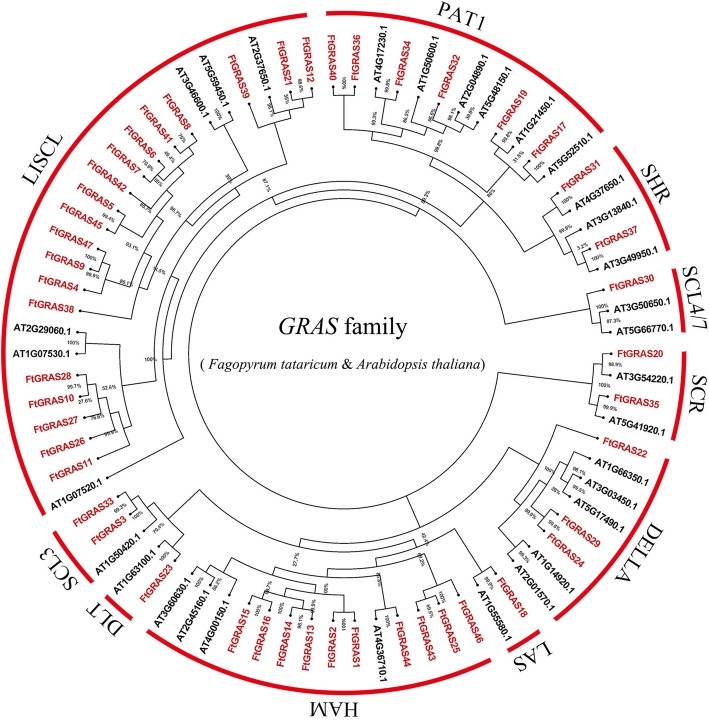
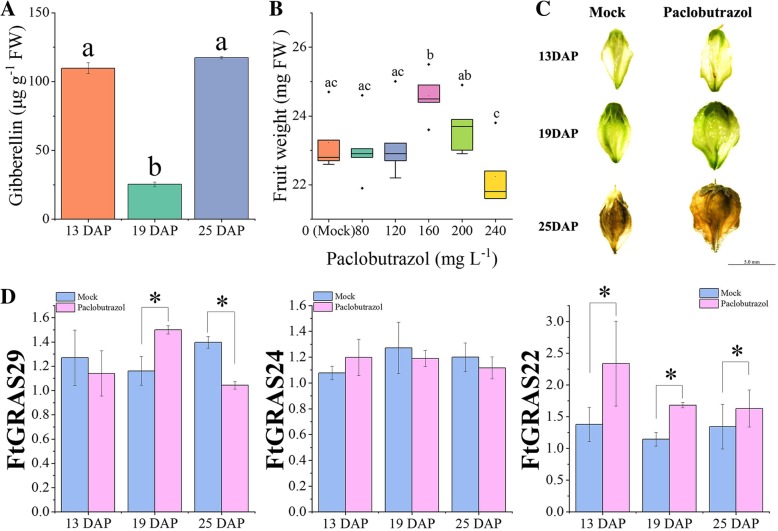
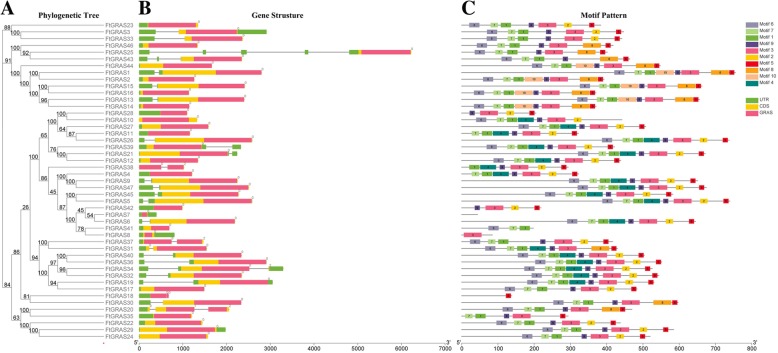
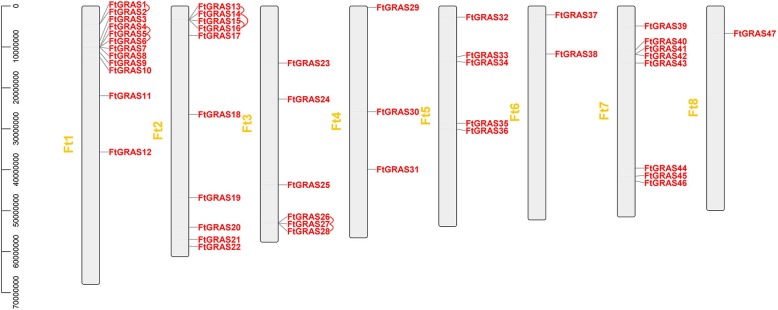
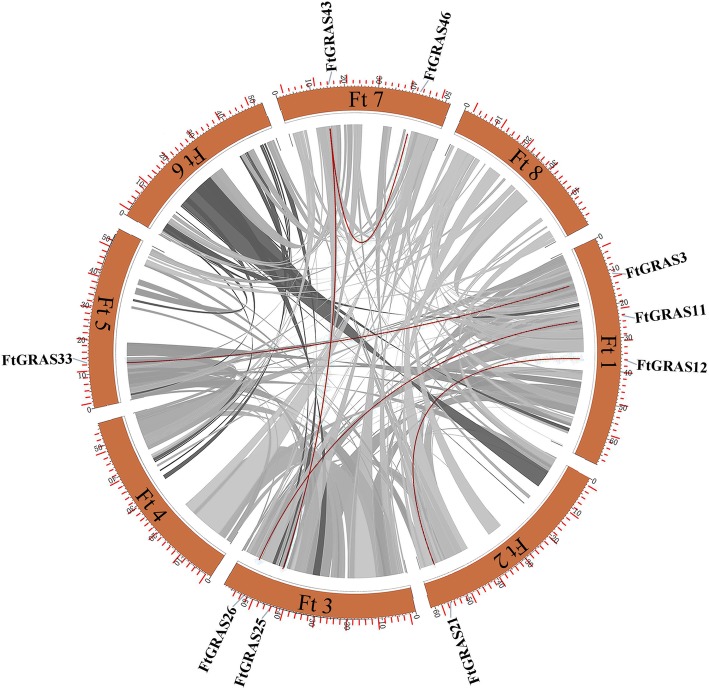
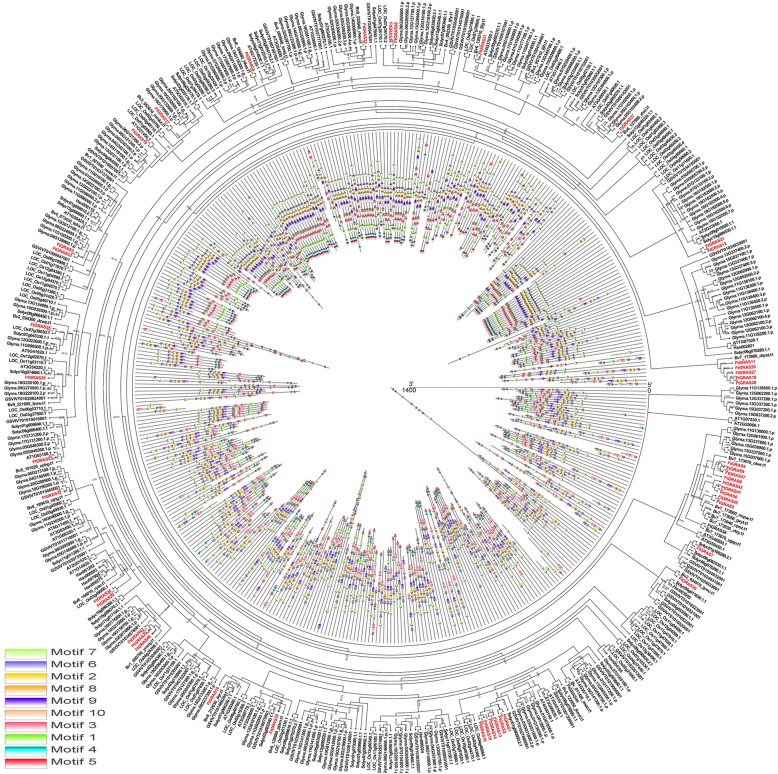
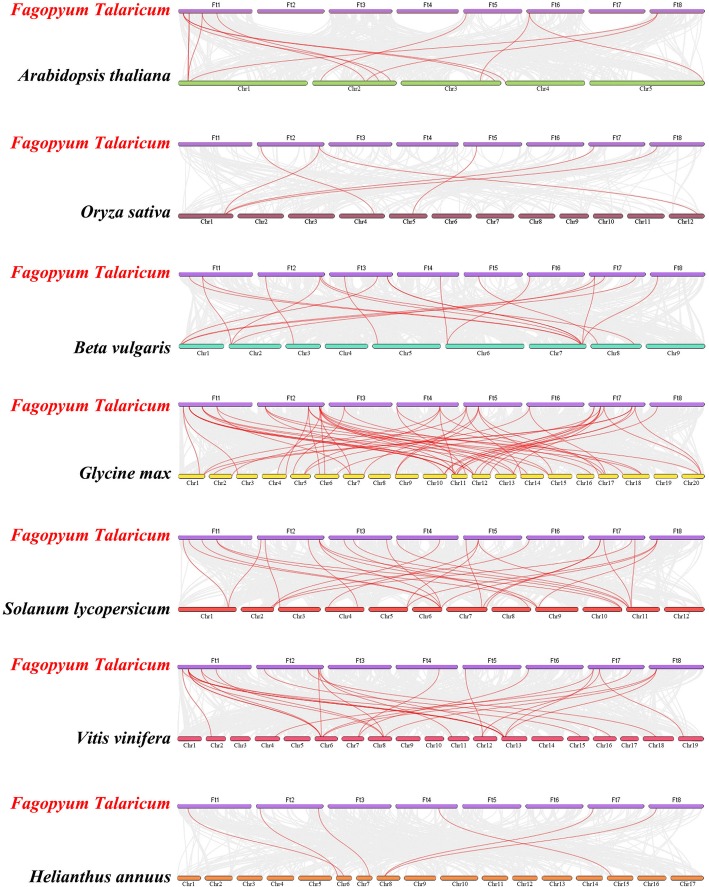
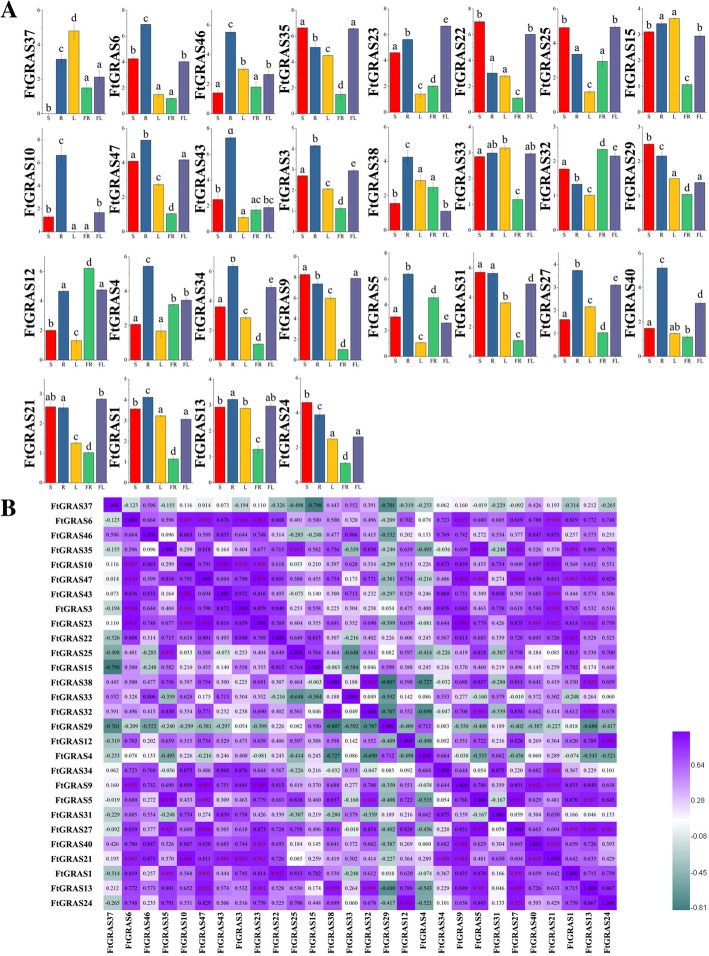
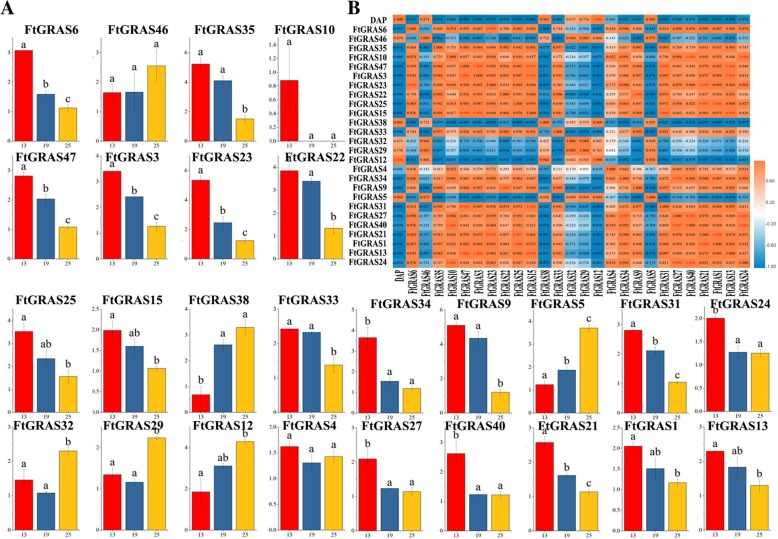
In this study, 47 GRAS genes of Tartary buckwheat were identified and divided into 10 subfamilies: LISCL, HAM, DELLA, SCR, PAT1, SCL4/7, LAS, SHR, SCL3, and DLT. FtGRAS genes were unevenly distributed on 8 chromosomes, and members of the same subfamily contained similar gene structures and motif compositions. Some FtGRAS genes may have been produced by gene duplications; tandem duplication contributed more to the expansion of the GRAS gene family in Tartary buckwheat. Real-time PCR showed that the transcription levels of FtGRAS were significantly different in different tissues and fruit development stages, implying that FtGRAS might have different functions. Furthermore, an increase in fruit weight was induced by exogenous paclobutrazol, and the transcription level of the DELLA subfamily member FtGRAS22 was significantly upregulated during the whole fruit development stage. Therefore, FtGRAS22 may be a potential target for molecular breeding or genetic editing.
Collectively, this systematic analysis lays a foundation for further study of the functional characteristics of GRAS genes and for the improvement of Tartary buckwheat crops.
GRAS 是植物特有的转录因子,在植物生长发育过程中发挥着重要作用。尽管 GRAS 基因家族在许多植物中都有研究,但对富含芦丁的重要作物苦荞(Fagopyrum tataricum)的 GRAS 基因研究甚少。苦荞的全基因组序列最近发表,使我们能够在全基因组水平上研究苦荞 GRAS 基因家族的特征和表达模式。
本研究在苦荞中鉴定出 47 个 GRAS 基因,分为 10 个亚家族:LISCL、HAM、DELLA、SCR、PAT1、SCL4/7、LAS、SHR、SCL3 和 DLT。FtGRAS 基因在 8 条染色体上不均匀分布,同一亚家族的成员具有相似的基因结构和基序组成。一些 FtGRAS 基因可能是由基因复制产生的;串联复制对苦荞 GRAS 基因家族的扩张贡献更大。实时 PCR 显示,FtGRAS 在不同组织和果实发育阶段的转录水平存在显著差异,暗示 FtGRAS 可能具有不同的功能。此外,外源多效唑诱导果实增重,DELLA 亚家族成员 FtGRAS22 的转录水平在整个果实发育阶段显著上调。因此,FtGRAS22 可能是分子育种或遗传编辑的潜在目标。
综上所述,本系统分析为进一步研究 GRAS 基因的功能特征以及苦荞作物的改良奠定了基础。