Department of Cognitive Science, Central European University, Budapest, Hungary.
Max Planck for the Science of Human History, Minds and Traditions Research Group, Jena, Germany.
PLoS One. 2019 Aug 7;14(8):e0220793. doi: 10.1371/journal.pone.0220793. eCollection 2019.
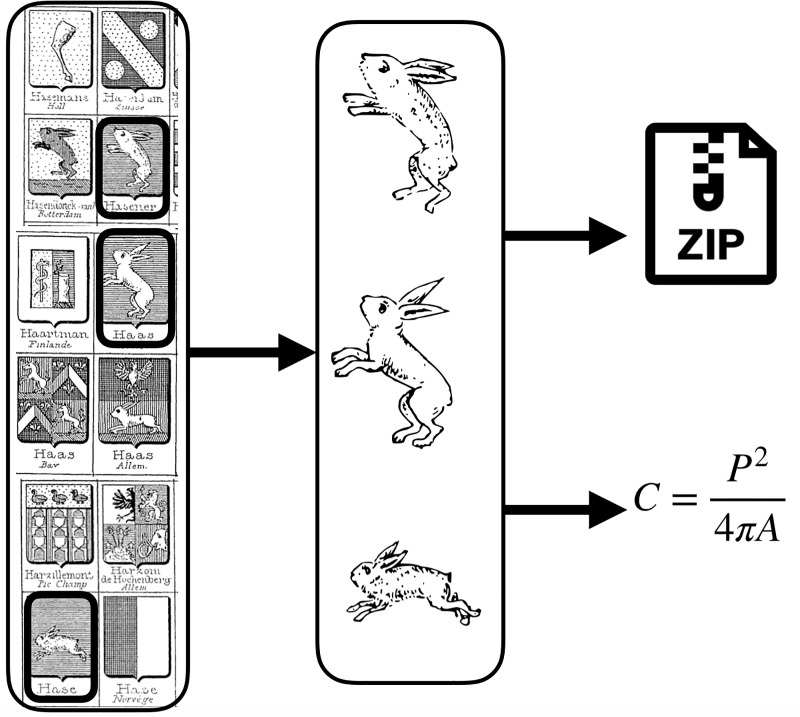
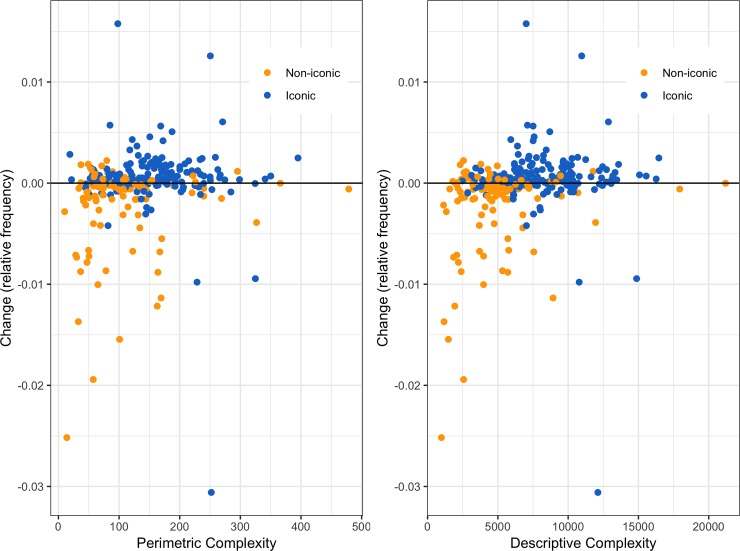
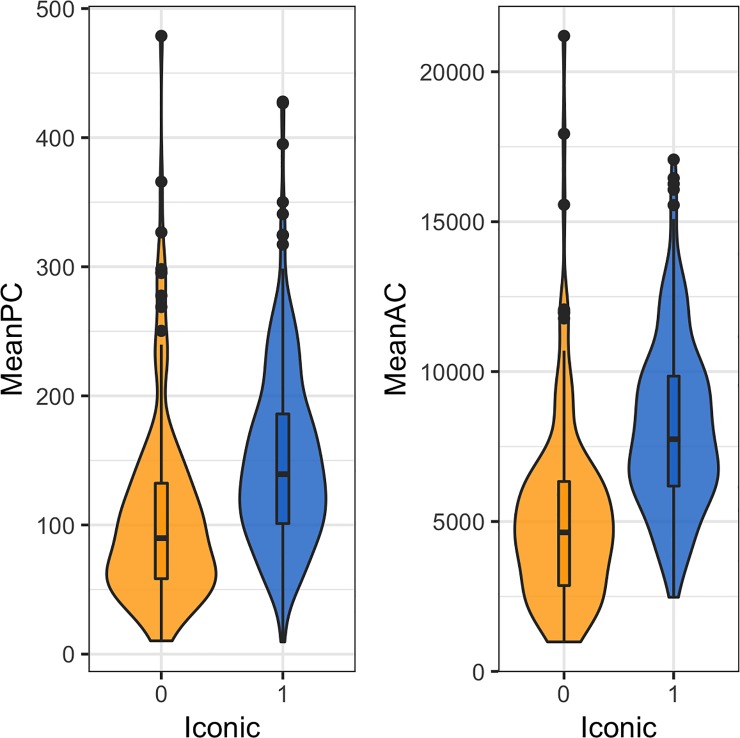
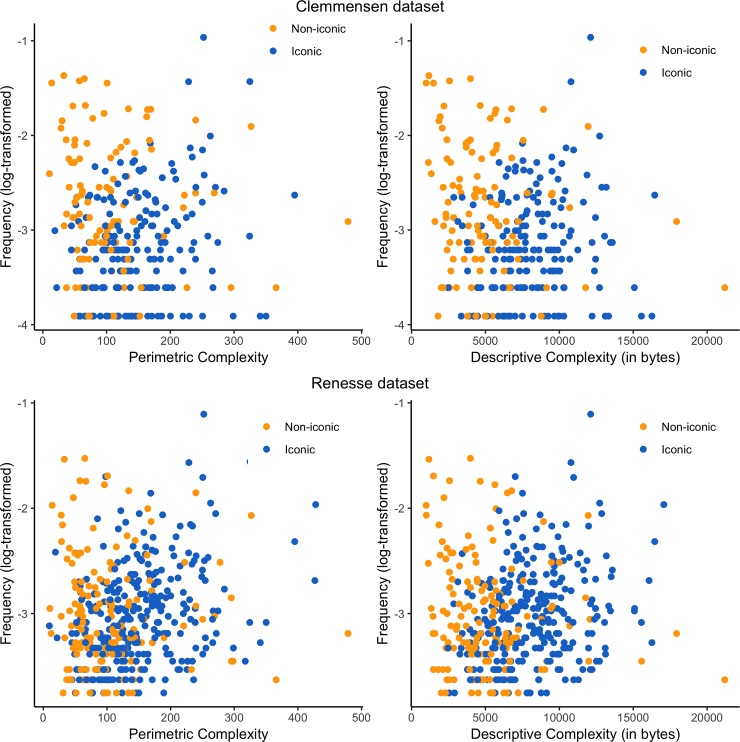
Zipf's law of abbreviation, relating more frequent signals to shorter signal lengths, applies to sounds in a variety of communication systems, both human and non-human. It also applies to writing systems: more frequent words tend to be encoded by less complex graphemes, even when grapheme complexity is decoupled from word length. This study documents an exception to this law of abbreviation. Observing European heraldic motifs, whose frequency of use was documented for the whole continent and over two large corpora (total N = 25115), one medieval, one early modern, we found that they do not obey a robust law of abbreviation. In our early modern corpus, motif complexity and motif frequency are positively, not negatively, correlated, a result driven by iconic motifs. In both our corpora, iconic motifs tend to be more frequent when more complex. They grew in popularity after the invention of printing. Our results suggest that lacking iconicity may be a precondition for a graphic code to exhibit Zipf's Law of Abbreviation.
齐夫定律(Zipf's law of abbreviation),即更频繁的信号对应更短的信号长度,适用于各种通信系统中的声音,无论是人类的还是非人类的。它也适用于书写系统:更频繁的单词往往由更简单的字符来编码,即使字符的复杂性与单词的长度是分离的。本研究记录了这个缩写定律的一个例外。通过观察整个欧洲大陆和两个大型语料库(总共 N = 25115)中记录的使用频率,我们发现欧洲纹章图案并不遵循这一定律。在我们的现代早期语料库中,图案复杂性和图案频率呈正相关,而不是负相关,这一结果是由具象图案驱动的。在我们的两个语料库中,更复杂的具象图案往往更受欢迎。它们在印刷术发明后变得流行起来。我们的研究结果表明,缺乏具象性可能是图形代码表现出齐夫定律的一个前提条件。