Slembrouck-Brec Amélie, Rodrigues Amélie, Rabesandratana Oriane, Gagliardi Giuliana, Nanteau Céline, Fouquet Stéphane, Thuret Gilles, Reichman Sacha, Orieux Gael, Goureau Olivier
Sorbonne Université, INSERM, CNRS, Institut de la Vision, F-75012 Paris, France.
Biologie, Ingénierie et Imagerie de la Greffe de Cornée, EA2521, Faculté de Médecine, Université Jean Monnet, Saint-Etienne, France.
Stem Cells Int. 2019 Jul 15;2019:7858796. doi: 10.1155/2019/7858796. eCollection 2019.
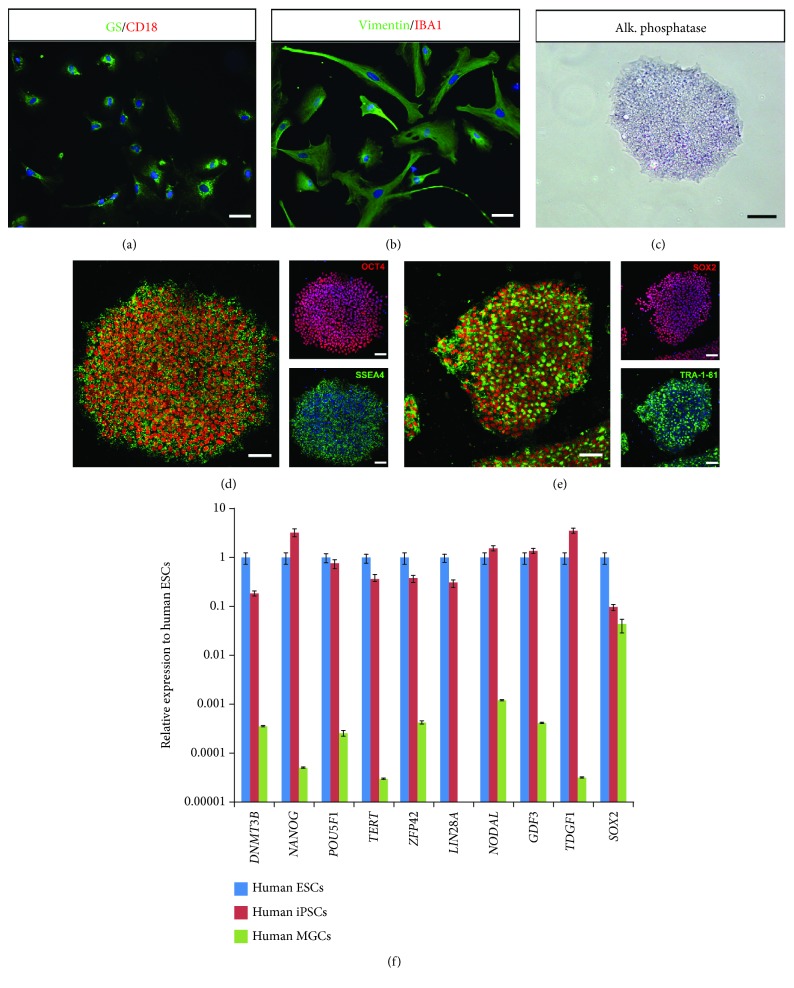
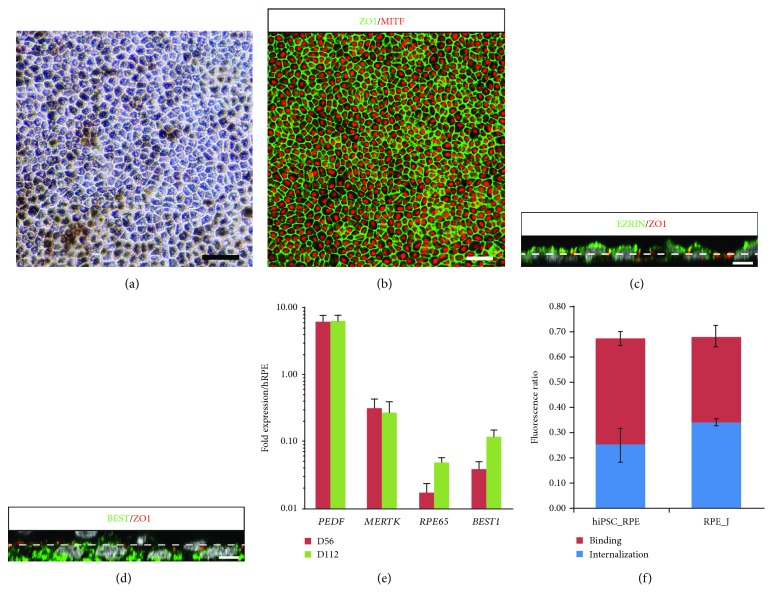
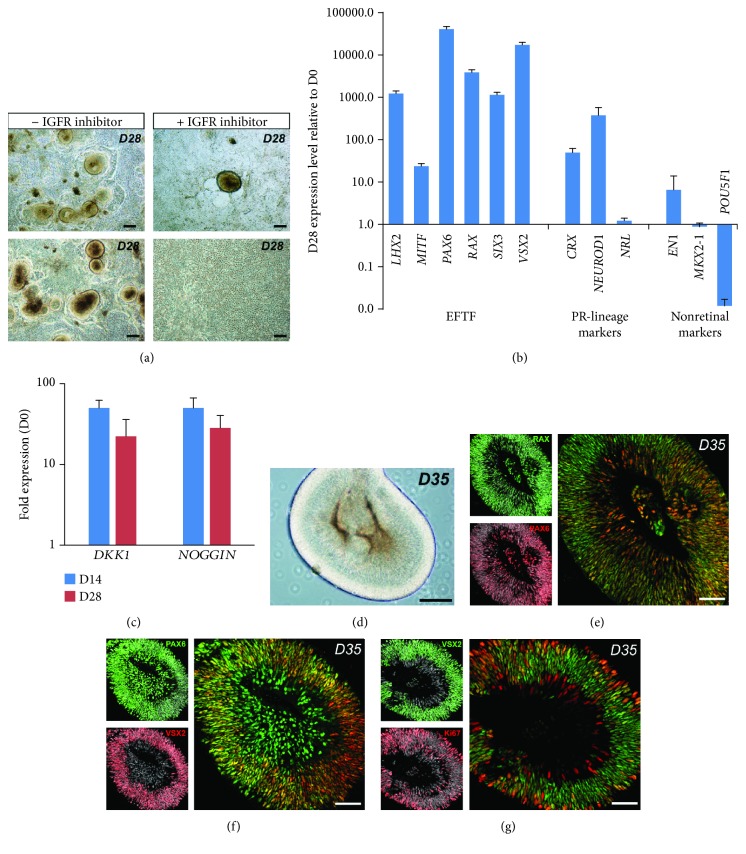
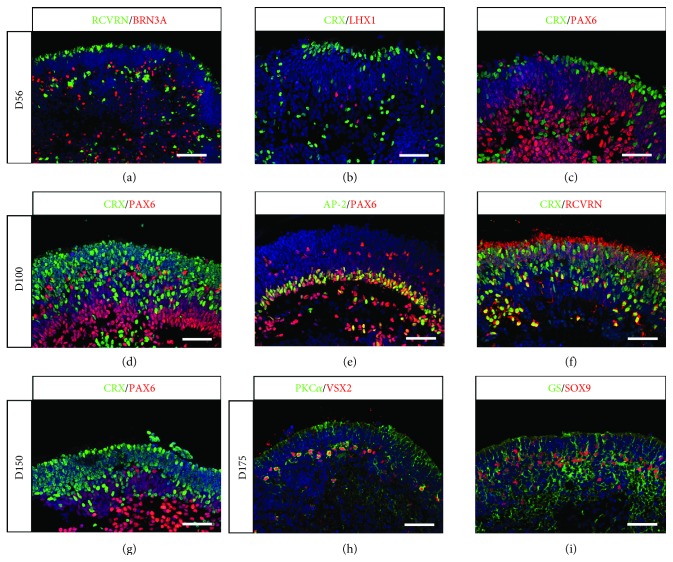
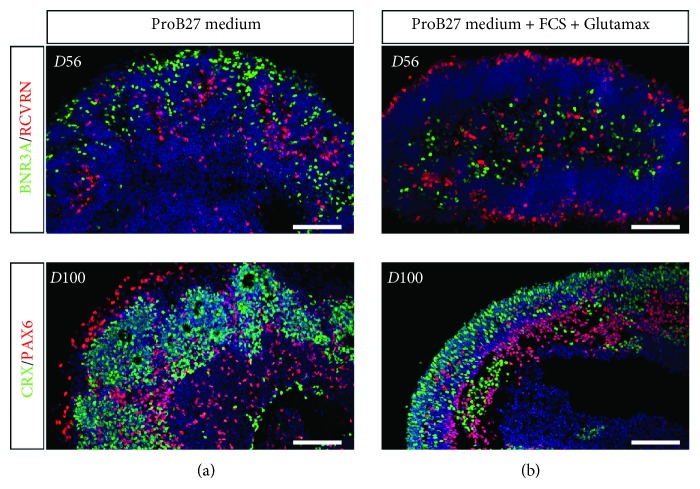
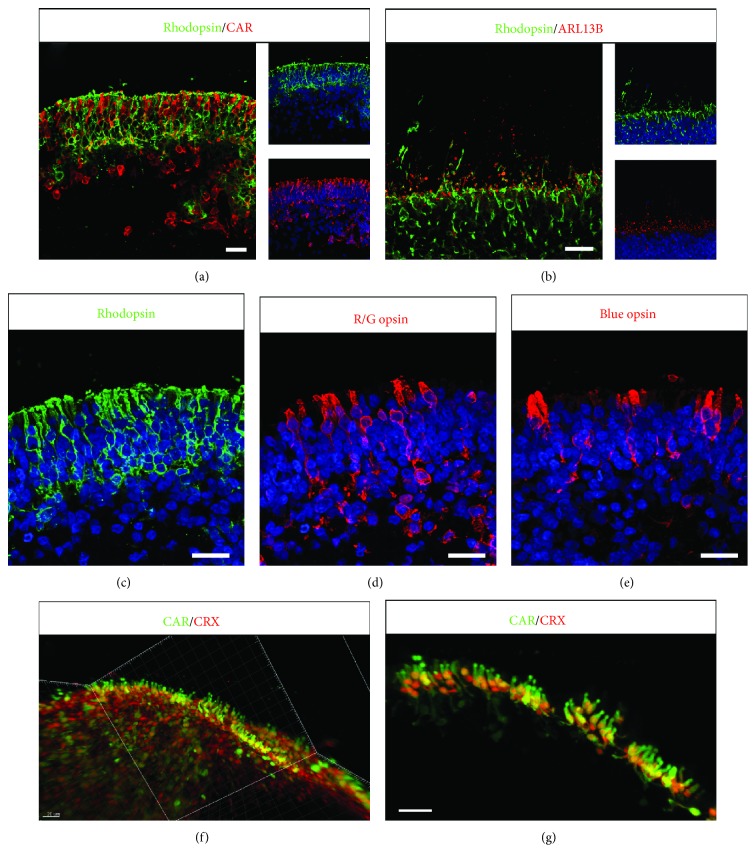
The reprogramming of human somatic cells to induced pluripotent stem cells (iPSCs) has broad applications in regenerative medicine. The generation of self-organized retinal structures from these iPSCs offers the opportunity to study retinal development and model-specific retinal disease with patient-specific iPSCs and provides the basis for cell replacement strategies. In this study, we demonstrated that the major type of glial cells of the human retina, Müller cells, can be reprogrammed into iPSCs that acquire classical signature of pluripotent stem cells. These Müller glial cell-derived iPSCs were able to differentiate toward retinal fate and generate concomitantly retinal pigmented epithelial cells and self-forming retinal organoid structures containing retinal progenitor cells. Retinal organoids recapitulated retinal neurogenesis with differentiation of retinal progenitor cells into all retinal cell types in a sequential overlapping order. With a modified retinal maturation protocol characterized by the presence of serum and high glucose levels, our study revealed that the retinal organoids contained pseudolaminated neural retina with important features reminiscent of mature photoreceptors, both rod and cone subtypes. This advanced maturation of photoreceptors not only supports the possibility to use 3D retinal organoids for studying photoreceptor development but also offers a novel opportunity for disease modeling, particularly for inherited retinal diseases.
将人类体细胞重编程为诱导多能干细胞(iPSC)在再生医学中具有广泛应用。由这些iPSC生成自组织视网膜结构,为利用患者特异性iPSC研究视网膜发育和特定视网膜疾病建模提供了机会,并为细胞替代策略奠定了基础。在本研究中,我们证明了人类视网膜的主要胶质细胞类型,即穆勒细胞,可以重编程为获得多能干细胞经典特征的iPSC。这些源自穆勒胶质细胞的iPSC能够向视网膜命运分化,并同时生成视网膜色素上皮细胞和包含视网膜祖细胞的自形成视网膜类器官结构。视网膜类器官通过视网膜祖细胞按顺序重叠分化为所有视网膜细胞类型,重现了视网膜神经发生过程。通过以血清和高葡萄糖水平为特征的改良视网膜成熟方案,我们的研究表明,视网膜类器官包含假分层神经视网膜,具有类似于成熟光感受器(包括视杆和视锥亚型)的重要特征。光感受器的这种高级成熟不仅支持使用3D视网膜类器官研究光感受器发育的可能性,还为疾病建模提供了新机会,特别是对于遗传性视网膜疾病。