Instituto de Biología Molecular y Celular de Rosario (IBR, CONICET-UNR), S2000EZP, Rosario, Argentina.
Centro de Biología Molecular Severo Ochoa, Agencia Estatal Consejo Superior de Investigaciones Científicas (CSIC-UAM), Campus de Cantoblanco, 28049, Madrid, Spain.
Nat Commun. 2019 Aug 9;10(1):3617. doi: 10.1038/s41467-019-11615-w.
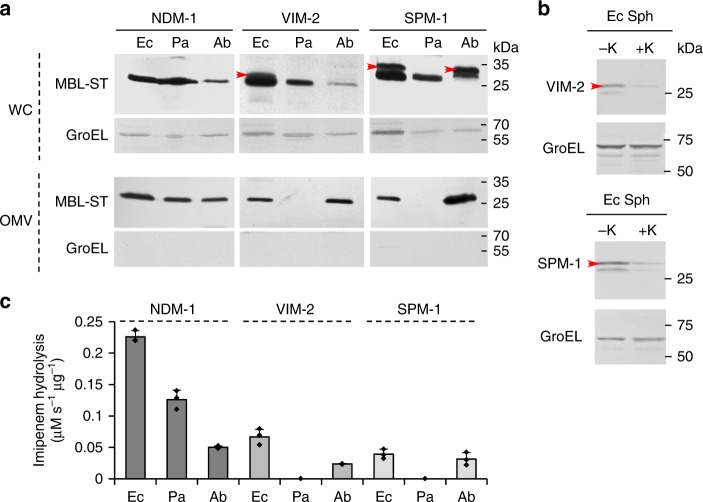
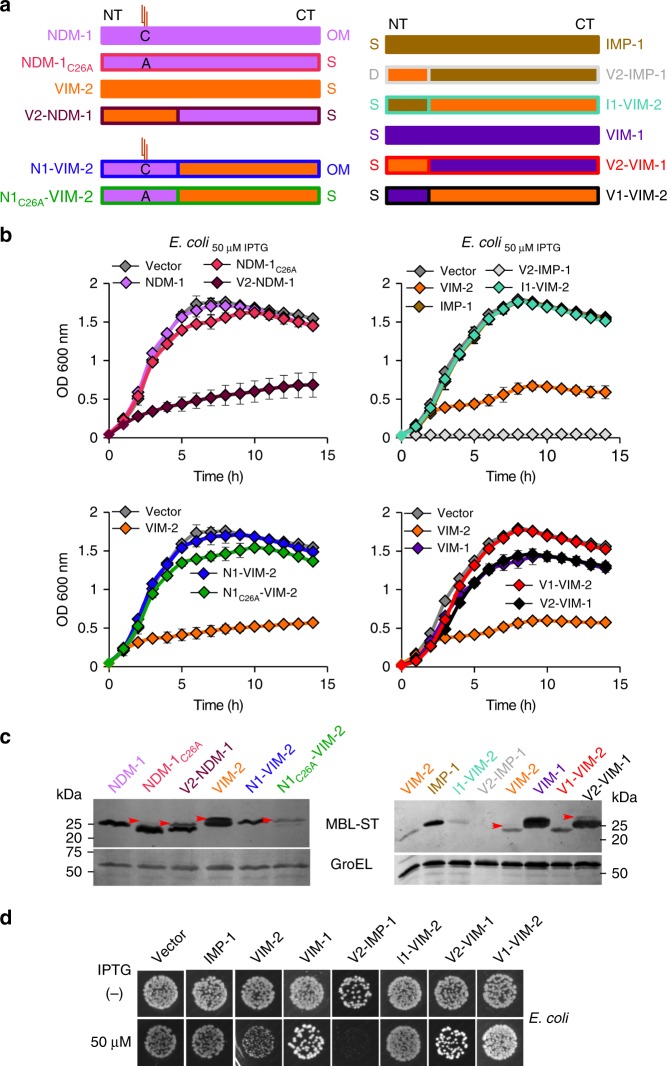
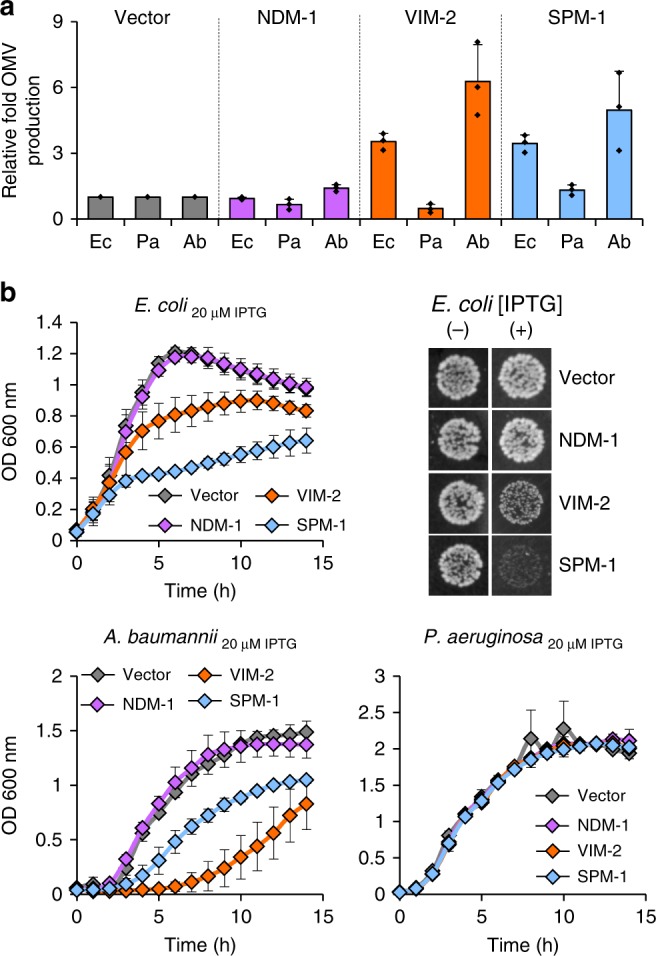
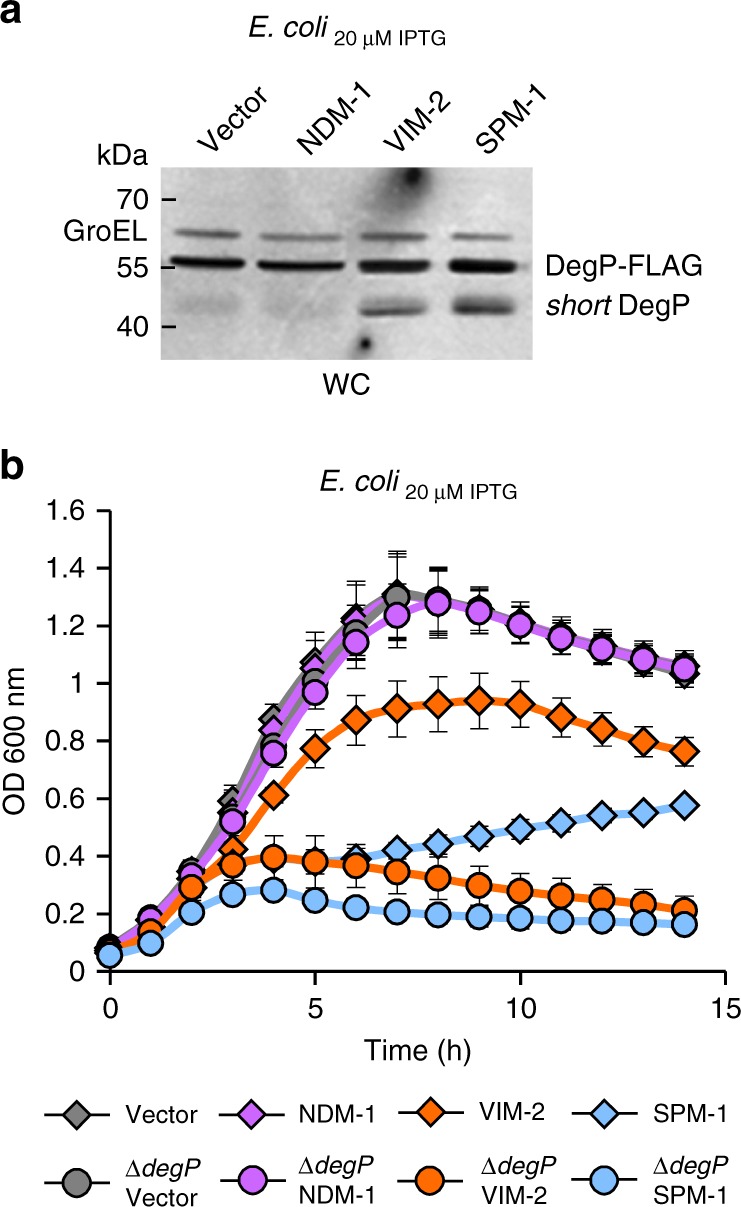
The worldwide dissemination of metallo-β-lactamases (MBLs), mediating resistance to carbapenem antibiotics, is a major public health problem. The extent of dissemination of MBLs such as VIM-2, SPM-1 and NDM among Gram-negative pathogens cannot be explained solely based on the associated mobile genetic elements or the resistance phenotype. Here, we report that MBL host range is determined by the impact of MBL expression on bacterial fitness. The signal peptide sequence of MBLs dictates their adaptability to each host. In uncommon hosts, inefficient processing of MBLs leads to accumulation of toxic intermediates that compromises bacterial growth. This fitness cost explains the exclusion of VIM-2 and SPM-1 from Escherichia coli and Acinetobacter baumannii, and their confinement to Pseudomonas aeruginosa. By contrast, NDMs are expressed without any apparent fitness cost in different bacteria, and are secreted into outer membrane vesicles. We propose that the successful dissemination and adaptation of MBLs to different bacterial hosts depend on protein determinants that enable host adaptability and carbapenem resistance.
金属β-内酰胺酶(MBLs)介导对碳青霉烯类抗生素的耐药性在全球范围内传播,是一个主要的公共卫生问题。无法仅基于相关的移动遗传元件或耐药表型来解释 VIM-2、SPM-1 和 NDM 等 MBL 在革兰氏阴性病原体中的传播程度。在这里,我们报告 MBL 宿主范围取决于 MBL 表达对细菌适应性的影响。MBL 的信号肽序列决定了它们对每个宿主的适应性。在不常见的宿主中,MBL 的处理效率低下会导致有毒中间体的积累,从而影响细菌的生长。这种适应性成本解释了 VIM-2 和 SPM-1 被排除在大肠埃希菌和鲍曼不动杆菌之外,并局限于铜绿假单胞菌。相比之下,NDMs 在不同的细菌中表达而没有明显的适应性成本,并且被分泌到外膜囊泡中。我们提出,MBLs 成功地传播和适应不同的细菌宿主取决于使宿主适应性和碳青霉烯类耐药性成为可能的蛋白质决定因素。