Department of Neurology, Graduate School of Medicine, University of Tokyo, Japan.
Department of Neurology, Graduate School of Medicine, University of Tokyo, Japan.
Neuroimage Clin. 2019;24:101957. doi: 10.1016/j.nicl.2019.101957. Epub 2019 Jul 25.
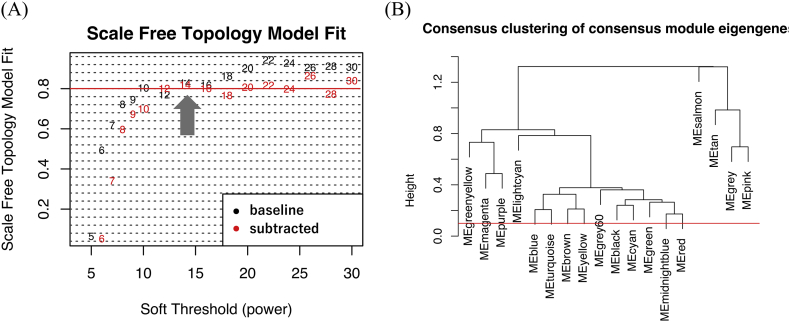
We aimed to identify modularized structural atrophy of brain regions with a high degree of connectivity and its longitudinal changes associated with the progression of Alzheimer's disease (AD) using weighted gene co-expression network analysis (WGCNA), which is an unsupervised hierarchical clustering method originally used in genetic analysis.
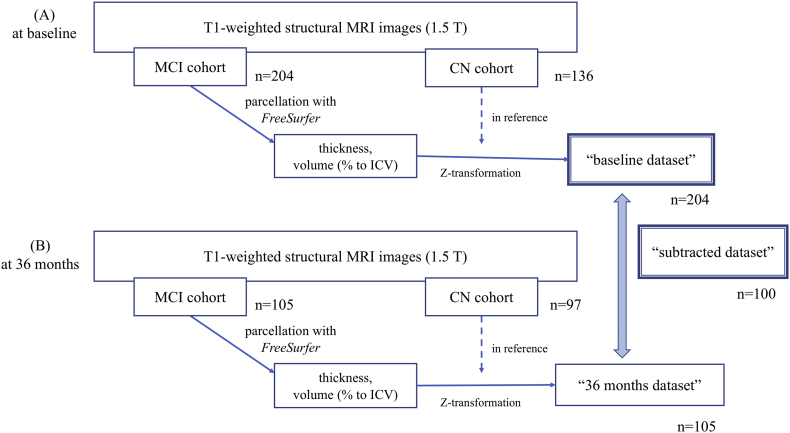
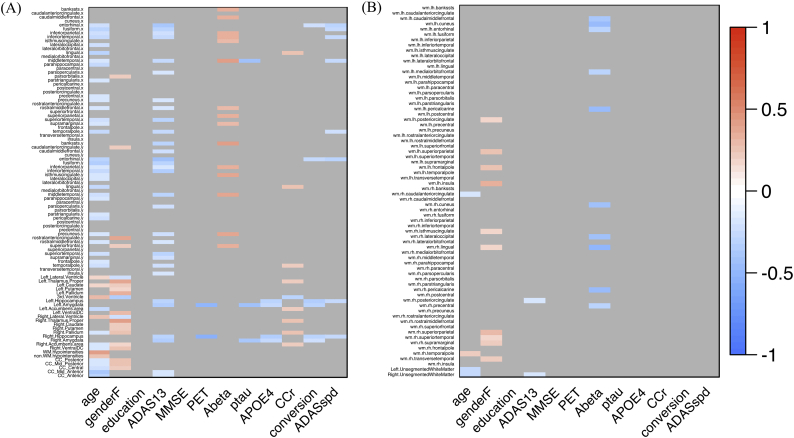
We included participants with late mild cognitive impairment (MCI) at baseline from the Japanese Alzheimer's Disease Neuroimaging Initiative (J-ADNI) study. We imputed normalized and Z-transformed structural volume or cortical thickness data of 164 parcellated brain regions/structures based on the calculations of the FreeSurfer software. We applied the WGCNA to extract modules with highly interconnected structural atrophic patterns and examined the correlation between the identified modules and clinical AD progression.
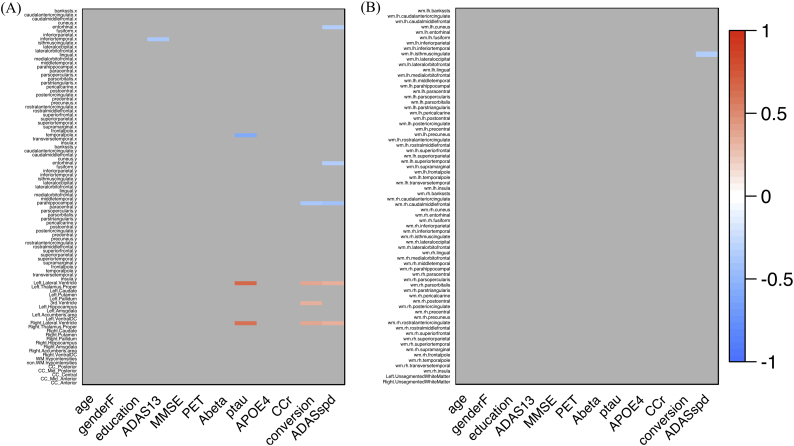
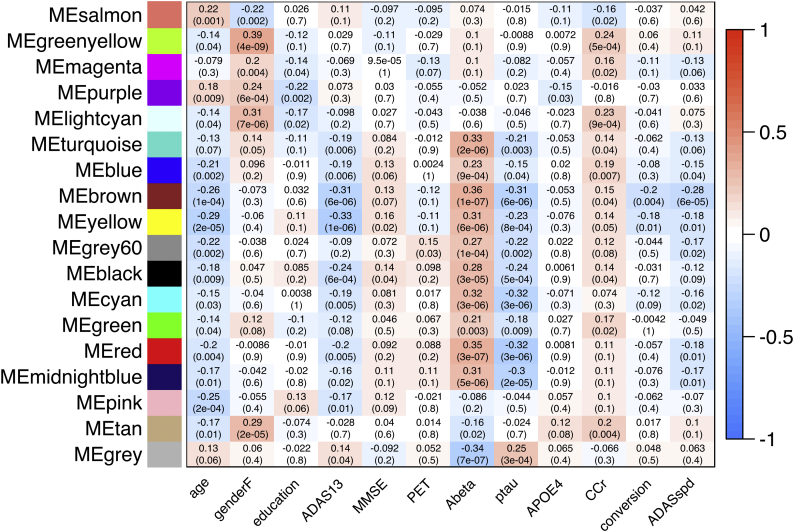
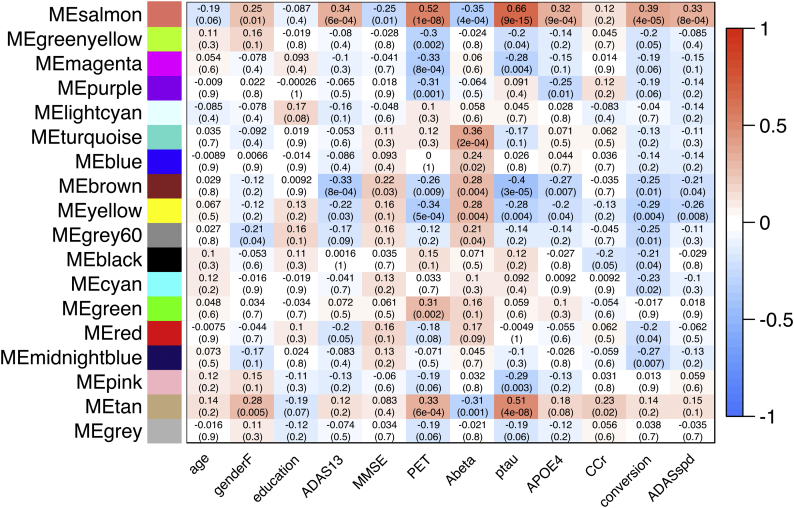
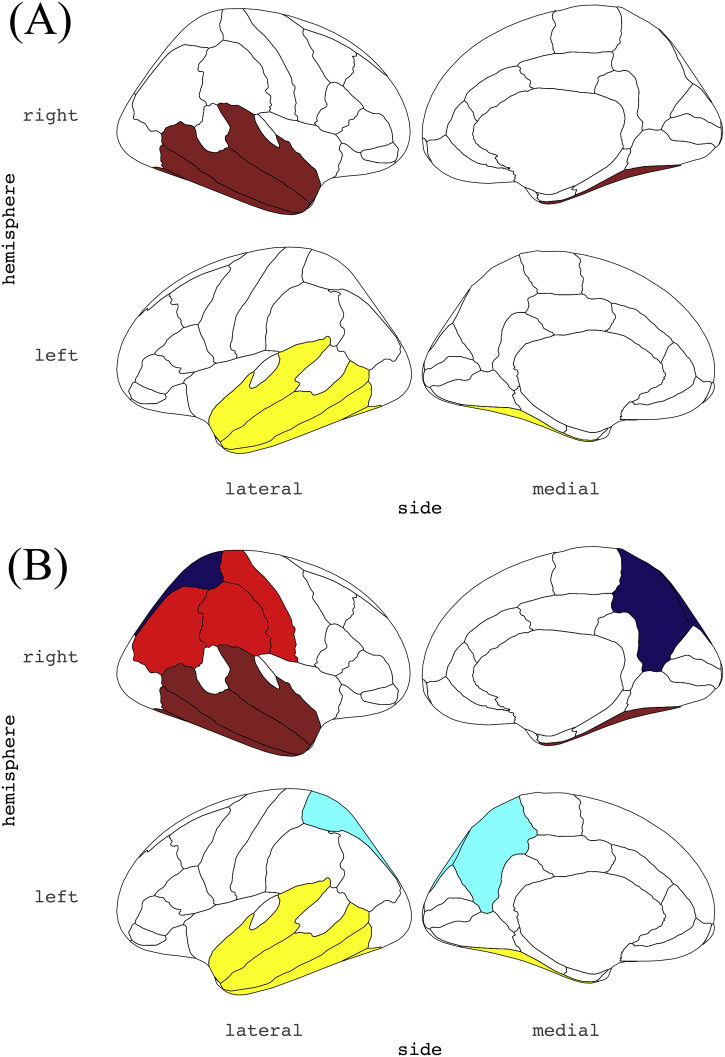
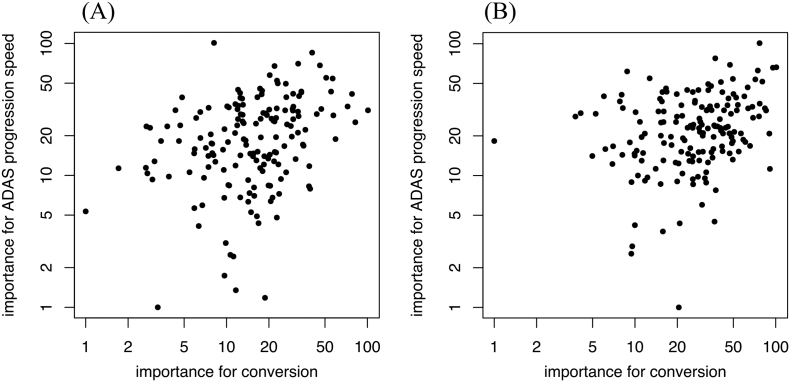
We included 204 participants from the baseline dataset, and performed a follow-up with 100 in the 36-month dataset of MCI cohort participants from the J-ADNI. In the univariate correlation or variable importance analysis, baseline atrophy in temporal lobe regions/structures significantly predicted clinical AD progression. In the WGCNA consensus analysis, co-atrophy modules associated with MCI conversion were first distributed in the temporal lobe and subsequently extended to adjacent parietal cortical regions in the following 36 months.
We identified coordinated modules of brain atrophy and demonstrated their longitudinal extension along with the clinical course of AD progression using WGCNA, which showed a good correspondence with previous pathological studies of the tau propagation theory. Our results suggest the potential applicability of this methodology, originating from genetic analyses, for the surrogate visualization of the underlying pathological progression in neurodegenerative diseases not limited to AD.
我们旨在使用加权基因共表达网络分析(WGCNA),一种最初用于遗传分析的无监督层次聚类方法,识别与阿尔茨海默病(AD)进展相关的具有高度连通性的模块化结构萎缩,并研究其纵向变化。
我们纳入了日本阿尔茨海默病神经影像学倡议(J-ADNI)研究中基线时患有晚期轻度认知障碍(MCI)的参与者。我们根据 FreeSurfer 软件的计算,对 164 个分割的大脑区域/结构的归一化和 Z 变换的结构体积或皮质厚度数据进行了推断。我们应用 WGCNA 提取具有高度相互连接的结构萎缩模式的模块,并检查所确定的模块与临床 AD 进展之间的相关性。
我们纳入了基线数据集的 204 名参与者,并对 J-ADNI 的 MCI 队列参与者的 36 个月数据集进行了 100 名参与者的随访。在单变量相关性或变量重要性分析中,颞叶区域/结构的基线萎缩显著预测了临床 AD 的进展。在 WGCNA 共识分析中,与 MCI 转化相关的共萎缩模块首先分布在颞叶,随后在接下来的 36 个月内扩展到相邻的顶叶皮质区域。
我们使用 WGCNA 识别了大脑萎缩的协调模块,并证明了它们沿着 AD 进展的临床过程进行纵向扩展,这与 tau 传播理论的先前病理研究具有很好的一致性。我们的结果表明,这种源自遗传分析的方法在不限于 AD 的神经退行性疾病的潜在病理进展的替代可视化方面具有潜在的适用性。