Department of Biological Chemistry, John Innes Centre, Norwich NR4 7UH, United Kingdom.
School of Biological Sciences, University of East Anglia, Norwich NR4 7TJ, United Kingdom.
Proc Natl Acad Sci U S A. 2019 Aug 27;116(35):17584-17591. doi: 10.1073/pnas.1907971116. Epub 2019 Aug 14.
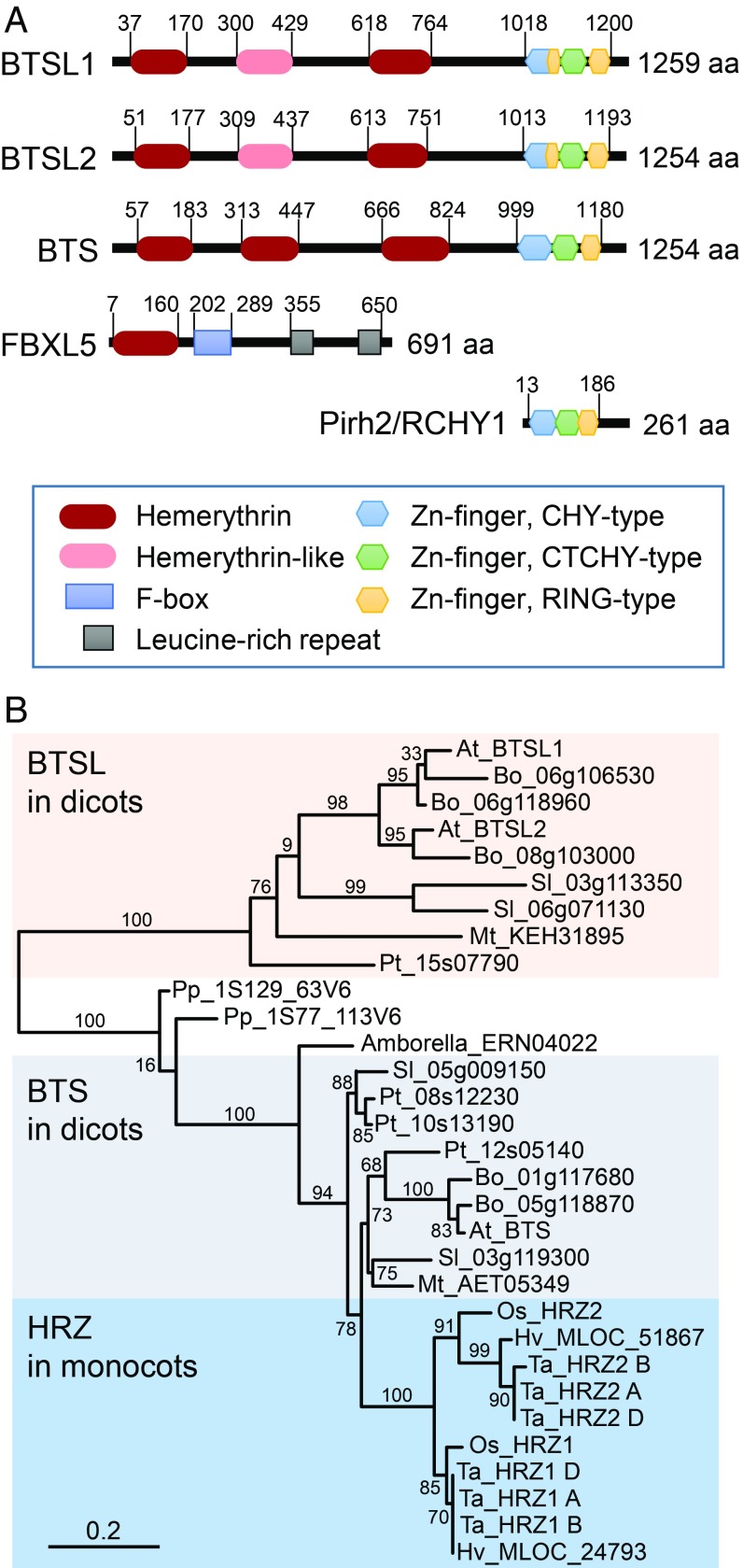
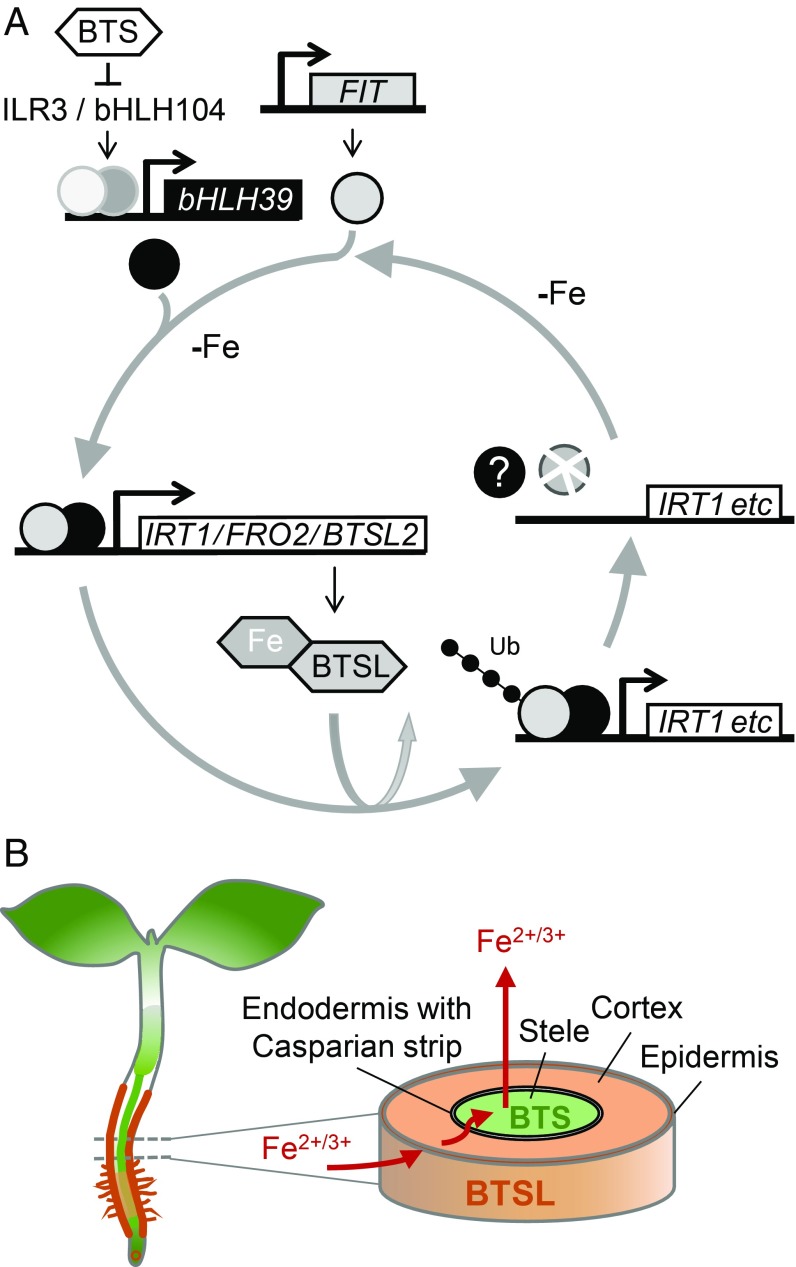
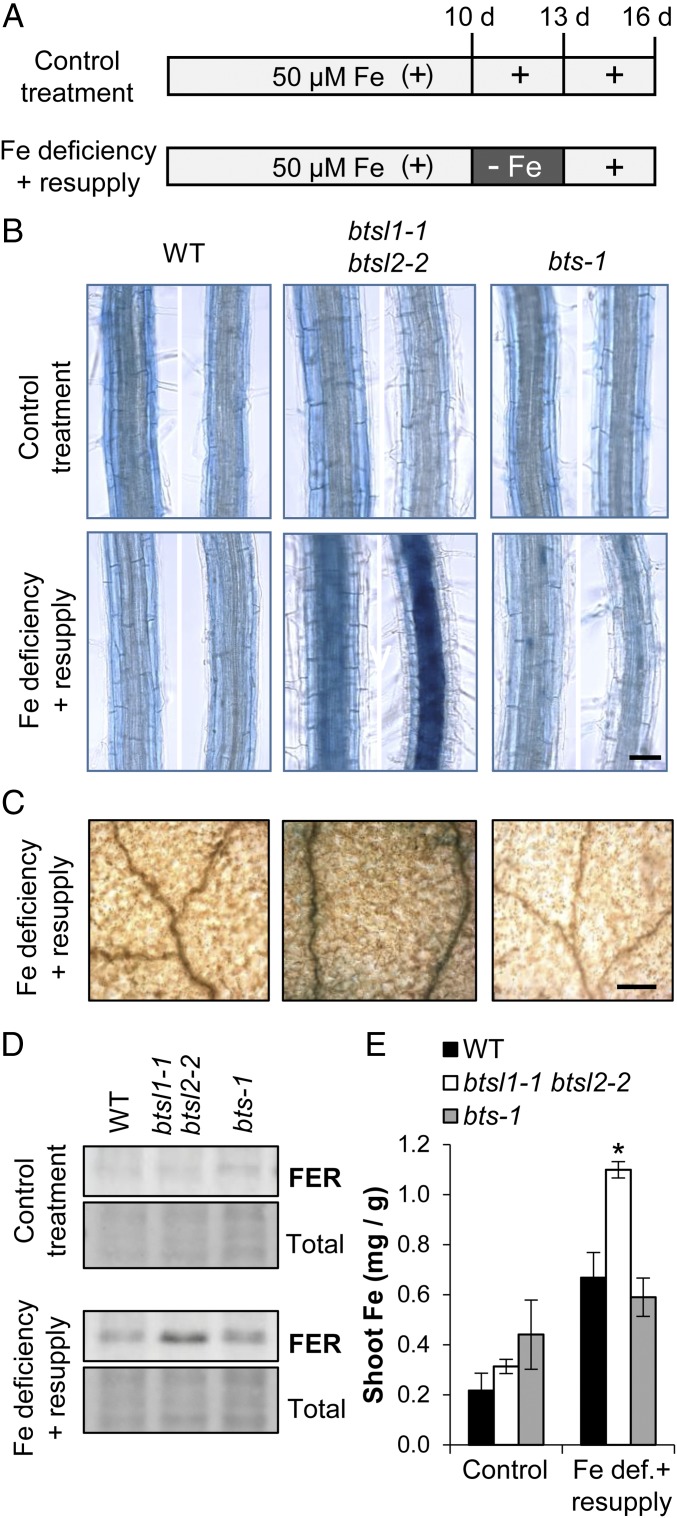
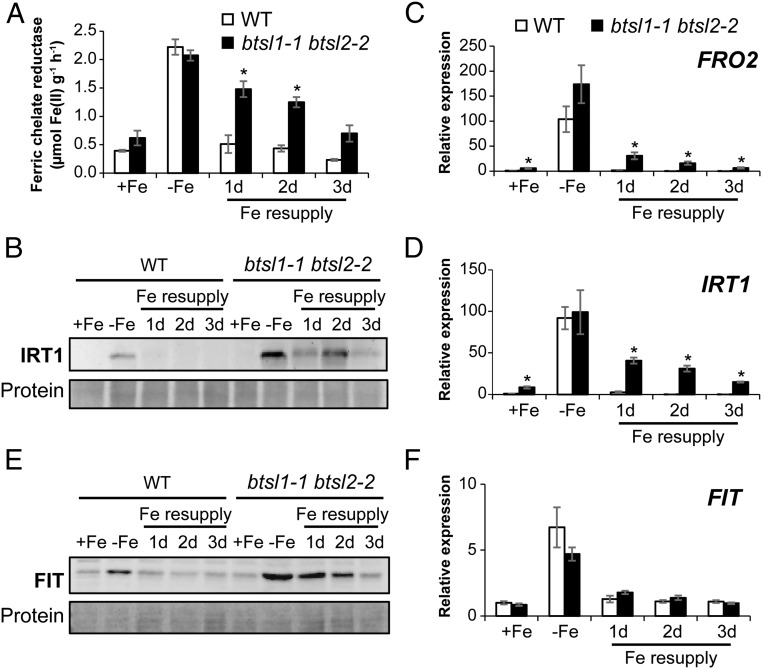
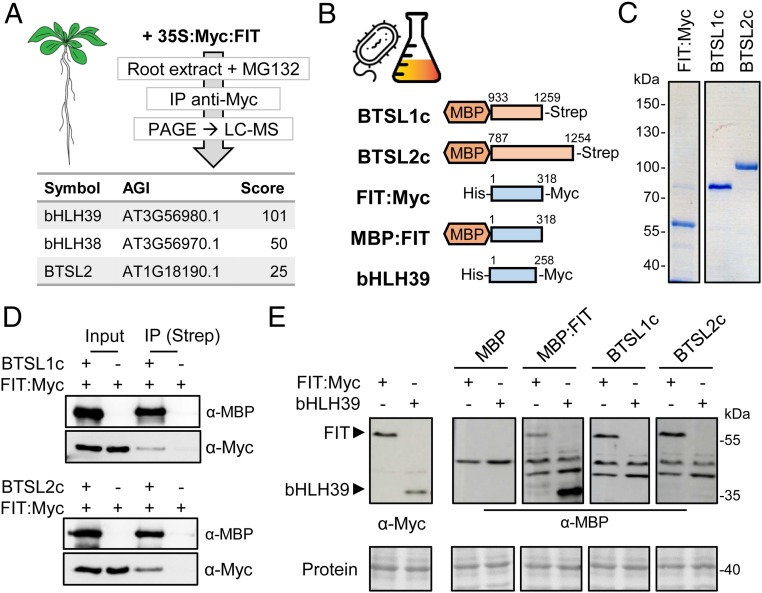
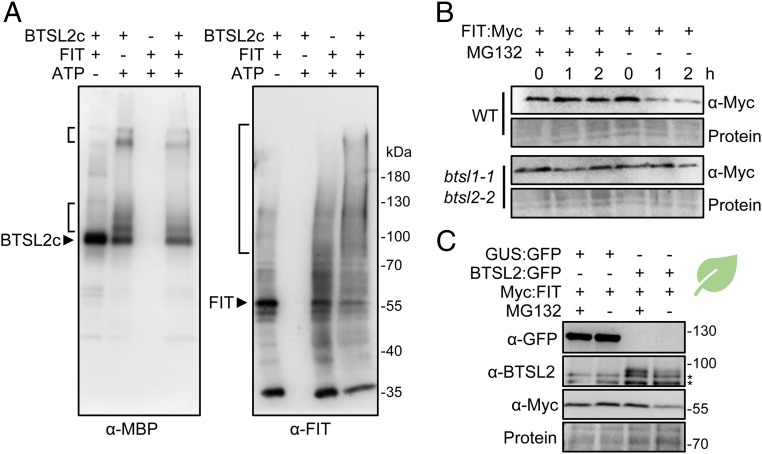
Organisms need to balance sufficient uptake of iron (Fe) with possible toxicity. In plant roots, a regulon of uptake genes is transcriptionally activated under Fe deficiency, but it is unknown how this response is inactivated when Fe becomes available. Here we describe the function of 2 partially redundant E3 ubiquitin ligases, BRUTUS-LIKE1 (BTSL1) and BTSL2, in and provide evidence that they target the transcription factor FIT, a key regulator of Fe uptake, for degradation. The double mutant failed to effectively down-regulate the transcription of genes controlled by FIT, and accumulated toxic levels of Fe in roots and leaves. The C-terminal domains of BTSL1 and BTSL2 exhibited E3 ligase activity, and interacted with FIT but not its dimeric partner bHLH39. The BTSL proteins were able to poly-ubiquitinate FIT in vitro and promote FIT degradation in vivo. Thus, posttranslational control of FIT is critical to prevent excess Fe uptake.
生物体需要平衡铁(Fe)的充足摄取和可能的毒性。在植物根中,一组摄取基因在缺铁时被转录激活,但当 Fe 变得可用时,这种反应是如何失活的尚不清楚。在这里,我们描述了 2 个部分冗余的 E3 泛素连接酶 BRUTUS-LIKE1(BTSL1)和 BTSL2 在中的功能,并提供证据表明它们将 FIT 的转录因子作为降解的靶标,FIT 是 Fe 摄取的关键调节剂。双突变体未能有效地下调 FIT 控制的基因的转录,并且在根和叶中积累了有毒水平的 Fe。BTSL1 和 BTSL2 的 C 端结构域表现出 E3 连接酶活性,并与 FIT 相互作用,但不与其二聚体伙伴 bHLH39 相互作用。BTSL 蛋白能够在体外多泛素化 FIT 并促进体内 FIT 降解。因此,FIT 的翻译后控制对于防止过量的 Fe 摄取至关重要。