Nokia Bell Laboratories, Espoo, Finland.
Department of Electrical Engineering and Automation, Aalto University, Espoo, Finland.
PLoS Comput Biol. 2019 Aug 15;15(8):e1007259. doi: 10.1371/journal.pcbi.1007259. eCollection 2019 Aug.
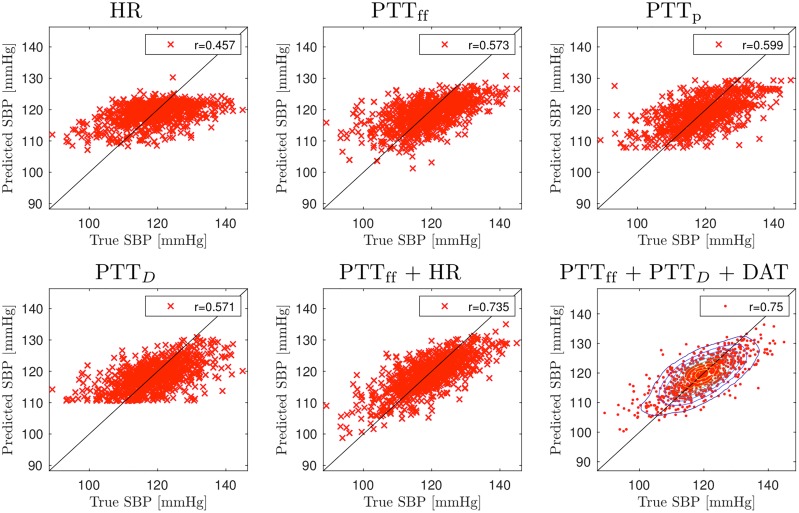
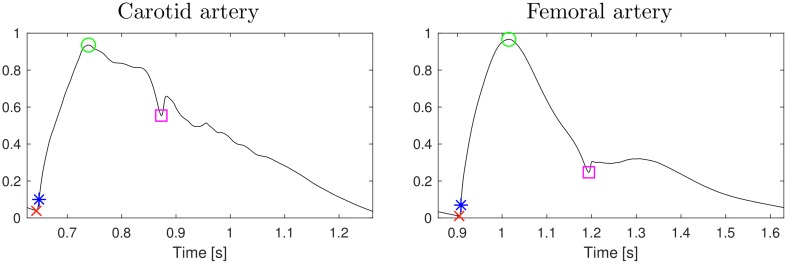
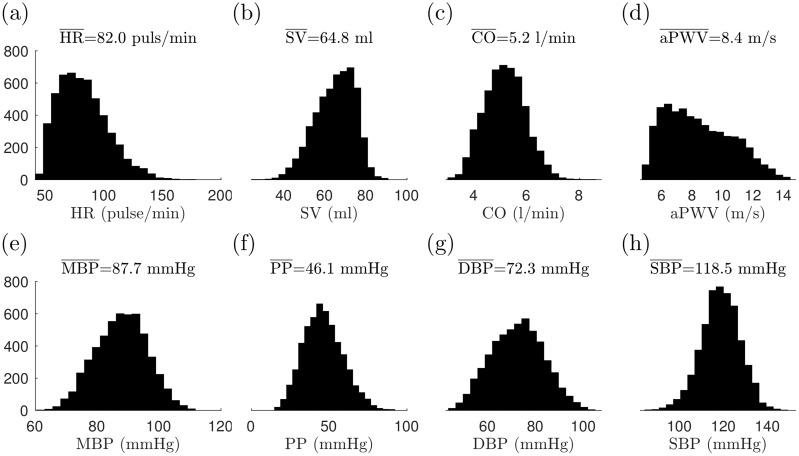
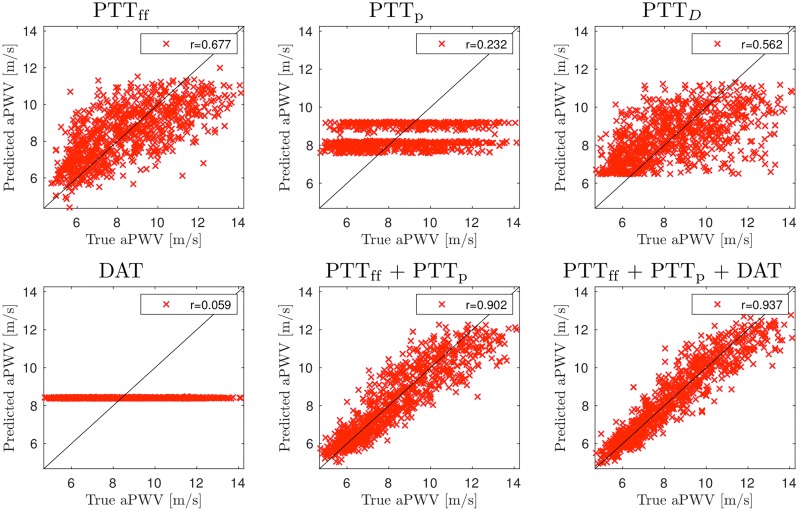
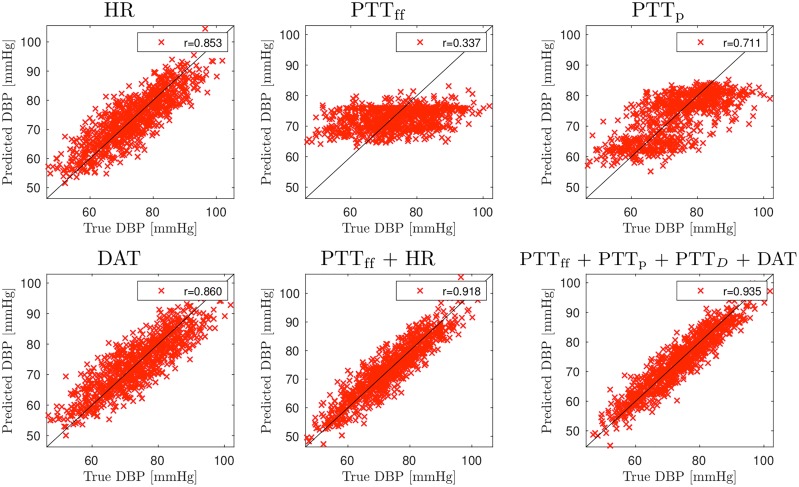
Recent developments in cardiovascular modelling allow us to simulate blood flow in an entire human body. Such model can also be used to create databases of virtual subjects, with sizes limited only by computational resources. In this work, we study if it is possible to estimate cardiovascular health indices using machine learning approaches. In particular, we carry out theoretical assessment of estimating aortic pulse wave velocity, diastolic and systolic blood pressure and stroke volume using pulse transit/arrival timings derived from photopletyshmography signals. For predictions, we train Gaussian process regression using a database of virtual subjects generated with a cardiovascular simulator. Simulated results provides theoretical assessment of accuracy for predictions of the health indices. For instance, aortic pulse wave velocity can be estimated with a high accuracy (r > 0.9) when photopletyshmography is measured from left carotid artery using a combination of foot-to-foot pulse transmit time and peak location derived for the predictions. Similar accuracy can be reached for diastolic blood pressure, but predictions of systolic blood pressure are less accurate (r > 0.75) and the stroke volume predictions are mostly contributed by heart rate.
心血管建模的最新进展使我们能够模拟整个人体的血流。这种模型也可以用于创建虚拟对象的数据库,其大小仅受计算资源的限制。在这项工作中,我们研究了是否可以使用机器学习方法来估计心血管健康指数。具体来说,我们通过使用光电容积描记信号得出的脉搏传输/到达时间来评估使用机器学习方法估计主动脉脉搏波速度、舒张和收缩压以及心搏量的可能性。对于预测,我们使用心血管模拟器生成的虚拟对象数据库来训练高斯过程回归。模拟结果提供了对健康指数预测的准确性的理论评估。例如,当使用预测得出的足部到足部脉搏传输时间和峰值位置组合从左颈动脉测量光电容积描记图时,可以非常准确地(r > 0.9)估计主动脉脉搏波速度。对于舒张压,可以达到类似的准确性,但收缩压的预测准确性较低(r > 0.75),并且心搏量的预测主要受心率影响。