Förg Michael, Colombier Léo, Patel Robin K, Lindlau Jessica, Mohite Aditya D, Yamaguchi Hisato, Glazov Mikhail M, Hunger David, Högele Alexander
Fakultät für Physik, Munich Quantum Center, and Center for NanoScience (CeNS), Ludwig-Maximilians-Universität München, Geschwister-Scholl-Platz 1, 80539, München, Germany.
Department of Chemical and Biomolecular Engineering, Rice University, Houston, TX, 77005, USA.
Nat Commun. 2019 Aug 16;10(1):3697. doi: 10.1038/s41467-019-11620-z.
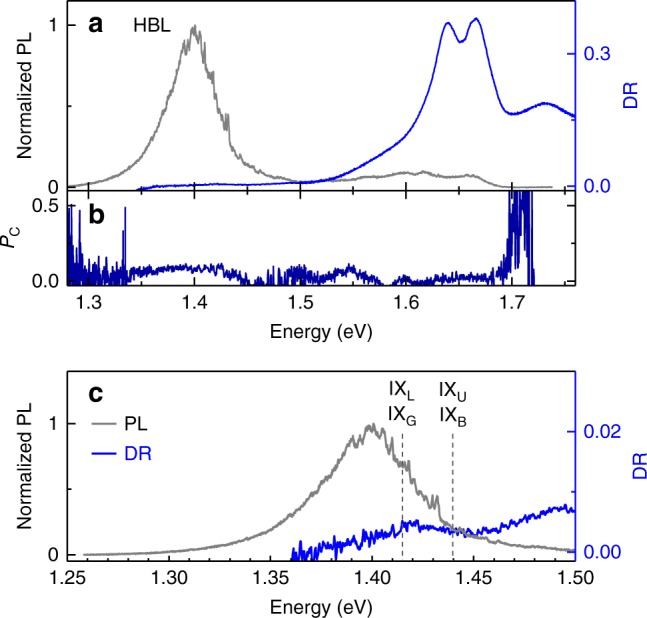
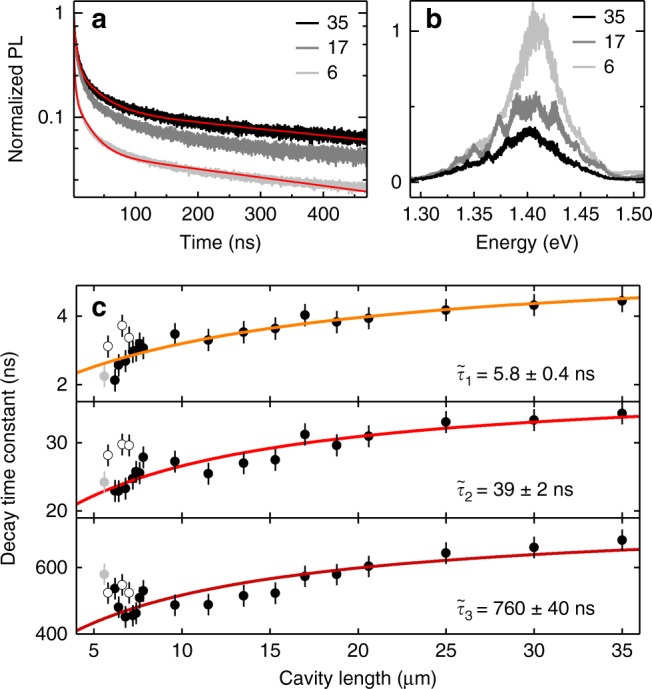
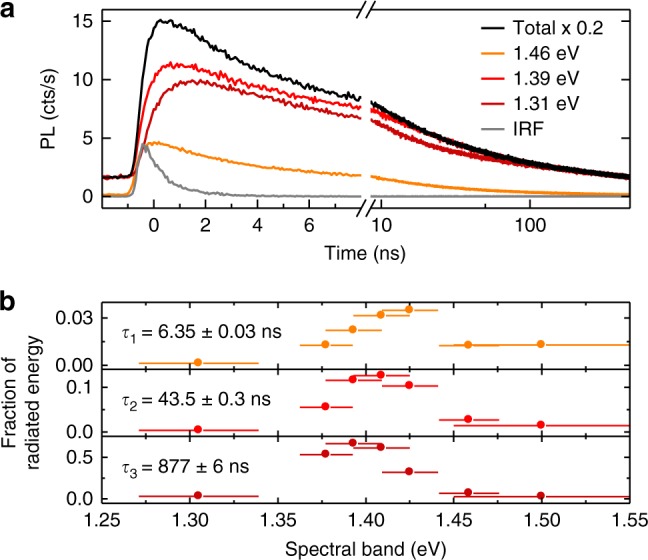
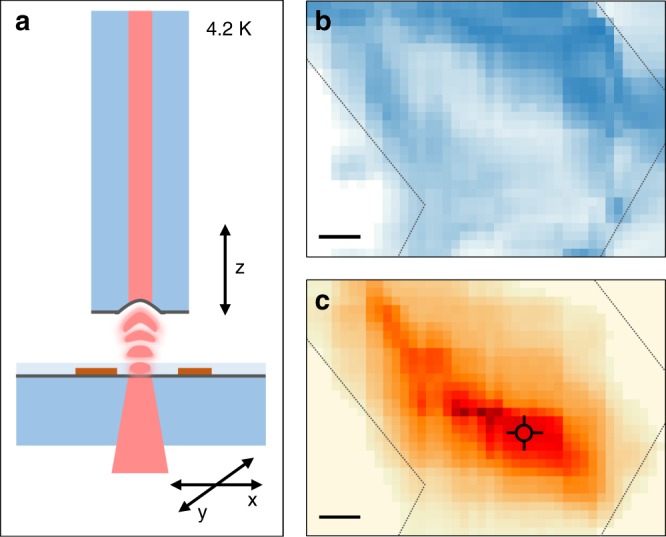
Monolayer transition metal dichalcogenides integrated in optical microcavities host exciton-polaritons as a hallmark of the strong light-matter coupling regime. Analogous concepts for hybrid light-matter systems employing spatially indirect excitons with a permanent electric dipole moment in heterobilayer crystals promise realizations of exciton-polariton gases and condensates with inherent dipolar interactions. Here, we implement cavity-control of interlayer excitons in vertical MoSe-WSe heterostructures. Our experiments demonstrate the Purcell effect for heterobilayer emission in cavity-modified photonic environments, and quantify the light-matter coupling strength of interlayer excitons. The results will facilitate further developments of dipolar exciton-polariton gases and condensates in hybrid cavity - van der Waals heterostructure systems.
集成在光学微腔中的单层过渡金属二硫属化物承载着激子极化激元,这是强光-物质耦合 regime 的一个标志。对于在异质双层晶体中采用具有永久电偶极矩的空间间接激子的混合光-物质系统,类似的概念有望实现具有固有偶极相互作用的激子极化激元气体和凝聚体。在这里,我们实现了垂直 MoSe-WSe 异质结构中层间激子的腔控制。我们的实验证明了在腔修饰的光子环境中异质双层发射的珀塞尔效应,并量化了层间激子的光-物质耦合强度。这些结果将促进混合腔-范德华异质结构系统中偶极激子极化激元气体和凝聚体的进一步发展。