Mitrea Laura, Ranga Floricuța, Fetea Florinela, Dulf Francisc Vasile, Rusu Alexandru, Trif Monica, Vodnar Dan Cristian
Institute of Life Sciences, Faculty of Food Science and Technology, University of Agricultural Sciences and Veterinary Medicine, Cluj-Napoca, Calea Mănăștur 3-5, 400372 Cluj-Napoca, Romania.
Faculty of Agriculture, University of Agricultural Sciences and Veterinary Medicine Cluj-Napoca, Calea Mănăștur 3-5, 400372 Cluj-Napoca, Romania.
Microorganisms. 2019 Aug 16;7(8):265. doi: 10.3390/microorganisms7080265.
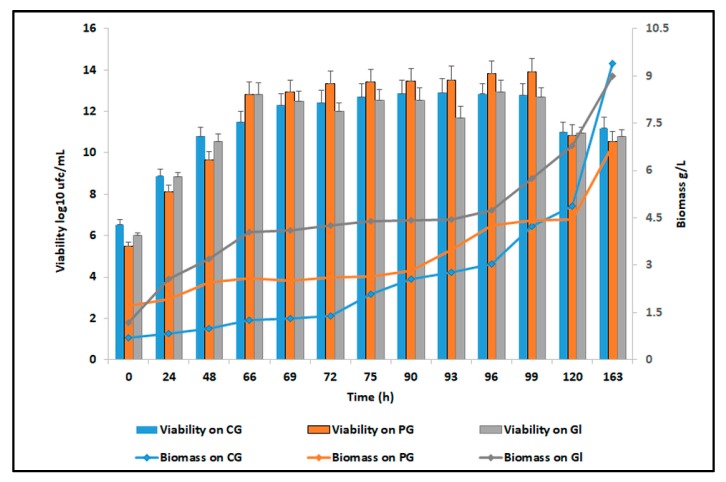
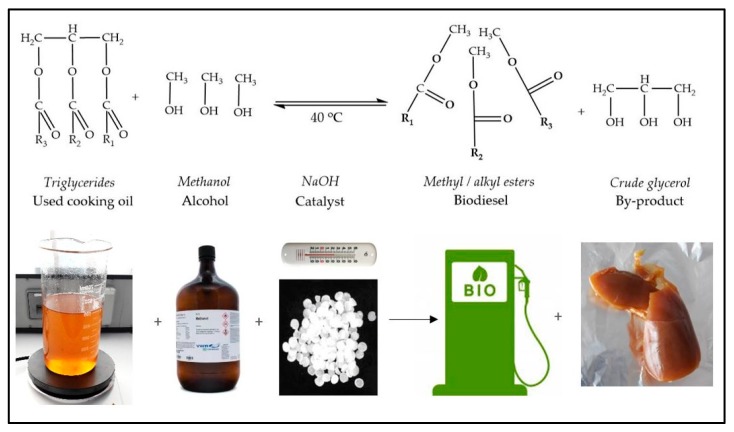
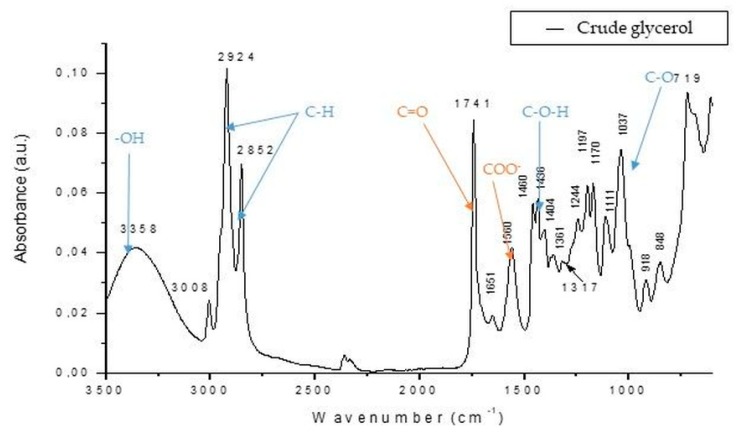
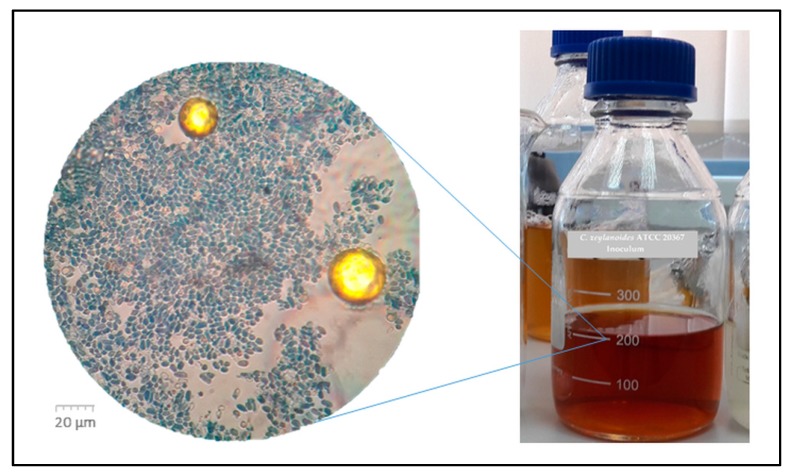
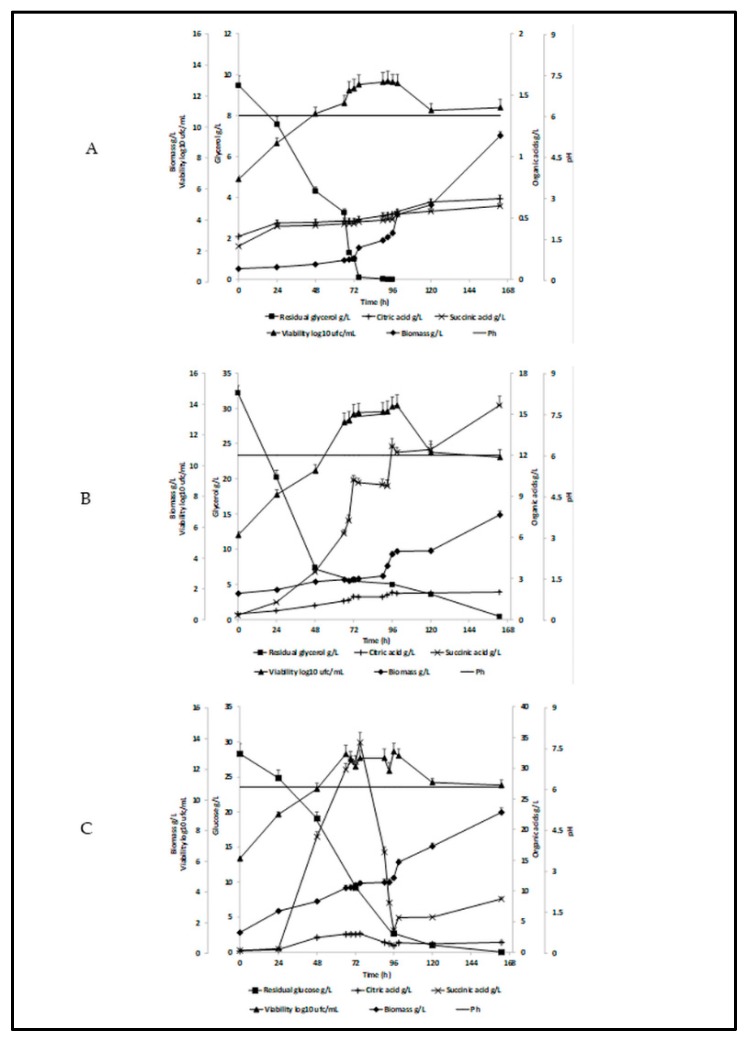
Used kitchen oil represents a feasible and renewable biomass to produce green biofuels such as biodiesel. Biodiesel production generates large amounts of by-products such as the crude glycerol fraction, which can be further used biotechnologically as a valuable nutrient for many microorganisms. In this study, we transesterified used kitchen oil with methanol and sodium hydroxide in order to obtain biodiesel and crude glycerol fractions. The crude glycerol fraction consisting of 30% glycerol was integrated into a bioreactor cultivation process as a nutrient source for the growth of ATCC 20367. Cell viability and biomass production were similar to those obtained with batch cultivations on pure glycerol or glucose as the main nutrient substrates. However, the biosynthesis of organic acids (e.g., citric and succinic) was significantly different compared to pure glycerol and glucose used as main carbon sources.
废弃食用油是一种可行的可再生生物质,可用于生产生物柴油等绿色生物燃料。生物柴油生产会产生大量副产物,如粗甘油馏分,这些副产物可进一步通过生物技术用作许多微生物的宝贵营养物质。在本研究中,我们将废弃食用油与甲醇和氢氧化钠进行酯交换反应,以获得生物柴油和粗甘油馏分。将含有30%甘油的粗甘油馏分作为ATCC 20367生长的营养源整合到生物反应器培养过程中。细胞活力和生物量产量与以纯甘油或葡萄糖作为主要营养底物的分批培养所获得的结果相似。然而,与以纯甘油和葡萄糖作为主要碳源相比,有机酸(如柠檬酸和琥珀酸)的生物合成存在显著差异。