• 文献检索
  • 文档翻译
  • 深度研究
  • 学术资讯
  • Suppr Zotero 插件Zotero 插件
  • 邀请有礼
  • 套餐&价格
  • 历史记录
应用&插件
Suppr Zotero 插件Zotero 插件浏览器插件Mac 客户端Windows 客户端微信小程序
定价
高级版会员购买积分包购买API积分包
服务
文献检索文档翻译深度研究API 文档MCP 服务
关于我们
关于 Suppr公司介绍联系我们用户协议隐私条款
关注我们

Suppr 超能文献

核心技术专利:CN118964589B侵权必究
粤ICP备2023148730 号-1Suppr @ 2026

文献检索

告别复杂PubMed语法,用中文像聊天一样搜索,搜遍4000万医学文献。AI智能推荐,让科研检索更轻松。

立即免费搜索

文件翻译

保留排版,准确专业,支持PDF/Word/PPT等文件格式,支持 12+语言互译。

免费翻译文档

深度研究

AI帮你快速写综述,25分钟生成高质量综述,智能提取关键信息,辅助科研写作。

立即免费体验

通过可控共沉淀法合成具有高磁热性能的磁性铁氧体纳米颗粒

Synthesis of Magnetic Ferrite Nanoparticles with High Hyperthermia Performance via a Controlled Co-Precipitation Method.

作者信息

Darwish Mohamed S A, Kim Hohyeon, Lee Hwangjae, Ryu Chiseon, Lee Jae Young, Yoon Jungwon

机构信息

School of Integrated Technology, Gwangju Institute of Science and Technology, Gwangju 61005, Korea.

Petrochemicals Department, Egyptian Petroleum Research Institute, 1 Ahmed El-Zomor Street, El Zohour Region, Nasr City, Cairo 11727, Egypt.

出版信息

Nanomaterials (Basel). 2019 Aug 16;9(8):1176. doi: 10.3390/nano9081176.

DOI:10.3390/nano9081176
PMID:31426427
原文链接:https://pmc.ncbi.nlm.nih.gov/articles/PMC6724091/
Abstract

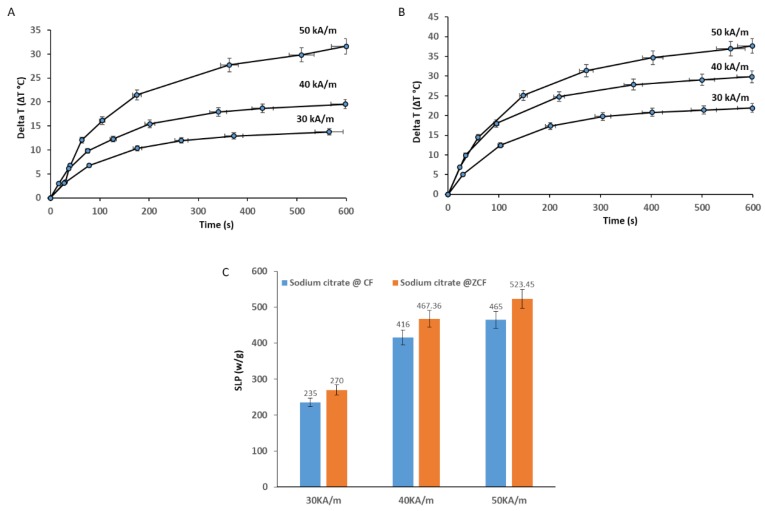
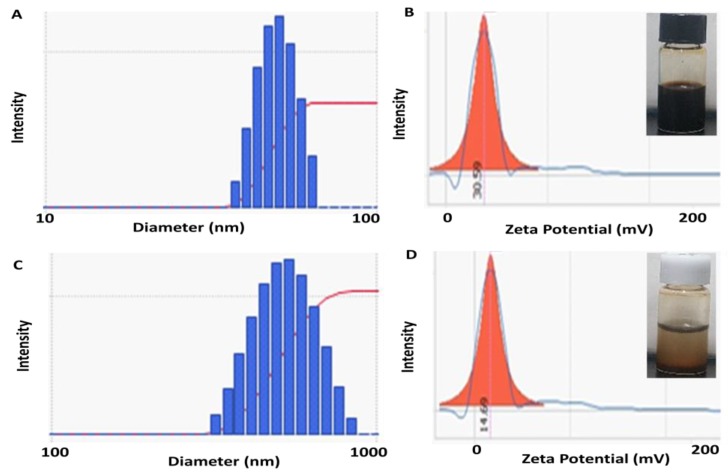
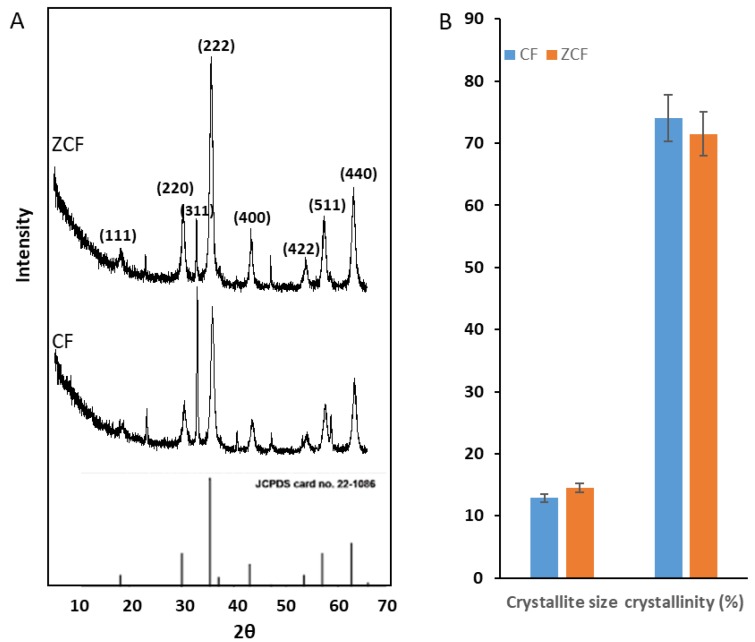
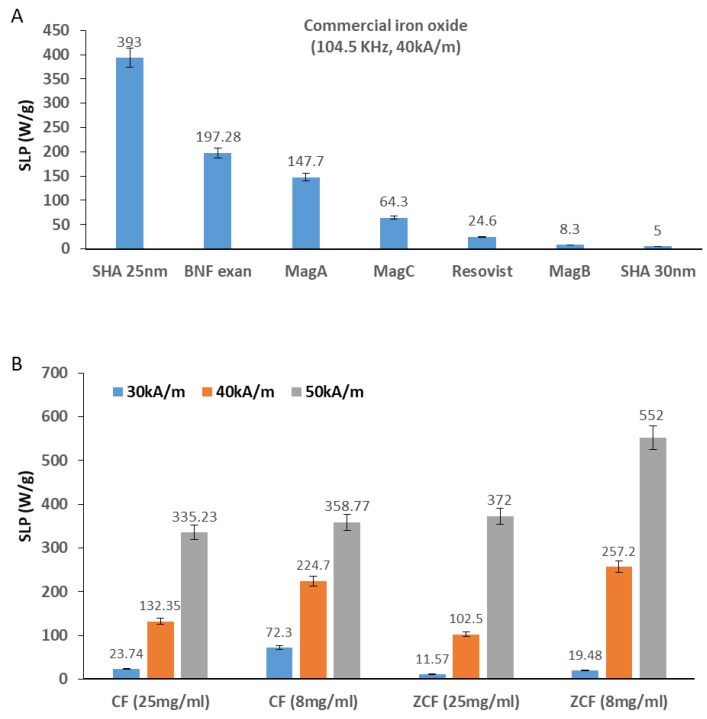
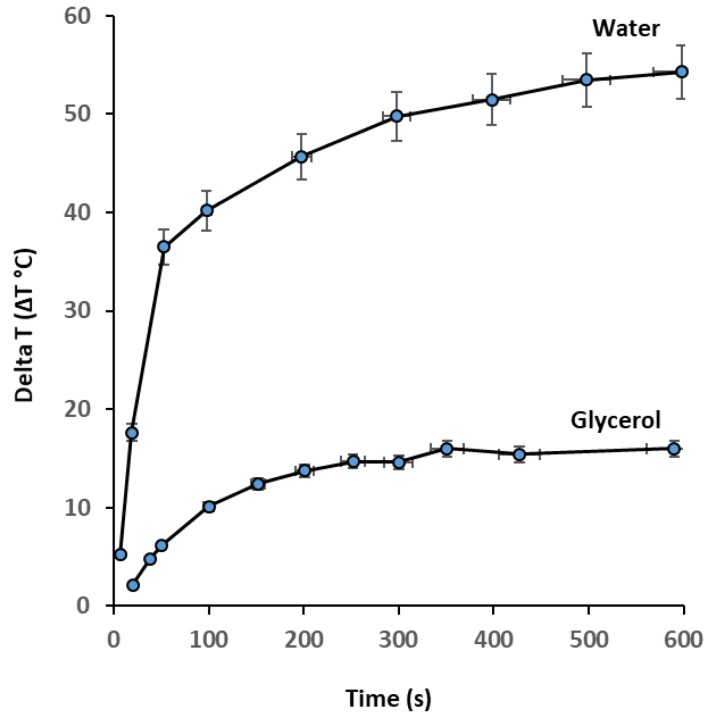
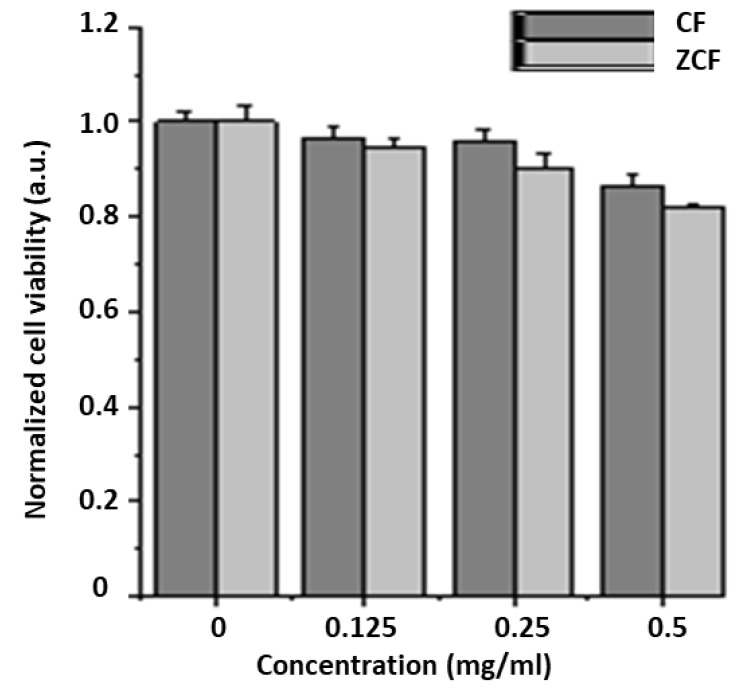
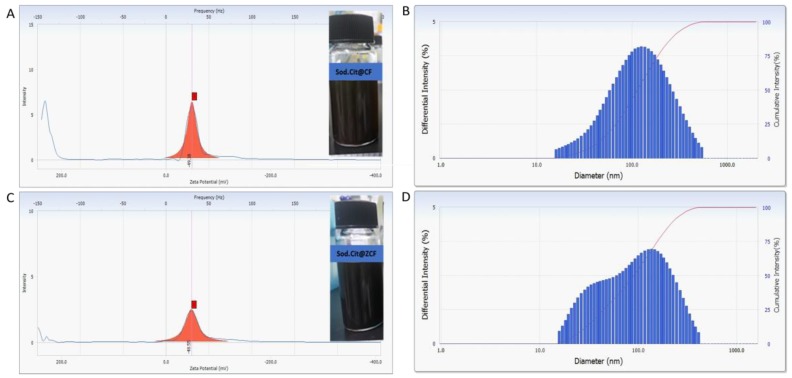
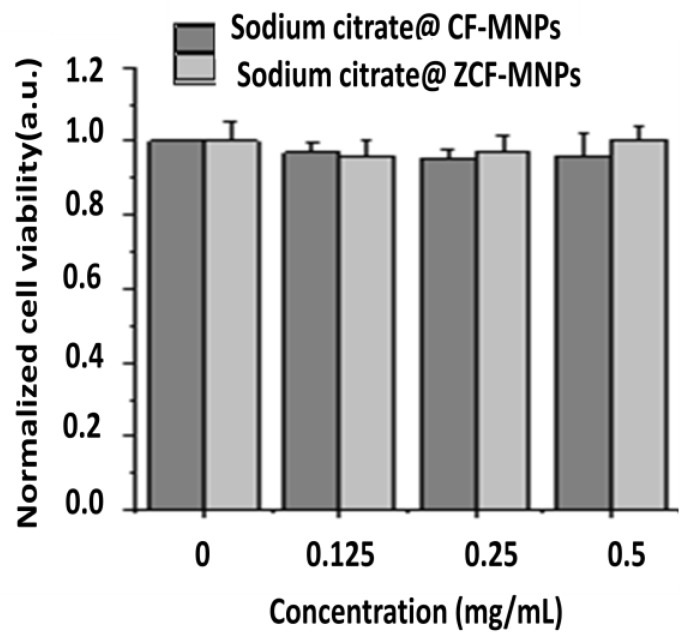
Magnetic nanoparticles (MNPs) that exhibit high specific loss power (SLP) at lower metal content are highly desirable for hyperthermia applications. The conventional co-precipitation process has been widely employed for the synthesis of magnetic nanoparticles. However, their hyperthermia performance is often insufficient, which is considered as the main challenge to the development of practicable cancer treatments. In particular, ferrite MNPs have unique properties, such as a strong magnetocrystalline anisotropy, high coercivity, and moderate saturation magnetization, however their hyperthermia performance needs to be further improved. In this study, cobalt ferrite (CoFeO) and zinc cobalt ferrite nanoparticles (ZnCoFeO) were prepared to achieve high SLP values by modifying the conventional co-precipitation method. Our modified method, which allows for precursor material compositions (molar ratio of Fe:Fe:Co/Zn of 3:2:1), is a simple, environmentally friendly, and low temperature process carried out in air at a maximum temperature of 60 °C, without the need for oxidizing or coating agents. The particles produced were characterized using multiple techniques, such as X-ray diffraction (XRD), dynamic light scattering (DLS), transmission electron microscopy (TEM), ultraviolet-visible spectroscopy (UV-Vis spectroscopy), and a vibrating sample magnetometer (VSM). SLP values of the prepared nanoparticles were carefully evaluated as a function of time, magnetic field strength (30, 40, and 50 kA m), and the viscosity of the medium (water and glycerol), and compared to commercial magnetic nanoparticle materials under the same conditions. The cytotoxicity of the prepared nanoparticles by in vitro culture with NIH-3T3 fibroblasts exhibited good cytocompatibility up to 0.5 mg/mL. The safety limit of magnetic field parameters for SLP was tested. It did not exceed the 5 × 10 Am s threshold. A saturation temperature of 45 °C could be achieved. These nanoparticles, with minimal metal content, can ideally be used for in vivo hyperthermia applications, such as cancer treatments.

摘要

在较低金属含量下表现出高比损耗功率(SLP)的磁性纳米颗粒(MNPs)在热疗应用中极具吸引力。传统的共沉淀法已被广泛用于合成磁性纳米颗粒。然而,它们的热疗性能往往不足,这被认为是开发可行的癌症治疗方法的主要挑战。特别是,铁氧体MNPs具有独特的性质,如强磁晶各向异性、高矫顽力和适度的饱和磁化强度,但其热疗性能仍需进一步提高。在本研究中,通过改进传统的共沉淀法制备了钴铁氧体(CoFeO)和锌钴铁氧体纳米颗粒(ZnCoFeO),以实现高SLP值。我们改进的方法允许前驱体材料组成(Fe:Fe:Co/Zn的摩尔比为3:2:1),是一种简单、环保且低温的过程,在空气中于最高60°C的温度下进行,无需氧化剂或涂层剂。使用多种技术对所制备的颗粒进行了表征,如X射线衍射(XRD)、动态光散射(DLS)、透射电子显微镜(TEM)、紫外可见光谱(UV-Vis光谱)和振动样品磁强计(VSM)。仔细评估了所制备纳米颗粒的SLP值随时间、磁场强度(30、40和50 kA/m)以及介质(水和甘油)粘度的变化,并与相同条件下的商业磁性纳米颗粒材料进行了比较。通过与NIH-3T3成纤维细胞进行体外培养,所制备纳米颗粒的细胞毒性在浓度高达0.5 mg/mL时表现出良好的细胞相容性。测试了SLP的磁场参数安全极限。它未超过5×10 A/m·s的阈值。可实现45°C的饱和温度。这些金属含量极低的纳米颗粒非常适合用于体内热疗应用,如癌症治疗。
https://cdn.ncbi.nlm.nih.gov/pmc/blobs/d432/6724091/19448d72da23/nanomaterials-09-01176-g016.jpg
https://cdn.ncbi.nlm.nih.gov/pmc/blobs/d432/6724091/71b70d26ecf1/nanomaterials-09-01176-g001a.jpg
https://cdn.ncbi.nlm.nih.gov/pmc/blobs/d432/6724091/80a3bf210899/nanomaterials-09-01176-g002.jpg
https://cdn.ncbi.nlm.nih.gov/pmc/blobs/d432/6724091/92d0ae6495a1/nanomaterials-09-01176-g003.jpg
https://cdn.ncbi.nlm.nih.gov/pmc/blobs/d432/6724091/9ad835b93b75/nanomaterials-09-01176-g004.jpg
https://cdn.ncbi.nlm.nih.gov/pmc/blobs/d432/6724091/b8799134d1b0/nanomaterials-09-01176-g005.jpg
https://cdn.ncbi.nlm.nih.gov/pmc/blobs/d432/6724091/8685c06f03f3/nanomaterials-09-01176-g006.jpg
https://cdn.ncbi.nlm.nih.gov/pmc/blobs/d432/6724091/185c180dddcb/nanomaterials-09-01176-g007.jpg
https://cdn.ncbi.nlm.nih.gov/pmc/blobs/d432/6724091/5ddf0bbe6d38/nanomaterials-09-01176-g008.jpg
https://cdn.ncbi.nlm.nih.gov/pmc/blobs/d432/6724091/b41e227d191b/nanomaterials-09-01176-g009.jpg
https://cdn.ncbi.nlm.nih.gov/pmc/blobs/d432/6724091/5667c058c9a9/nanomaterials-09-01176-g010.jpg
https://cdn.ncbi.nlm.nih.gov/pmc/blobs/d432/6724091/08103e3ce480/nanomaterials-09-01176-g011.jpg
https://cdn.ncbi.nlm.nih.gov/pmc/blobs/d432/6724091/3932af4c15ae/nanomaterials-09-01176-g012.jpg
https://cdn.ncbi.nlm.nih.gov/pmc/blobs/d432/6724091/19c65618c8d7/nanomaterials-09-01176-g013a.jpg
https://cdn.ncbi.nlm.nih.gov/pmc/blobs/d432/6724091/1f7eafbd012d/nanomaterials-09-01176-g014.jpg
https://cdn.ncbi.nlm.nih.gov/pmc/blobs/d432/6724091/31851268a5b4/nanomaterials-09-01176-g015.jpg
https://cdn.ncbi.nlm.nih.gov/pmc/blobs/d432/6724091/19448d72da23/nanomaterials-09-01176-g016.jpg
https://cdn.ncbi.nlm.nih.gov/pmc/blobs/d432/6724091/71b70d26ecf1/nanomaterials-09-01176-g001a.jpg
https://cdn.ncbi.nlm.nih.gov/pmc/blobs/d432/6724091/80a3bf210899/nanomaterials-09-01176-g002.jpg
https://cdn.ncbi.nlm.nih.gov/pmc/blobs/d432/6724091/92d0ae6495a1/nanomaterials-09-01176-g003.jpg
https://cdn.ncbi.nlm.nih.gov/pmc/blobs/d432/6724091/9ad835b93b75/nanomaterials-09-01176-g004.jpg
https://cdn.ncbi.nlm.nih.gov/pmc/blobs/d432/6724091/b8799134d1b0/nanomaterials-09-01176-g005.jpg
https://cdn.ncbi.nlm.nih.gov/pmc/blobs/d432/6724091/8685c06f03f3/nanomaterials-09-01176-g006.jpg
https://cdn.ncbi.nlm.nih.gov/pmc/blobs/d432/6724091/185c180dddcb/nanomaterials-09-01176-g007.jpg
https://cdn.ncbi.nlm.nih.gov/pmc/blobs/d432/6724091/5ddf0bbe6d38/nanomaterials-09-01176-g008.jpg
https://cdn.ncbi.nlm.nih.gov/pmc/blobs/d432/6724091/b41e227d191b/nanomaterials-09-01176-g009.jpg
https://cdn.ncbi.nlm.nih.gov/pmc/blobs/d432/6724091/5667c058c9a9/nanomaterials-09-01176-g010.jpg
https://cdn.ncbi.nlm.nih.gov/pmc/blobs/d432/6724091/08103e3ce480/nanomaterials-09-01176-g011.jpg
https://cdn.ncbi.nlm.nih.gov/pmc/blobs/d432/6724091/3932af4c15ae/nanomaterials-09-01176-g012.jpg
https://cdn.ncbi.nlm.nih.gov/pmc/blobs/d432/6724091/19c65618c8d7/nanomaterials-09-01176-g013a.jpg
https://cdn.ncbi.nlm.nih.gov/pmc/blobs/d432/6724091/1f7eafbd012d/nanomaterials-09-01176-g014.jpg
https://cdn.ncbi.nlm.nih.gov/pmc/blobs/d432/6724091/31851268a5b4/nanomaterials-09-01176-g015.jpg
https://cdn.ncbi.nlm.nih.gov/pmc/blobs/d432/6724091/19448d72da23/nanomaterials-09-01176-g016.jpg

相似文献

1
Synthesis of Magnetic Ferrite Nanoparticles with High Hyperthermia Performance via a Controlled Co-Precipitation Method.通过可控共沉淀法合成具有高磁热性能的磁性铁氧体纳米颗粒
Nanomaterials (Basel). 2019 Aug 16;9(8):1176. doi: 10.3390/nano9081176.
2
Engineering Core-Shell Structures of Magnetic Ferrite Nanoparticles for High Hyperthermia Performance.用于高磁热性能的磁性铁氧体纳米颗粒的工程核壳结构
Nanomaterials (Basel). 2020 May 21;10(5):991. doi: 10.3390/nano10050991.
3
Study of structural and magnetic properties and heat induction of gadolinium-substituted manganese zinc ferrite nanoparticles for in vitro magnetic fluid hyperthermia.研究结构、磁性和热感应的钆取代锰锌铁氧体纳米粒子,用于体外磁流体热疗。
J Colloid Interface Sci. 2019 Apr 1;541:192-203. doi: 10.1016/j.jcis.2019.01.063. Epub 2019 Jan 17.
4
Real-time infrared thermography detection of magnetic nanoparticle hyperthermia in a murine model under a non-uniform field configuration.在非均匀场配置下,通过实时红外热成像技术检测小鼠模型中的磁性纳米颗粒热疗。
Int J Hyperthermia. 2013 Dec;29(8):752-67. doi: 10.3109/02656736.2013.839056. Epub 2013 Oct 18.
5
Optimization of cobalt ferrite magnetic nanoparticle as a theranostic agent: MRI and hyperthermia.优化钴铁氧体磁性纳米颗粒作为治疗诊断一体化试剂:磁共振成像和热疗。
MAGMA. 2023 Oct;36(5):749-766. doi: 10.1007/s10334-023-01072-4. Epub 2023 Mar 6.
6
Green Synthesis of Co-Zn Spinel Ferrite Nanoparticles: Magnetic and Intrinsic Antimicrobial Properties.钴锌尖晶石铁氧体纳米颗粒的绿色合成:磁性和固有抗菌性能
Materials (Basel). 2020 Nov 6;13(21):5014. doi: 10.3390/ma13215014.
7
Sonochemical synthesis of Gd doped CoFeO spinel ferrite nanoparticles and its physical properties.钆掺杂钴铁氧体尖晶石纳米颗粒的声化学合成及其物理性质。
Ultrason Sonochem. 2018 Jan;40(Pt A):773-783. doi: 10.1016/j.ultsonch.2017.08.024. Epub 2017 Aug 24.
8
Specific Absorption Rate Dependency on the Co Distribution and Magnetic Properties in CoMnFeO Nanoparticles.钴锰铁氧体纳米颗粒中比吸收率与钴分布及磁性能的关系
Nanomaterials (Basel). 2021 May 7;11(5):1231. doi: 10.3390/nano11051231.
9
Fabrication of Multifunctional Drug Loaded Magnetic Phase Supported Calcium Phosphate Nanoparticle for Local Hyperthermia Combined Drug Delivery and Antibacterial Activity.用于局部热疗联合药物递送及抗菌活性的多功能载药磁性相支撑磷酸钙纳米颗粒的制备
ACS Appl Bio Mater. 2023 Jan 16;6(1):104-116. doi: 10.1021/acsabm.2c00768. Epub 2022 Dec 13.
10
Effect of particle size and composition on local magnetic hyperthermia of chitosan-Mg1-xCoxFe2O4 nanohybrid.粒径和组成对壳聚糖-Mg1-xCoxFe2O4纳米杂化物局部磁热疗的影响
Front Chem. 2024 Mar 7;12:1347423. doi: 10.3389/fchem.2024.1347423. eCollection 2024.

引用本文的文献

1
Metal-based nanomedicines for cancer theranostics.用于癌症诊疗的金属基纳米药物。
Mil Med Res. 2025 Jul 30;12(1):41. doi: 10.1186/s40779-025-00627-x.
2
Magnetic Separation of Oil Spills from Water Using Cobalt Ferrite Nanoparticles with Fluorocarbon Functionalization.使用具有碳氟化合物功能化的钴铁氧体纳米颗粒从水中磁分离溢油
Int J Mol Sci. 2025 Jul 8;26(14):6562. doi: 10.3390/ijms26146562.
3
Applications and Efficacy of Iron Oxide Nanoparticles in the Treatment of Brain Tumors.氧化铁纳米颗粒在脑肿瘤治疗中的应用及疗效

本文引用的文献

1
Theoretical Analysis for Wireless Magnetothermal Deep Brain Stimulation Using Commercial Nanoparticles.商用纳米粒子的无线磁热深脑刺激的理论分析。
Int J Mol Sci. 2019 Jun 12;20(12):2873. doi: 10.3390/ijms20122873.
2
Magnetic Dehydrodipeptide-Based Self-Assembled Hydrogels for Theragnostic Applications.用于诊疗应用的基于磁性脱氢二肽的自组装水凝胶。
Nanomaterials (Basel). 2019 Apr 3;9(4):541. doi: 10.3390/nano9040541.
3
Combining magnetic hyperthermia and dual T1/T2 MR imaging using highly versatile iron oxide nanoparticles.
Pharmaceutics. 2025 Apr 9;17(4):499. doi: 10.3390/pharmaceutics17040499.
4
A facile one-pot γ-radiation formation of gum arabic-stabilized cobalt ferrite nanoparticles as an efficient magnetically retrievable heterogeneous catalyst.一种简便的一锅法通过γ辐射形成阿拉伯胶稳定的钴铁氧体纳米颗粒,作为一种高效的可磁回收多相催化剂。
RSC Adv. 2025 Mar 24;15(12):9119-9128. doi: 10.1039/d5ra00651a. eCollection 2025 Mar 21.
5
Control of Anisotropy and Magnetic Hyperthermia Effect by Addition of Cobalt on Magnetite Nanoparticles.通过添加钴对磁铁矿纳米颗粒的各向异性和磁热效应的控制
ACS Appl Mater Interfaces. 2025 Mar 5;17(9):13083-13093. doi: 10.1021/acsami.4c03343. Epub 2024 Jul 15.
6
Nanostructured Magnetic Particles for Removing Cyanotoxins: Assessing Effectiveness and Toxicity In Vitro.用于去除蓝藻毒素的纳米结构磁性颗粒:体外评估有效性和毒性。
Toxins (Basel). 2024 Jun 13;16(6):269. doi: 10.3390/toxins16060269.
7
Advancements in enzyme immobilization on magnetic nanomaterials: toward sustainable industrial applications.磁性纳米材料上酶固定化的进展:迈向可持续工业应用
RSC Adv. 2024 Jun 5;14(25):17946-17988. doi: 10.1039/d4ra02939a. eCollection 2024 May 28.
8
Effect of particle size and composition on local magnetic hyperthermia of chitosan-Mg1-xCoxFe2O4 nanohybrid.粒径和组成对壳聚糖-Mg1-xCoxFe2O4纳米杂化物局部磁热疗的影响
Front Chem. 2024 Mar 7;12:1347423. doi: 10.3389/fchem.2024.1347423. eCollection 2024.
9
Magnetic nanosystem a tool for targeted delivery and diagnostic application: Current challenges and recent advancement.磁性纳米系统:靶向递送与诊断应用的工具——当前挑战与最新进展
Int J Pharm X. 2024 Jan 23;7:100231. doi: 10.1016/j.ijpx.2024.100231. eCollection 2024 Jun.
10
Low-frequency magnetic fields potentiate plasma-modified magneto-electric nanoparticle drug loading for anticancer activity in vitro and in vivo.低频磁场增强了等离子体修饰的磁电纳米颗粒的药物负载,从而提高了体外和体内的抗癌活性。
Sci Rep. 2023 Oct 16;13(1):17536. doi: 10.1038/s41598-023-44683-6.
采用多功能氧化铁纳米粒子进行磁热疗和双 T1/T2 MR 成像的联合应用。
Dalton Trans. 2019 Mar 19;48(12):3883-3892. doi: 10.1039/c8dt04685a.
4
Evolution of Magnetic Hyperthermia for Glioblastoma Multiforme Therapy.磁热疗治疗多形性胶质母细胞瘤的研究进展。
ACS Chem Neurosci. 2019 Mar 20;10(3):1157-1172. doi: 10.1021/acschemneuro.8b00652. Epub 2019 Feb 19.
5
Thermoresponsive Iron Oxide Nanocubes for an Effective Clinical Translation of Magnetic Hyperthermia and Heat-Mediated Chemotherapy.用于磁性热疗和热介导化疗的有效临床转化的温敏氧化铁纳米立方
ACS Appl Mater Interfaces. 2019 Feb 13;11(6):5727-5739. doi: 10.1021/acsami.8b16226. Epub 2019 Feb 1.
6
Magnetic field-inducible drug-eluting nanoparticles for image-guided thermo-chemotherapy.磁场诱导载药纳米颗粒用于影像引导的热化疗。
Biomaterials. 2018 Oct;180:240-252. doi: 10.1016/j.biomaterials.2018.07.028. Epub 2018 Jul 19.
7
Cobalt toxicity in humans-A review of the potential sources and systemic health effects.人类钴中毒——潜在来源及全身健康影响综述
Toxicology. 2017 Jul 15;387:43-56. doi: 10.1016/j.tox.2017.05.015. Epub 2017 May 29.
8
Structural, Optical, and Magnetic Properties of Zn-Doped CoFeO Nanoparticles.锌掺杂钴铁氧体纳米颗粒的结构、光学和磁性特性
Nanoscale Res Lett. 2017 Dec;12(1):141. doi: 10.1186/s11671-017-1899-x. Epub 2017 Feb 21.
9
Improved specific loss power on cancer cells by hyperthermia and MRI contrast of hydrophilic Fe Co Fe O nanoensembles.通过热疗和亲水性FeCoFeO纳米聚集体的MRI造影改善癌细胞上的比损耗功率。
Contrast Media Mol Imaging. 2016 Nov;11(6):514-526. doi: 10.1002/cmmi.1713. Epub 2016 Sep 22.
10
Frequency-dependent magnetic susceptibility of magnetite and cobalt ferrite nanoparticles embedded in PAA hydrogel.嵌入聚丙烯酸水凝胶中的磁铁矿和钴铁氧体纳米颗粒的频率依赖性磁化率。
Int J Mol Sci. 2013 May 14;14(5):10162-77. doi: 10.3390/ijms140510162.