Department of Visceral Surgery and Medicine, Inselspital Bern, Bern, Switzerland.
Department of Gastroenterology and Hepatology, University Hospital Zürich, Zurich, Switzerland.
Gut. 2019 Nov;68(11):2080-2091. doi: 10.1136/gutjnl-2019-318404. Epub 2019 Aug 19.
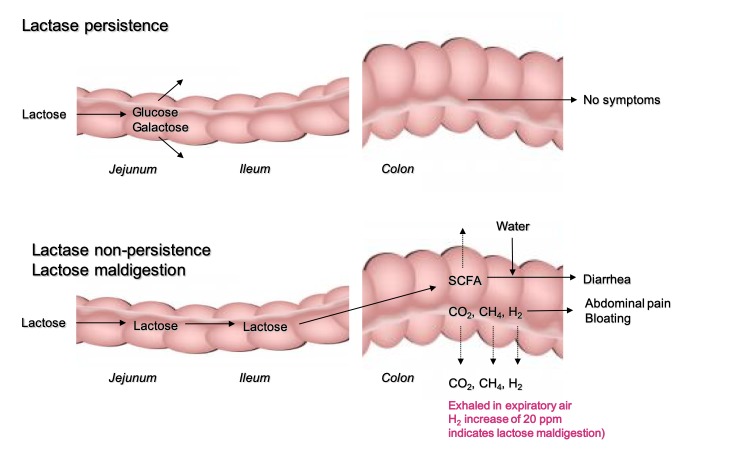
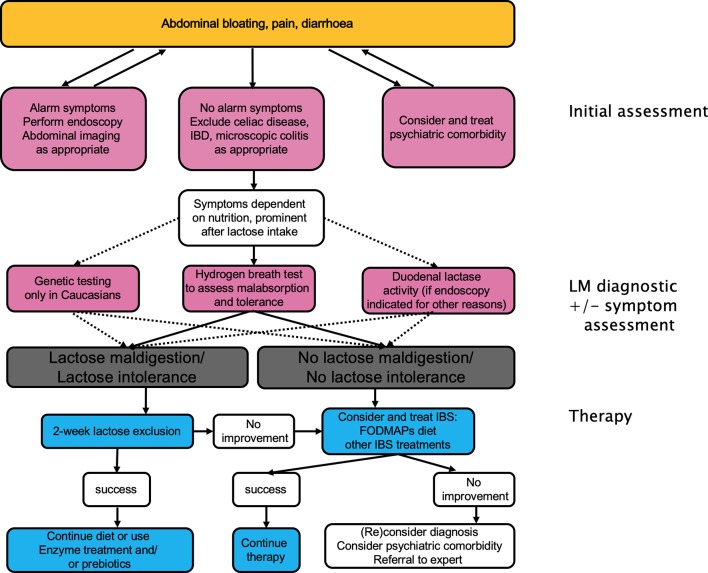
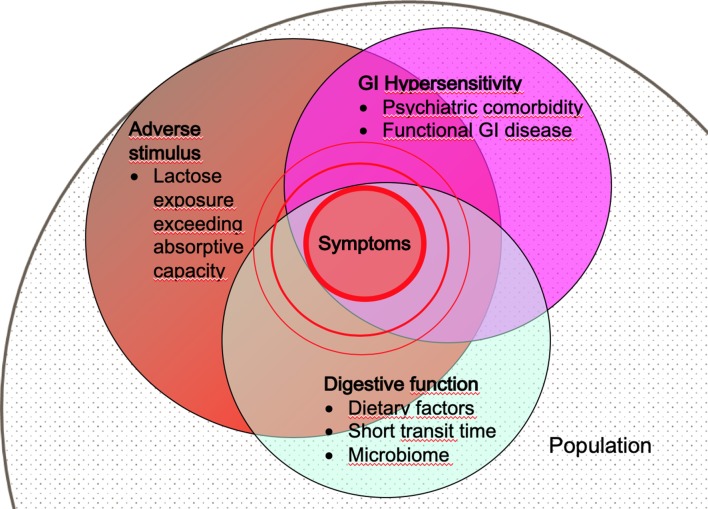
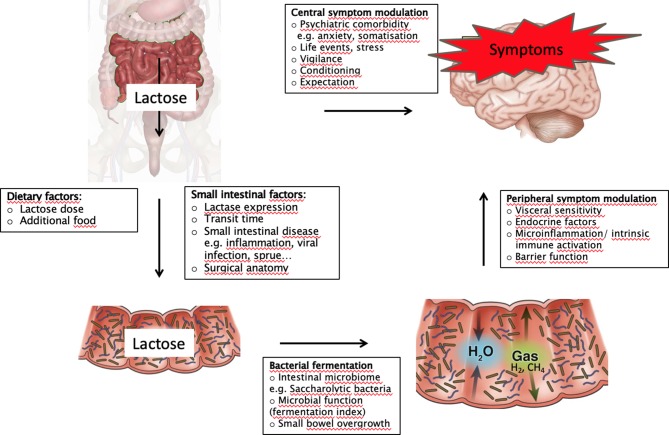
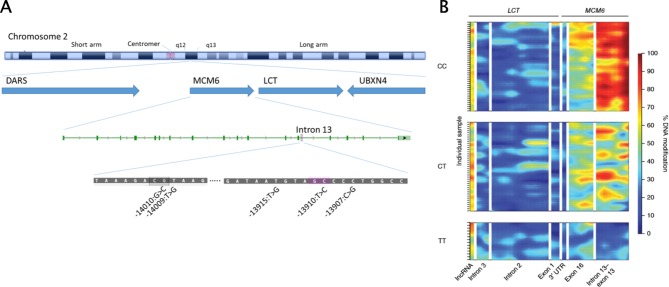
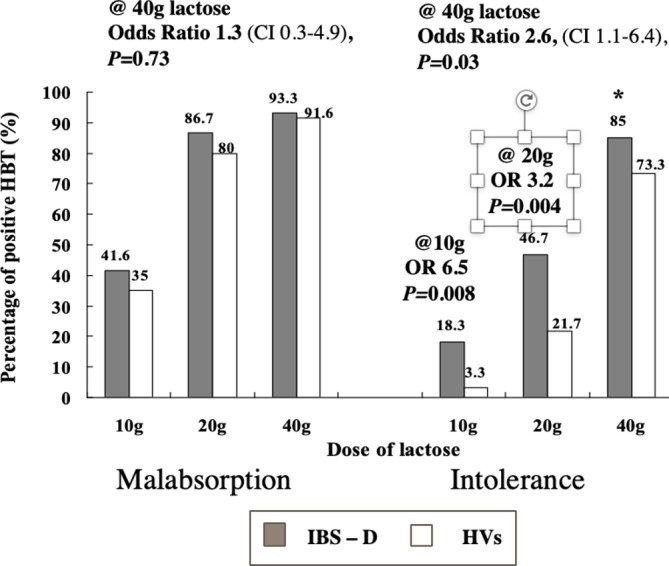
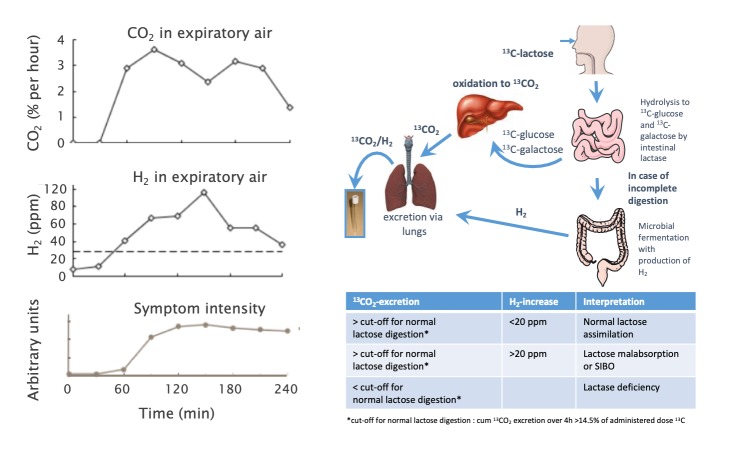
Lactose is the main source of calories in milk, an essential nutriedigestion, patients with visceral hypersensitivity nt in infancy and a key part of the diet in populations that maintain the ability to digest this disaccharide in adulthood. Lactase deficiency (LD) is the failure to express the enzyme that hydrolyses lactose into galactose and glucose in the small intestine. The genetic mechanism of lactase persistence in adult Caucasians is mediated by a single C→T nucleotide polymorphism at the LCTbo -13'910 locus on chromosome-2. Lactose malabsorption (LM) refers to any cause of failure to digest and/or absorb lactose in the small intestine. This includes primary genetic and also secondary LD due to infection or other conditions that affect the mucosal integrity of the small bowel. Lactose intolerance (LI) is defined as the onset of abdominal symptoms such as abdominal pain, bloating and diarrhoea after lactose ingestion by an individual with LM. The likelihood of LI depends on the lactose dose, lactase expression and the intestinal microbiome. Independent of lactose digestion, patients with visceral hypersensitivity associated with anxiety or the Irritable Bowel Syndrome (IBS) are at increased risk of the condition. Diagnostic investigations available to diagnose LM and LI include genetic, endoscopic and physiological tests. The association between self-reported LI, objective findings and clinical outcome of dietary intervention is variable. Treatment of LI can include low-lactose diet, lactase supplementation and, potentially, colonic adaptation by prebiotics. The clinical outcome of these treatments is modest, because lactose is just one of a number of poorly absorbed carbohydrates which can cause symptoms by similar mechanisms.
乳糖是牛奶中卡路里的主要来源,是一种重要的营养物质,对于消化,患有内脏高敏感的婴儿,以及在成年后仍能消化这种二糖的人群的饮食中是关键部分。乳糖酶缺乏症(LD)是指小肠内无法表达水解乳糖成半乳糖和葡萄糖的酶。在白种人中,乳糖酶持续存在的遗传机制是由染色体 2 上 LCTbo-13'910 位点的单个 C→T 核苷酸多态性介导的。乳糖吸收不良(LM)是指小肠无法消化和/或吸收乳糖的任何原因。这包括原发性遗传和由于感染或其他影响小肠黏膜完整性的条件引起的继发性 LD。乳糖不耐受(LI)是指具有 LM 的个体在摄入乳糖后出现腹痛、腹胀和腹泻等腹部症状。LI 的可能性取决于乳糖剂量、乳糖酶表达和肠道微生物组。与乳糖消化无关,与焦虑或肠易激综合征(IBS)相关的内脏高敏感患者发生这种情况的风险增加。用于诊断 LM 和 LI 的诊断性检查包括基因、内镜和生理检查。自我报告的 LI、客观发现和饮食干预的临床结果之间的关联是可变的。LI 的治疗包括低乳糖饮食、乳糖酶补充剂,以及通过益生元进行结肠适应性治疗。这些治疗的临床效果是适度的,因为乳糖只是引起类似机制症状的许多吸收不良的碳水化合物之一。