Wu Kegang, Lin Yahui, Chai Xianghua, Duan Xuejuan, Zhao Xinxin, Chun Chen
College of Chemical Engineering and Light Industry Guangdong University of Technology Guangzhou China.
Guangdong Provincial Bioengineering Institute (Guangzhou Sugarcane Industry Research Institute) Guangzhou China.
Food Sci Nutr. 2019 Jul 4;7(8):2546-2555. doi: 10.1002/fsn3.1104. eCollection 2019 Aug.
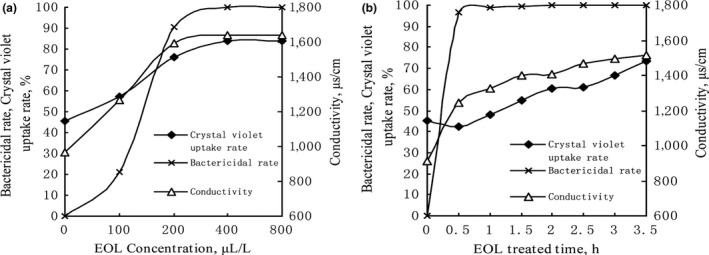
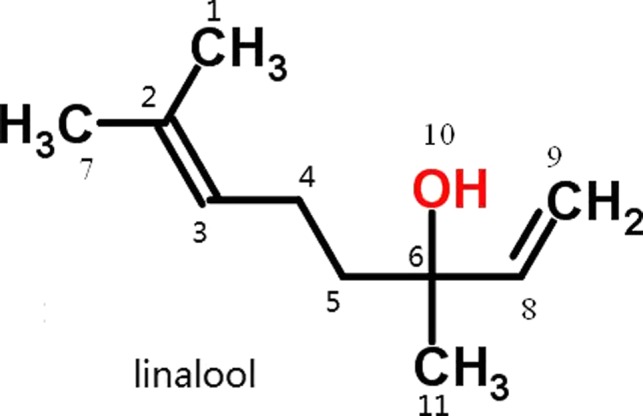
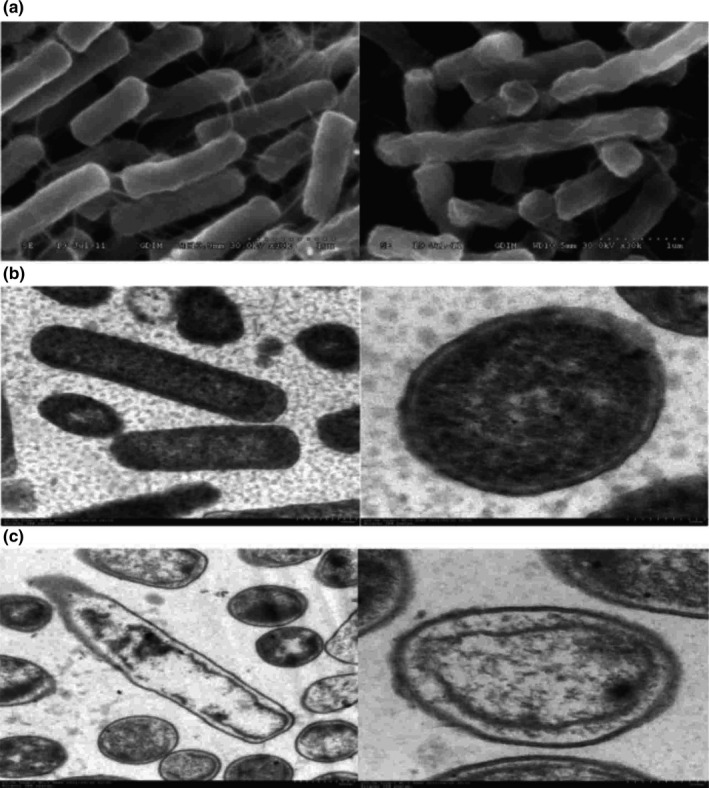
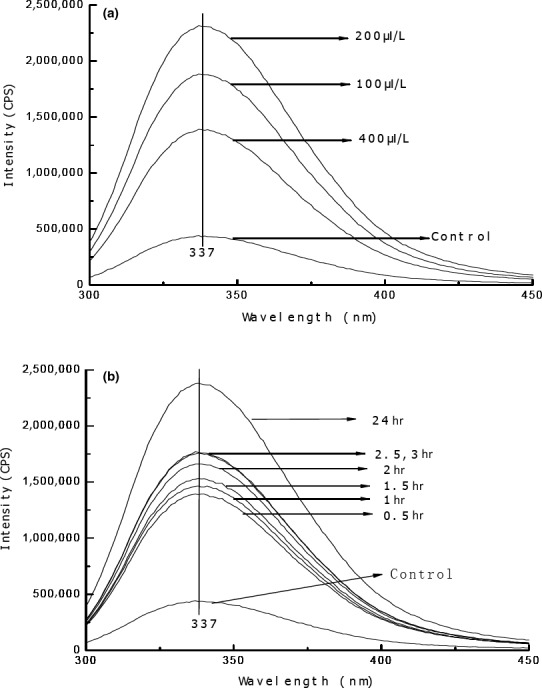
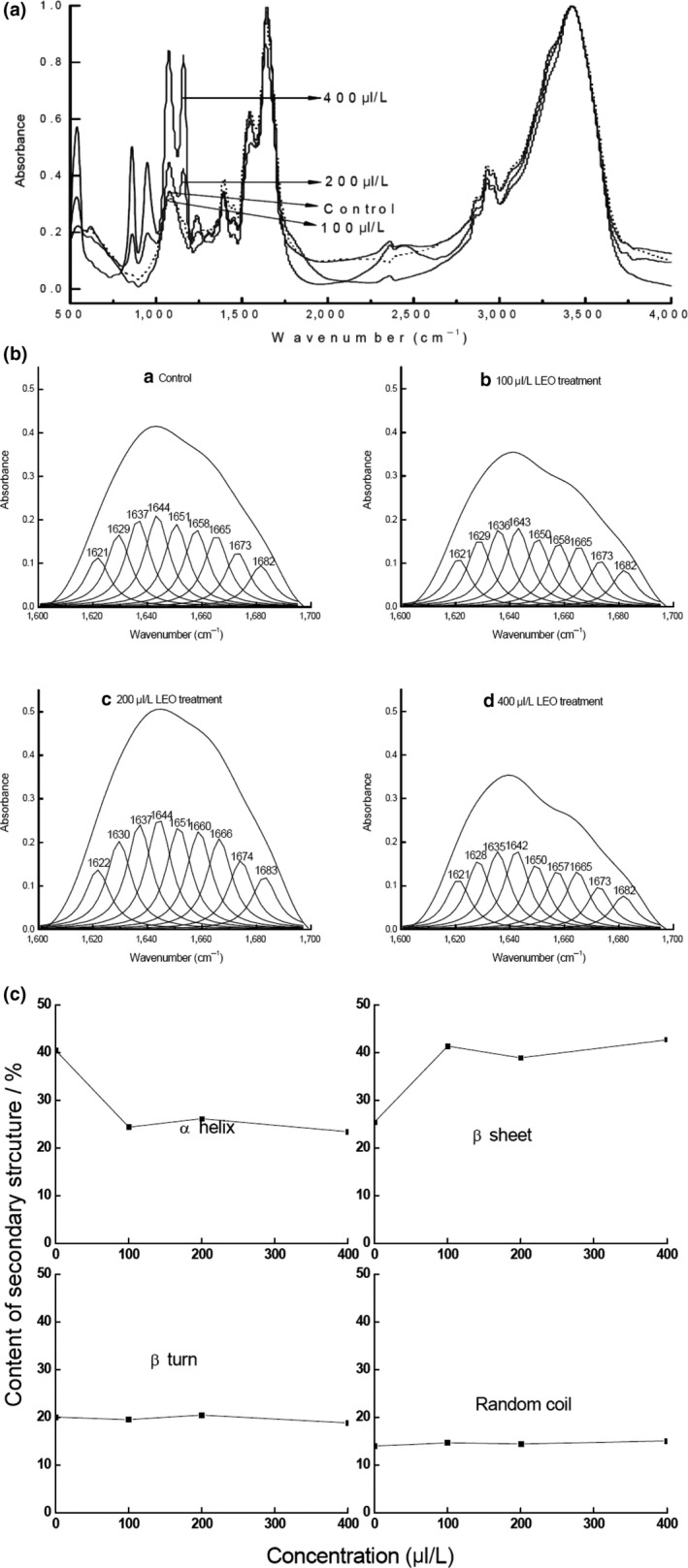
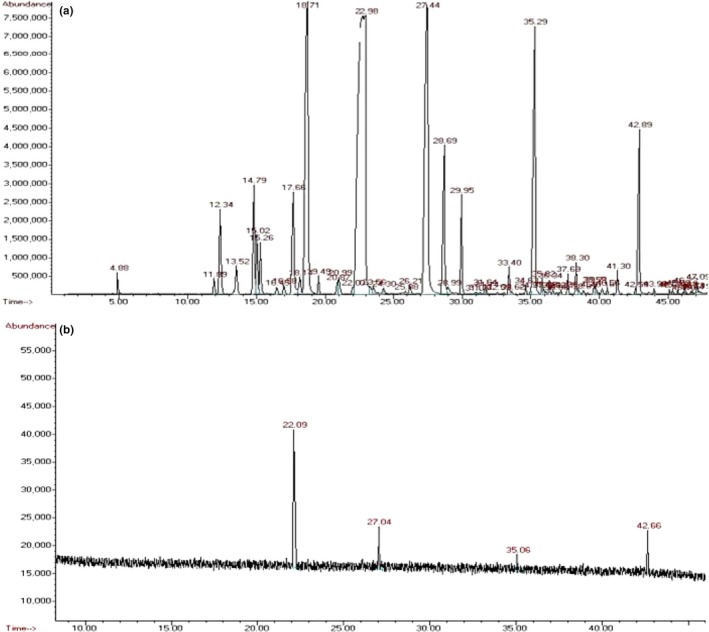
The purpose of this study was to investigate antibacterial activity of essential oil from Cinnamomum camphora var. linaloofera Fujita (EOL) at vapor phase and its mechanism of bactericidal action against . Results showed that the vapor-phase EOL had significant antibacterial activity with a minimum inhibitory concentration (MIC) and minimum bactericidal concentration (MBC) of 200 μl/L. Further analyses showed that treatment of with vapor-phase EOL resulted in partial degradation of cell membrane, increased membrane permeability, leakage of cytoplasm materials, and prominent distortion and shrinkage of bacterial cells. FTIR showed that EOL altered bacterial protein secondary and tertiary structures. GC/MS analysis showed that the components of vapor-phase EOL included linalool (69.94%), camphor (10.90%), nerolidol (10.92%), and safrole (8.24%), of which linalool had bactericidal activity. Quantum chemical analysis suggested that the antibacterial reactive center of linalool was oxygen atom (O) which transferred electrons during antibacterial action by the donation of electrons.
本研究旨在探讨芳樟叶樟挥发油(EOL)在气相中的抗菌活性及其对[具体细菌名称未给出]的杀菌作用机制。结果表明,气相EOL具有显著的抗菌活性,最低抑菌浓度(MIC)和最低杀菌浓度(MBC)为200μl/L。进一步分析表明,用气相EOL处理[具体细菌名称未给出]导致细胞膜部分降解、膜通透性增加、细胞质物质泄漏以及细菌细胞明显变形和收缩。傅里叶变换红外光谱(FTIR)表明EOL改变了细菌蛋白质的二级和三级结构。气相色谱/质谱(GC/MS)分析表明,气相EOL的成分包括芳樟醇(69.94%)、樟脑(10.90%)、橙花叔醇(10.92%)和黄樟素(8.24%),其中芳樟醇具有杀菌活性。量子化学分析表明,芳樟醇的抗菌反应中心是氧原子(O),其在抗菌作用过程中通过电子给予转移电子。