Department of Mathematics, Bucknell University, Lewisburg, Pennsylvania, United States of America.
Department of Physics and Astronomy, University of California, Los Angeles, Los Angeles, California, United States of America.
PLoS Comput Biol. 2019 Aug 21;15(8):e1006602. doi: 10.1371/journal.pcbi.1006602. eCollection 2019 Aug.
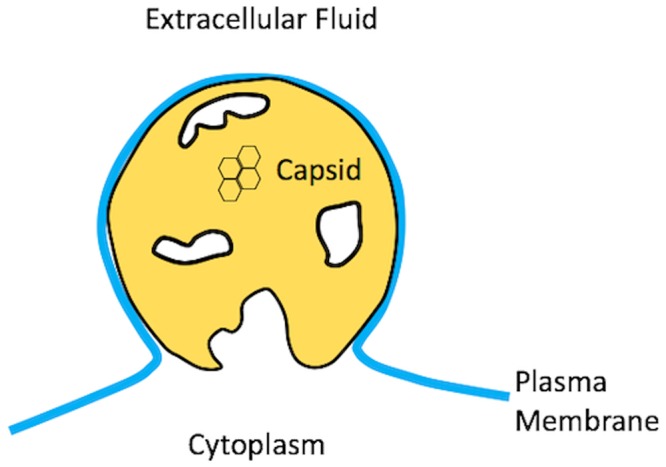
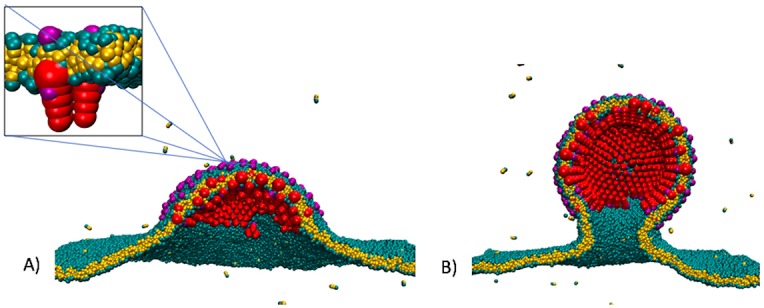
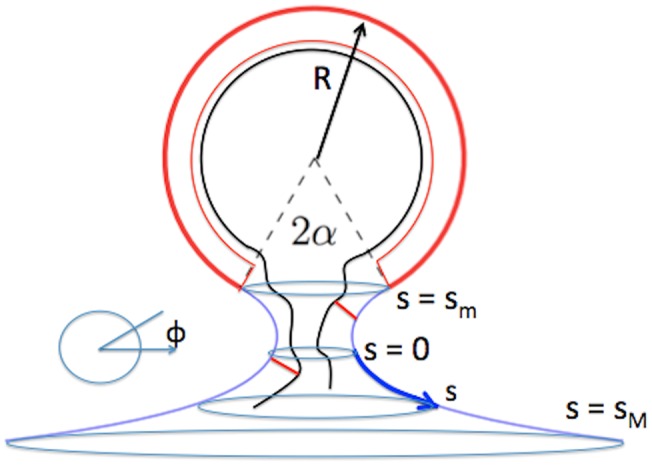
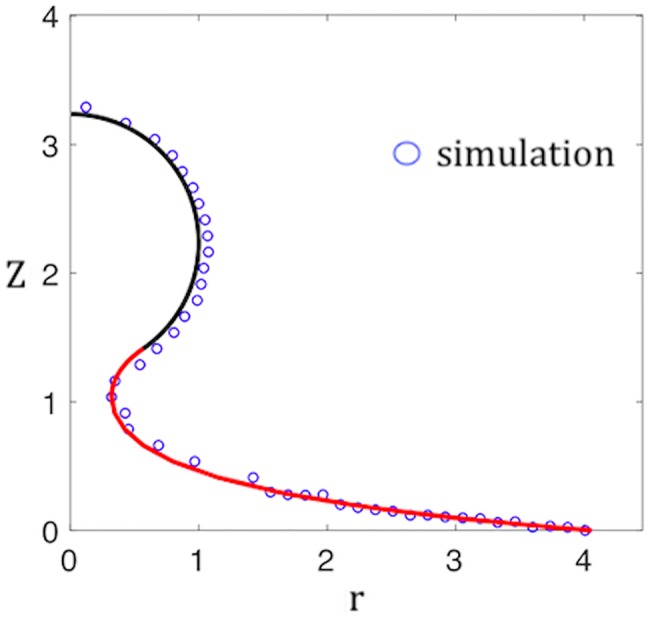
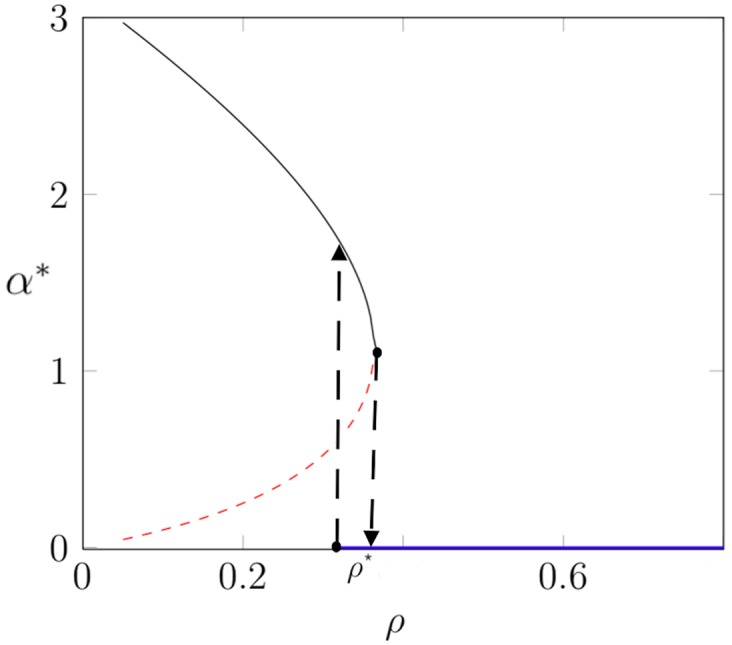
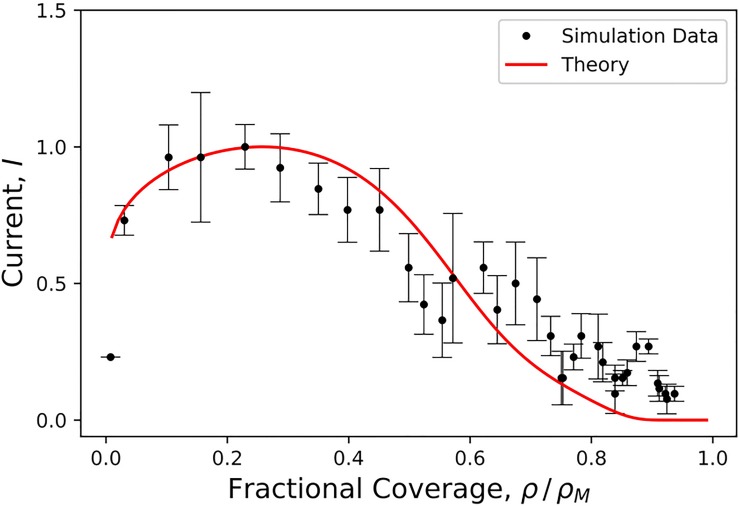
The formation of a membrane-enveloped virus starts with the assembly of a curved layer of capsid proteins lining the interior of the plasma membrane (PM) of the host cell. This layer develops into a spherical shell (capsid) enveloped by a lipid-rich membrane. In many cases, the budding process stalls prior to the release of the virus. Recently, Brownian dynamics simulations of a coarse-grained model system reproduced protracted pausing and stalling, which suggests that the origin of pausing/stalling is to be found in the physics of the budding process. Here, we propose that the pausing/stalling observed in the simulations can be understood as a purely kinetic phenomenon associated with the neck geometry. A geometrical potential energy barrier develops during the budding that must be overcome by capsid proteins diffusing along the membrane prior to incorporation into the capsid. The barrier is generated by a conflict between the positive Gauss curvature of the assembling capsid and the negative Gauss curvature of the neck region. A continuum theory description is proposed and is compared with the Brownian simulations of the budding of enveloped viruses.
包膜病毒的形成始于宿主细胞质膜 (PM) 内弯曲的衣壳蛋白层的组装。这一层发展成一个由富含脂质的膜包裹的球形壳(衣壳)。在许多情况下,病毒释放前出芽过程会停滞。最近,粗粒化模型系统的布朗动力学模拟再现了长时间的暂停和停滞,这表明暂停/停滞的起源在于出芽过程的物理学。在这里,我们提出,模拟中观察到的暂停/停滞可以被理解为与颈部几何形状相关的纯动力学现象。在出芽过程中会产生势能障碍,衣壳蛋白必须在扩散到衣壳中之前克服该障碍。该障碍是由组装衣壳的正高斯曲率和颈部区域的负高斯曲率之间的冲突产生的。提出了连续体理论描述,并与包膜病毒出芽的布朗模拟进行了比较。