Hartman Hyman, Smith Temple F
Earth, Atmosphere, and Planetary Science Department, Massachusetts Institute of Technology, Cambridge, MA 02139, USA.
BioMedical Engineering, Boston University, Boston, MA 02215, USA.
Life (Basel). 2019 Aug 22;9(3):69. doi: 10.3390/life9030069.
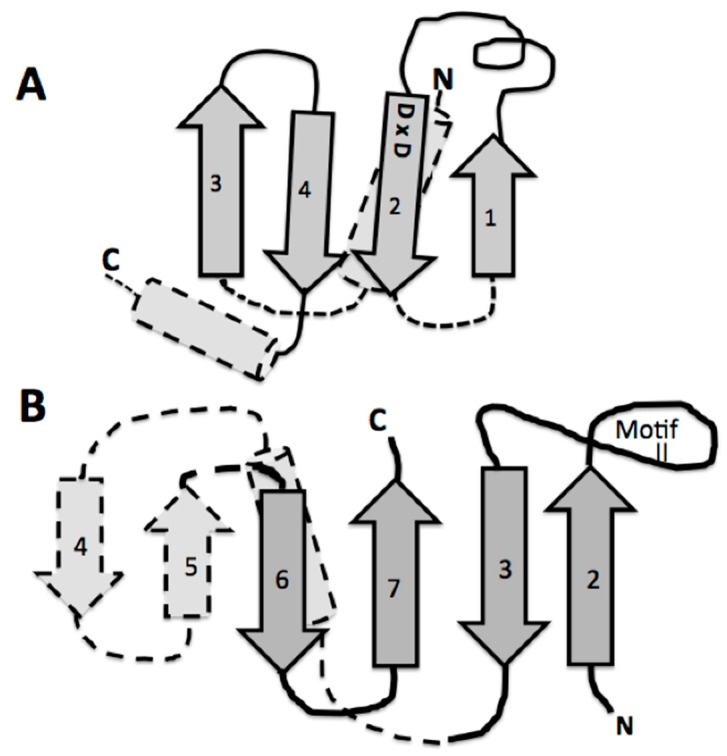
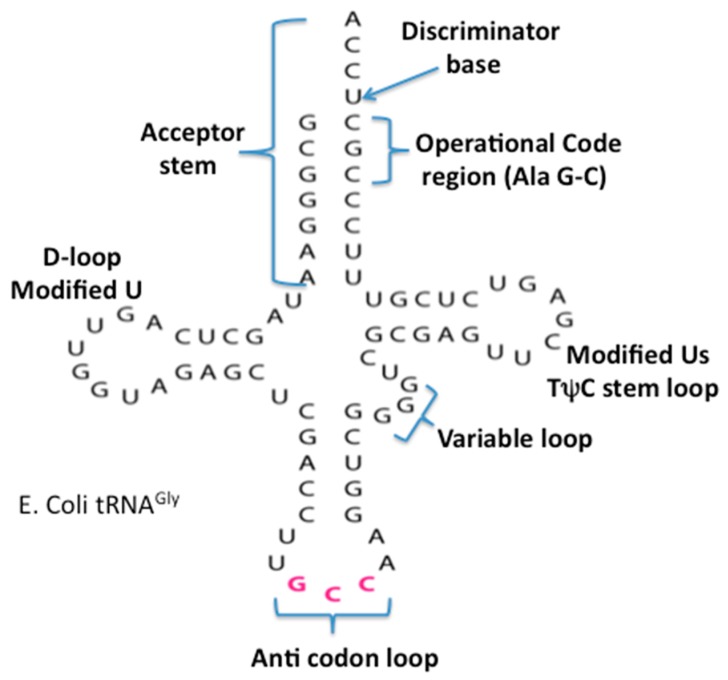
The early metabolism arising in a Thioester world gave rise to amino acids and their simple peptides. The catalytic activity of these early simple peptides became instrumental in the transition from Thioester World to a Phosphate World. This transition involved the appearances of sugar phosphates, nucleotides, and polynucleotides. The coupling of the amino acids and peptides to nucleotides and polynucleotides is the origin for the genetic code. Many of the key steps in this transition are seen in in the catalytic cores of the nucleotidyltransferases, the class II tRNA synthetases (aaRSs) and the CCA adding enzyme. These catalytic cores are dominated by simple beta hairpin structures formed in the Thioester World. The code evolved from a proto-tRNA a tetramer XCCA interacting with a proto-aminoacyl-tRNA synthetase (aaRS) activating Glycine and Proline, the initial expanded code is found in the acceptor arm of the tRNA, the operational code. It is the coevolution of the tRNA with the aaRSs that is at the heart of the origin and evolution of the genetic code. There is also a close relationship between the accretion models of the evolving tRNA and that of the ribosome.
硫酯世界中产生的早期新陈代谢产生了氨基酸及其简单肽。这些早期简单肽的催化活性在从硫酯世界向磷酸世界的转变中起到了重要作用。这种转变涉及糖磷酸、核苷酸和多核苷酸的出现。氨基酸和肽与核苷酸及多核苷酸的偶联是遗传密码的起源。这一转变中的许多关键步骤可见于核苷酸转移酶、II类tRNA合成酶(aaRS)和CCA添加酶的催化核心中。这些催化核心主要由硫酯世界中形成的简单β发夹结构组成。密码从与原氨基酰tRNA合成酶(aaRS)相互作用以激活甘氨酸和脯氨酸的四聚体XCCA原tRNA进化而来,初始扩展密码存在于tRNA的接受臂中,即操作密码。tRNA与aaRS的共同进化是遗传密码起源和进化的核心。进化中的tRNA的积累模型与核糖体的积累模型之间也存在密切关系。