Rothrock Michael J, Locatelli Aude, Feye Kristina M, Caudill Andrew J, Guard Jean, Hiett Kelli, Ricke Steven C
Egg Safety and Quality Research Unit, U. S. National Poultry Research Center, United States Department of Agriculture - Agricultural Research Service (USDA-ARS), Athens, GA, United States.
Department of Food Science, Center for Food Safety, University of Arkansas, Fayetteville, AR, United States.
Front Vet Sci. 2019 Aug 7;6:260. doi: 10.3389/fvets.2019.00260. eCollection 2019.
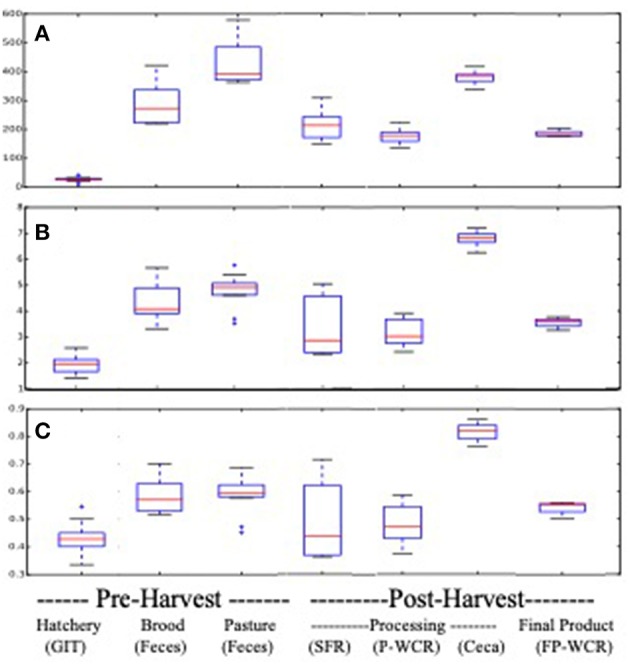
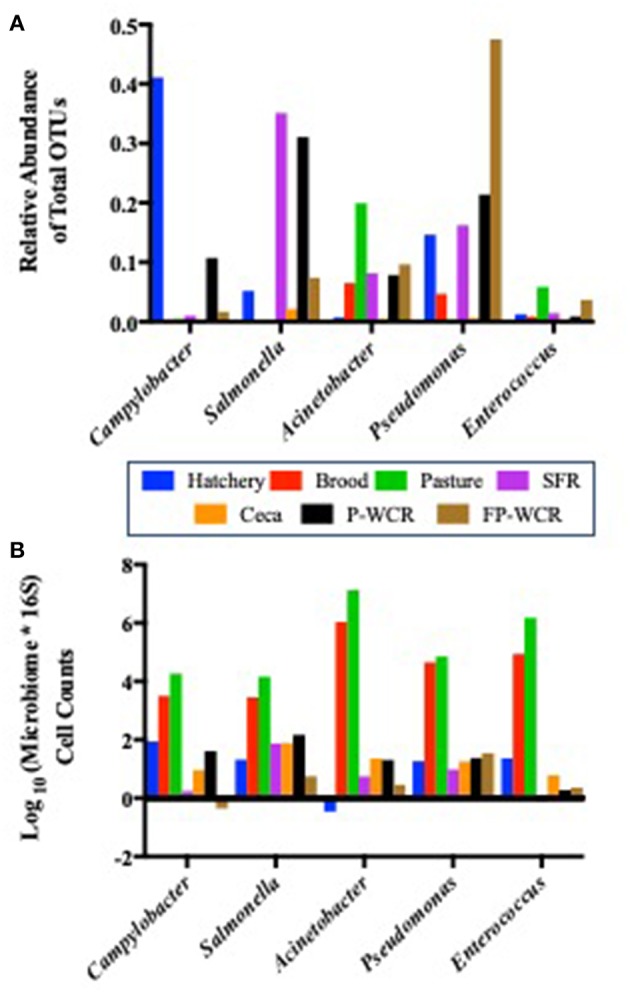
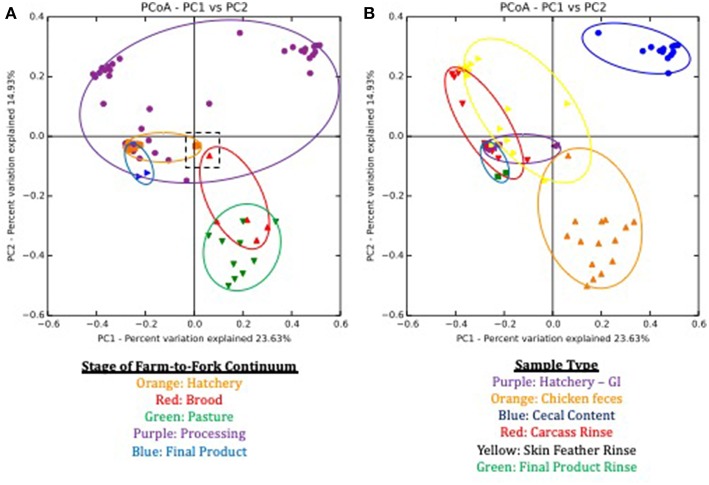
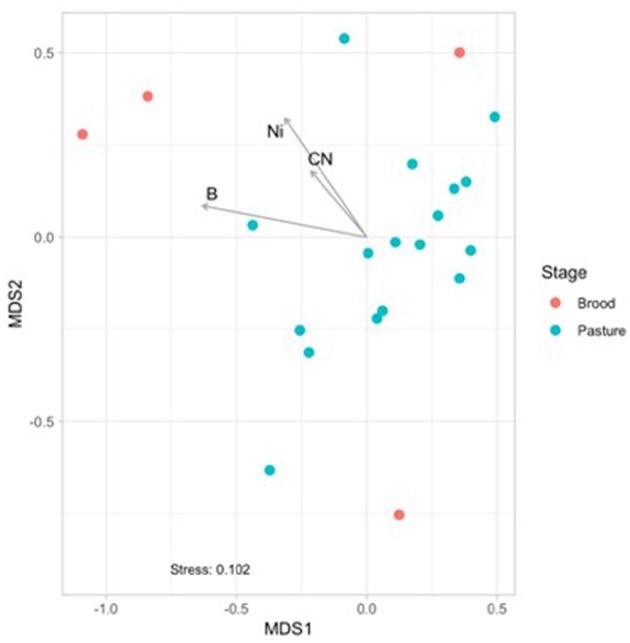
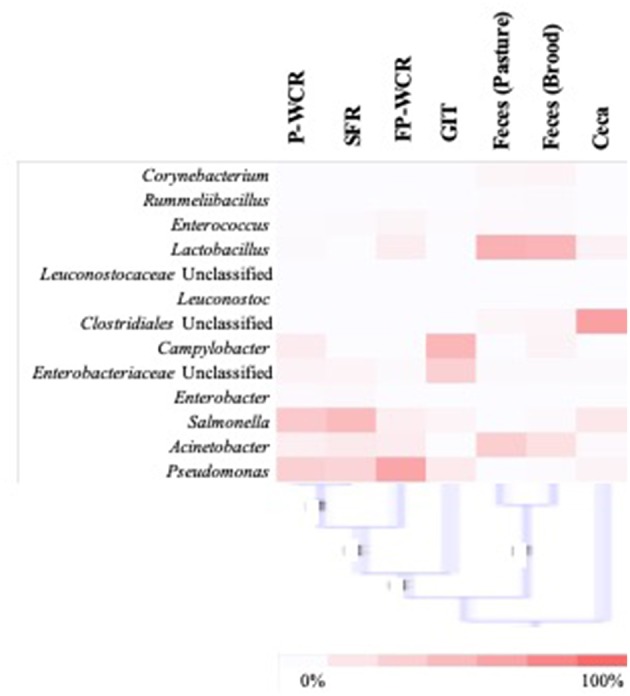
While conventionally grown poultry continues to dominate the U. S. poultry industry, there is an increasing demand for locally-grown, "all natural" alternatives. The use of next generation sequencing allows for not only the gross (e.g., community structure) but also fine-scale (e.g., taxa abundances) examination of these complex microbial communities. This data provides a better understanding of how a pasture flock's microbiome changes throughout the production life cycle and how that change in microbial ecology changes foodborne pathogens in alternative poultry production systems. In order to understand this ecology better, pooled broiler samples were taken during the entire flock life cycle, from pre-hatch gastrointestinal samples ( = 12) to fecal samples from the brood ( = 5), and pasture ( = 10) periods. Additional samples were taken during processing, including skin and feather rinsates ( = 12), ceca ( = 12), and whole carcass rinses ( = 12), and finally whole carcasss rinsates of final products ( = 3). Genomic DNA was extracted, 16S rDNA microbiome sequencing was conducted (Illumina MiSeq), and microbiomes were analyzed and compared using QIIME 1.9.1 to determine how microbiomes shifted throughout production continuum, as well as what environmental factors may be influencing these shifts. Significant microbiome shifts occurred during the life cycle of the pasture broiler flock, with the brood and pasture fecal samples and cecal samples being very distinct from the other pre-hatch, processing, and final product samples. Throughout these varied microbiomes, there was a stable core microbiome containing 13 taxa. Within this core microbiome, five taxa represented known foodborne pathogens () or potential/emerging pathogens () whose relative abundances varied throughout the farm-to-fork continuum, although all were more prevalent in the fecal samples. Additionally, of the 25 physiochemical and nutrient variables measured from the fecal samples, the carbon to nitrogen ratio was one of the most significant variables to warrant further investigations because it impacted both general fecal microbial ecology and and taxa within the core fecal microbiomes. These findings demonstrate the need for further longitudinal, farm-to-fork studies to understand the ecology of the microbial ecology of pasture production flocks to improve animal, environmental, and public health.
虽然传统养殖的家禽在美国家禽业中仍占主导地位,但对本地养殖的“全天然”替代品的需求却在不断增加。使用下一代测序技术不仅可以对这些复杂的微生物群落进行总体(如群落结构)分析,还可以进行精细尺度(如分类群丰度)分析。这些数据有助于更好地理解牧场鸡群的微生物群落在整个生产生命周期中是如何变化的,以及微生物生态的这种变化如何影响替代家禽生产系统中的食源性病原体。为了更好地理解这种生态,在鸡群的整个生命周期内采集了肉鸡混合样本,从孵化前的胃肠道样本(n = 12)到育雏期(n = 5)和放牧期(n = 10)的粪便样本。在加工过程中还采集了其他样本,包括皮肤和羽毛冲洗液(n = 12)、盲肠(n = 12)和整个胴体冲洗液(n = 12),最后是成品的整个胴体冲洗液(n = 3)。提取基因组DNA,进行16S rDNA微生物群测序(Illumina MiSeq),并使用QIIME 1.9.1对微生物群进行分析和比较,以确定微生物群在整个生产连续过程中的变化情况,以及哪些环境因素可能影响这些变化。牧场肉鸡群生命周期内发生了显著的微生物群变化,育雏期和放牧期的粪便样本以及盲肠样本与其他孵化前、加工和最终产品样本有很大不同。在这些不同的微生物群中,有一个由13个分类群组成的稳定核心微生物群。在这个核心微生物群中,有五个分类群代表已知的食源性病原体(n)或潜在/新兴病原体(n),它们的相对丰度在从农场到餐桌的连续过程中有所变化,尽管在粪便样本中更为普遍。此外,在从粪便样本中测量的25个理化和营养变量中,碳氮比是最值得进一步研究的重要变量之一,因为它影响了一般粪便微生物生态以及核心粪便微生物群中的n和n分类群。这些发现表明,需要进一步开展从农场到餐桌的纵向研究,以了解牧场生产鸡群的微生物生态,从而改善动物、环境和公共卫生。