Mahamat Ouagal, Doungous Tchari, Kebkiba Bidjeh, Oumar Hadjé Arabié, Oussiguéré Assandi, Yacoub Adam Hassan, Goudja Adoum, Guindé Mahamat, Moussa Ahmat Hassan
Ministry of Livestock and Animal Productions, Livestock Research Institute for Development, Epidemiology Department, N'Djamena, Chad.
Ministry of Livestock and Animal Productions, Livestock Research Institute for Development, Virology Department, N'Djamena, Chad.
J Adv Vet Anim Res. 2018 Nov 9;5(4):420-425. doi: 10.5455/javar.2018.e293. eCollection 2018 Dec.
The objective of this study was to determine the prevalence, geographical distribution, and main risk factors for peste des petits ruminants (PPR) in the Republic of Chad.
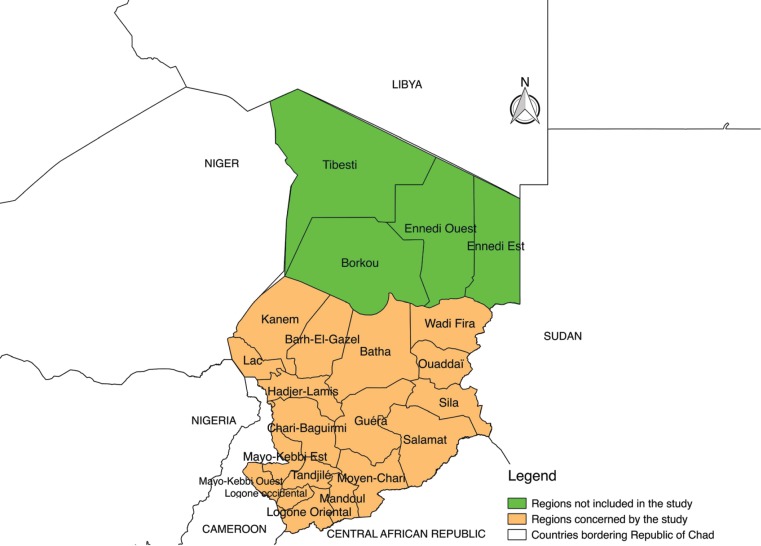
A total of 3,546 sera collected from unvaccinated small ruminants including 1,699 goats and 1,847 sheep in 19 of the 23 regions in Chad were randomly sampled. The competitive enzyme-linked immunosorbent assay technics were used for serological analysis.
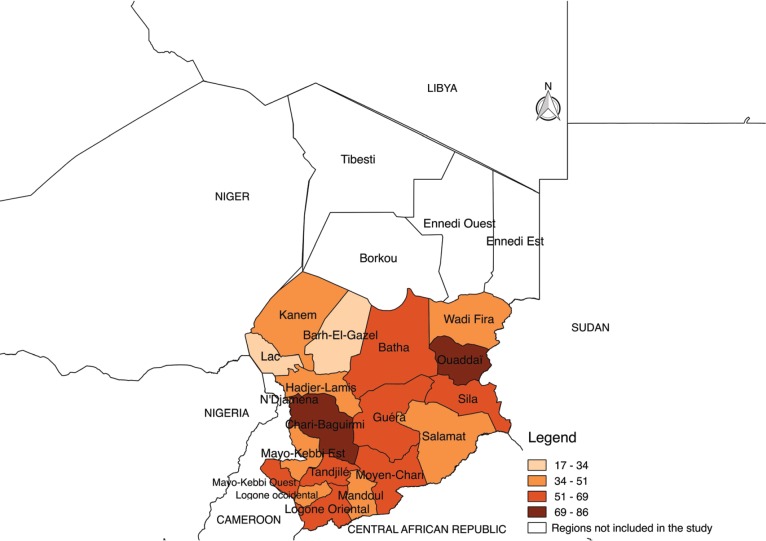
The overall seroprevalence at the individual level was 52.9%±1.6% (48.9% for goats and 56.2% for sheep). Seroprevalence observed in the Chari Baguirmi, Ouaddaï, and N'Djamena regions was significantly higher than those in the other regions. Transhumant herds are the most exposed than the sedentary ones. Older animals were more affected than the young ones. Kababich sheep are the most affected than other breeds.
This study has shown that the PPR virus is circulating in the Republic of Chad. In view of the results obtained, the disease is enzootic in the country. Epidemiological information obtained including seroprevalence rate, risk factors (sex, breed, age, and mode of rearing), and geographical distribution will help to define an appropriate strategy for PPR control in the Republic of Chad.
本研究的目的是确定乍得共和国小反刍兽疫(PPR)的流行率、地理分布和主要风险因素。
从乍得23个地区中的19个地区未接种疫苗的小反刍动物中随机采集了3546份血清,其中包括1699只山羊和1847只绵羊。采用竞争酶联免疫吸附测定技术进行血清学分析。
个体水平的总体血清阳性率为52.9%±1.6%(山羊为48.9%,绵羊为56.2%)。在沙里-巴吉尔米、瓦达伊和恩贾梅纳地区观察到的血清阳性率显著高于其他地区。游牧畜群比定居畜群更容易感染。年龄较大的动物比年幼的动物受影响更大。卡巴比什绵羊比其他品种受影响更大。
本研究表明PPR病毒在乍得共和国传播。鉴于所获得的结果,该病在该国呈地方流行。所获得的流行病学信息,包括血清阳性率、风险因素(性别、品种、年龄和饲养方式)以及地理分布,将有助于确定乍得共和国PPR防控的适当策略。