Aarum Ida, Devle Hanne, Ekeberg Dag, Horn Svein J, Stenstrøm Yngve
Faculty of Chemistry, Biotechnology and Food Science, Norwegian University of Life Sciences, P.O. Box 5003, N-1432 Ås, Norway.
ACS Omega. 2018 May 4;3(5):4924-4931. doi: 10.1021/acsomega.8b00381. eCollection 2018 May 31.
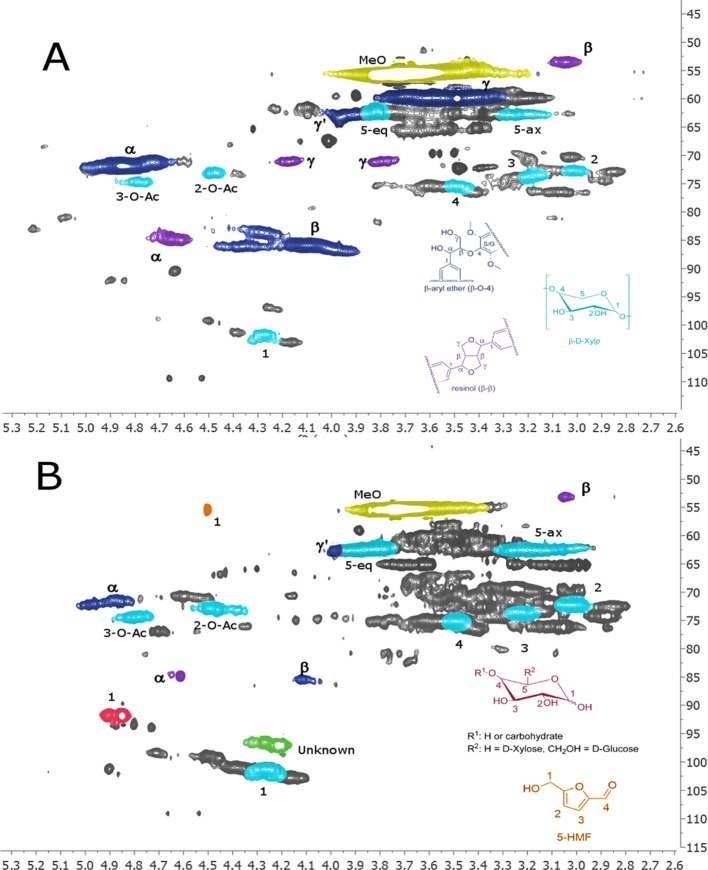
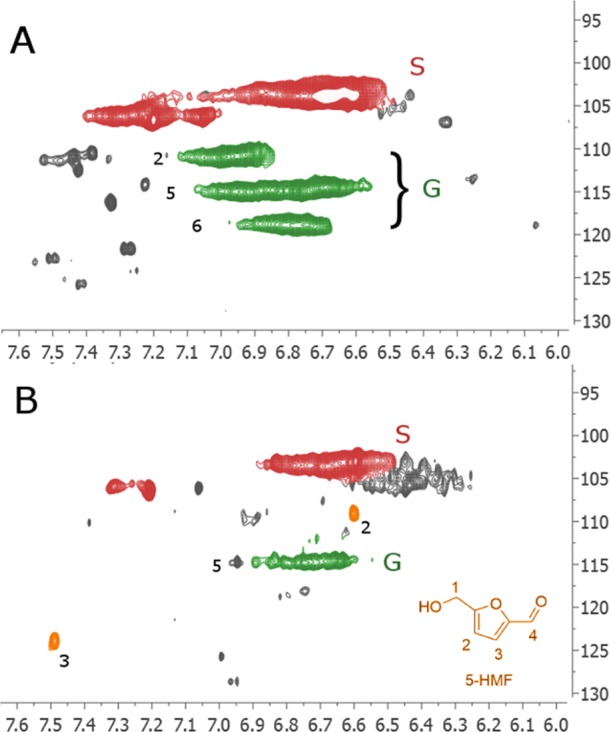
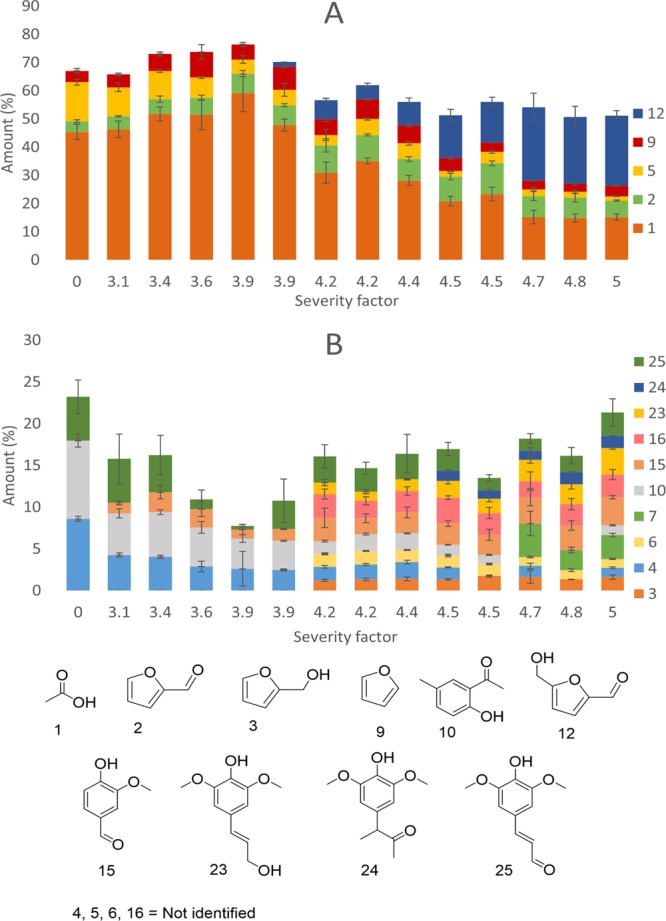
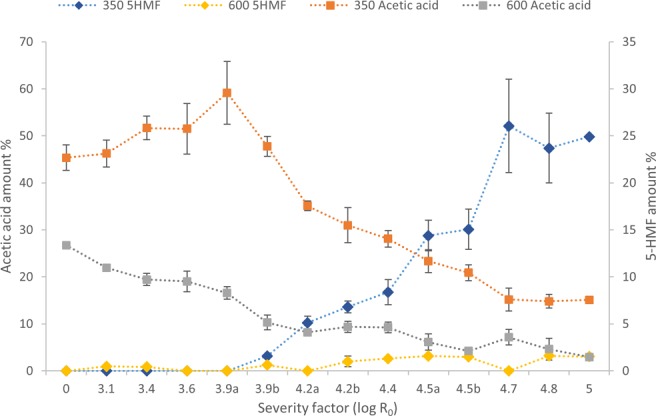
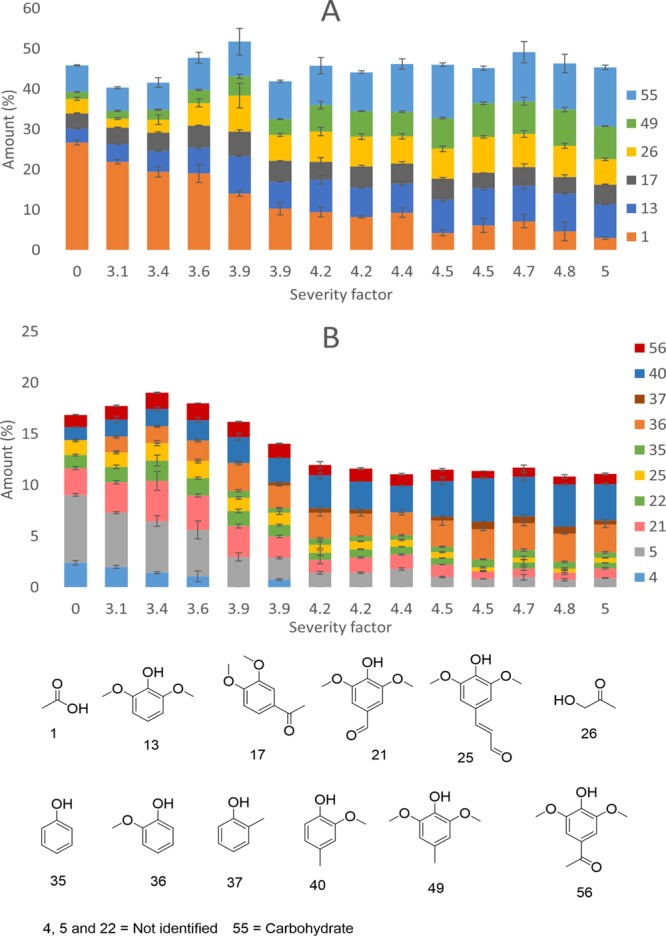
There is a growing interest in a more wholesome utilization of biomass as the need for greener chemistry and non-mineral oil-based products increases. Lignin is the largest renewable resource for aromatic chemicals, which is found in all types of lignocellulosic biomass. Steam-explosion of lignocellulosic biomass is a useful pretreatment technique to make the polymeric material more available for processing. However, this heat-based pretreatment is known to result in the formation of pseudo-lignin, a lignin-like polymer made from carbohydrate degradation products. In this work, we have analyzed steam-exploded birch with a varying severity factor (3.1-5.0) by pyrolysis-gas chromatography-mass spectrometry, 2D-NMR, and Fourier transform infrared spectroscopy. The main results reveal a consumption of acetic acid at higher temperatures, with the increase of furan components in the pyrolyzate. The IR and NMR spectral data support these results, and there is a reason to believe that the conditions for humin formation are accomplished under steam explosion. Pseudo-lignin seems to be a humin-like compound.
随着对绿色化学和非矿物油基产品的需求增加,人们对生物质更有益健康的利用方式的兴趣与日俱增。木质素是芳香化学品的最大可再生资源,存在于所有类型的木质纤维素生物质中。木质纤维素生物质的蒸汽爆破是一种有用的预处理技术,可使聚合物材料更易于加工。然而,这种基于热的预处理会导致形成假木质素,一种由碳水化合物降解产物制成的类似木质素的聚合物。在这项工作中,我们通过热解-气相色谱-质谱、二维核磁共振和傅里叶变换红外光谱分析了具有不同强度因子(3.1 - 5.0)的蒸汽爆破桦木。主要结果表明,在较高温度下乙酸会消耗,热解产物中呋喃成分增加。红外光谱和核磁共振光谱数据支持这些结果,并且有理由相信在蒸汽爆破条件下会形成腐殖质。假木质素似乎是一种类似腐殖质的化合物。