Medical College, Shenzhen University, Shenzhen, China.
Department of Urological Surgery, The Third Affiliated Hospital of Shenzhen University, Shenzhen University, Shenzhen, China.
Cell Prolif. 2019 Nov;52(6):e12659. doi: 10.1111/cpr.12659. Epub 2019 Aug 30.
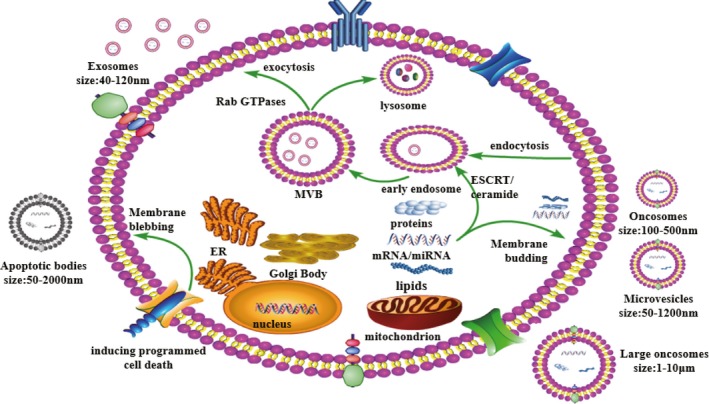
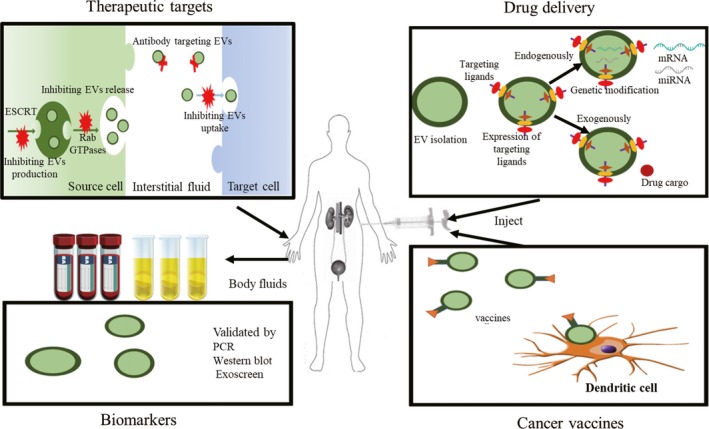
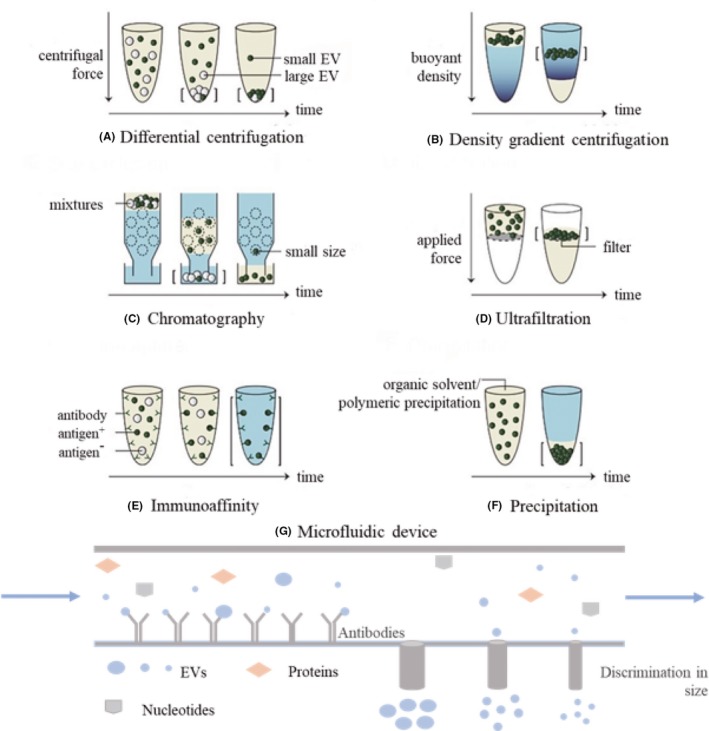
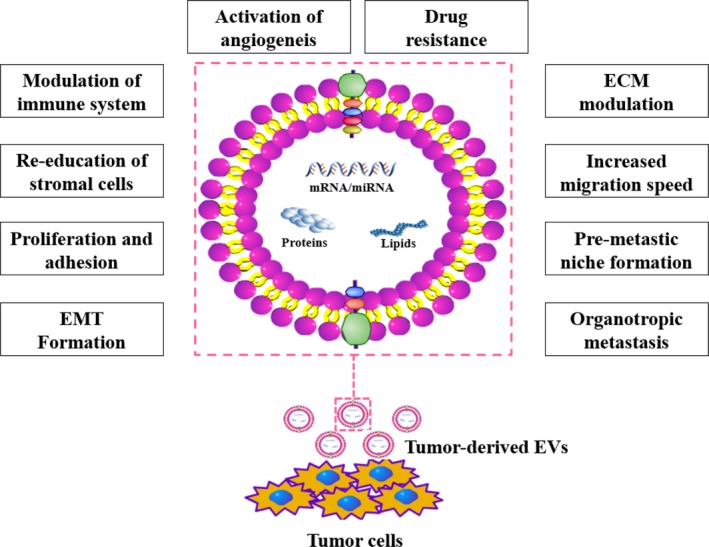
Extracellular vesicles (EVs), a heterogeneous group of vesicles differing in size and shape, cargo content and function, are membrane-bound and nano-sized vesicles that could be released by nearly all variations of cells. EVs have gained considerable attention in the past decades for their functions in modulating intercellular signalling and roles as potential pools for the novel diagnostic and prognostic biomarkers, as well as therapeutic targets in several cancers including urological neoplasms. In general, human and animal cells both can release distinct types of EVs, including exosomes, microvesicles, oncosomes and large oncosomes, and apoptotic bodies, while the content of EVs can be divided into proteins, lipids and nucleic acids. However, the lack of standard methods for isolation and detection platforms rein the widespread usage in clinical applications warranted furthermore investigations in the development of reliable, specific and sensitive isolation techniques. Whether and how the EVs work has become pertinent issues. With the aid of high-throughput proteomics or genomics methods, a fully understanding of contents contained in EVs from urogenital tumours, beyond all doubt, will improve our ability to identify the complex genomic alterations in the process of cancer and, in turn, contribute to detect potential therapeutic target and then provide personalization strategy for patient.
细胞外囊泡(EVs)是一组大小和形状、货物内容和功能不同的囊泡,它们是膜结合的纳米级囊泡,可以由几乎所有类型的细胞释放。EVs 在过去几十年中受到了相当多的关注,因为它们在调节细胞间信号传递方面的功能,以及作为新型诊断和预后生物标志物的潜在来源,以及几种癌症(包括泌尿系统肿瘤)的治疗靶点。一般来说,人类和动物细胞都可以释放不同类型的 EVs,包括外泌体、微泡、肿瘤囊泡和大肿瘤囊泡以及凋亡小体,而 EVs 的内容物可以分为蛋白质、脂质和核酸。然而,缺乏标准化的分离方法和检测平台限制了它们在临床应用中的广泛使用,因此需要进一步研究开发可靠、特异和敏感的分离技术。EVs 是否以及如何发挥作用已成为相关问题。借助高通量蛋白质组学或基因组学方法,对泌尿生殖系统肿瘤来源的 EVs 中的内容物进行全面了解,无疑将提高我们识别癌症过程中复杂基因组改变的能力,并有助于检测潜在的治疗靶点,从而为患者提供个性化治疗策略。