Tianjin Key Laboratory of Retinal Functions and Diseases, Eye Institute and School of Optometry, Tianjin Medical University Eye Hospital, No.251 Fukang Road, Nankai District, Tianjin, 300384, People's Republic of China.
Stem Cell Res Ther. 2019 Aug 30;10(1):278. doi: 10.1186/s13287-019-1372-0.
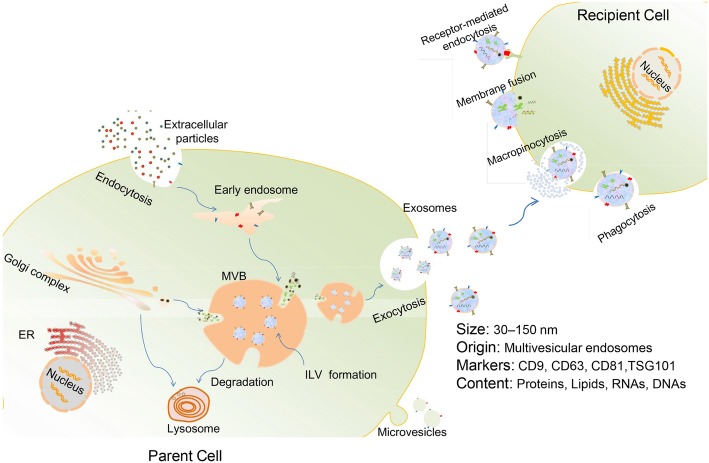
Exosomes, nanosized extracellular vesicles of 30-150 nm, are shed by almost all cell types. Bearing proteins, lipids, RNAs, and DNAs, exosomes have emerged as vital biological mediators in cell-to-cell communication, affecting a plethora of physiological and pathological processes. Particularly, mounting evidence indicates that immunologically active exosomes can regulate both innate and adaptive immune responses. Herein, we review recent advances in the research of exosomes in several immune-mediated eye diseases, including Sjögren's syndrome (SS) dry eye, corneal allograft rejection, autoimmune uveitis, and age-related macular degeneration (AMD). Additionally, we discuss the potential of exosomes as novel biomarkers and drug delivery vesicles for the diagnosis and treatment of eye diseases.
外泌体是直径为 30-150nm 的纳米级细胞外囊泡,几乎所有细胞类型都会分泌外泌体。外泌体携带蛋白质、脂质、RNA 和 DNA,作为细胞间通讯的重要生物介质,影响着众多生理和病理过程。越来越多的证据表明,具有免疫活性的外泌体可以调节固有免疫和适应性免疫反应。本文综述了外泌体在几种免疫介导的眼病中的研究进展,包括干燥综合征(SS)干眼、角膜移植排斥反应、自身免疫性葡萄膜炎和年龄相关性黄斑变性(AMD)。此外,还讨论了外泌体作为新型生物标志物和药物递送载体在眼病诊断和治疗中的潜力。