Institute of Biopharmaceutical Technology, Zhejiang Pharmaceutical College, Ningbo, 315100, Zhejiang, People's Republic of China.
Fujian Agriculture and Forestry University, Fuzhou, 350000, Fujian, People's Republic of China.
BMC Genomics. 2019 Aug 31;20(1):687. doi: 10.1186/s12864-019-6045-y.
Tetrastigma hemsleyanum Diels et Gilg is a valuable medicinal herb, whose main bioactive constituents are flavonoids. Chilling sensitivity is the dominant environmental factor limiting growth and development of the plants. But the mechanisms of cold sensitivity in this plant are still unclear. Also, not enough information on genes involved in flavonoid biosynthesis in T. hemsleyanum is available to understand the mechanisms of its physiological and pharmaceutical effects.
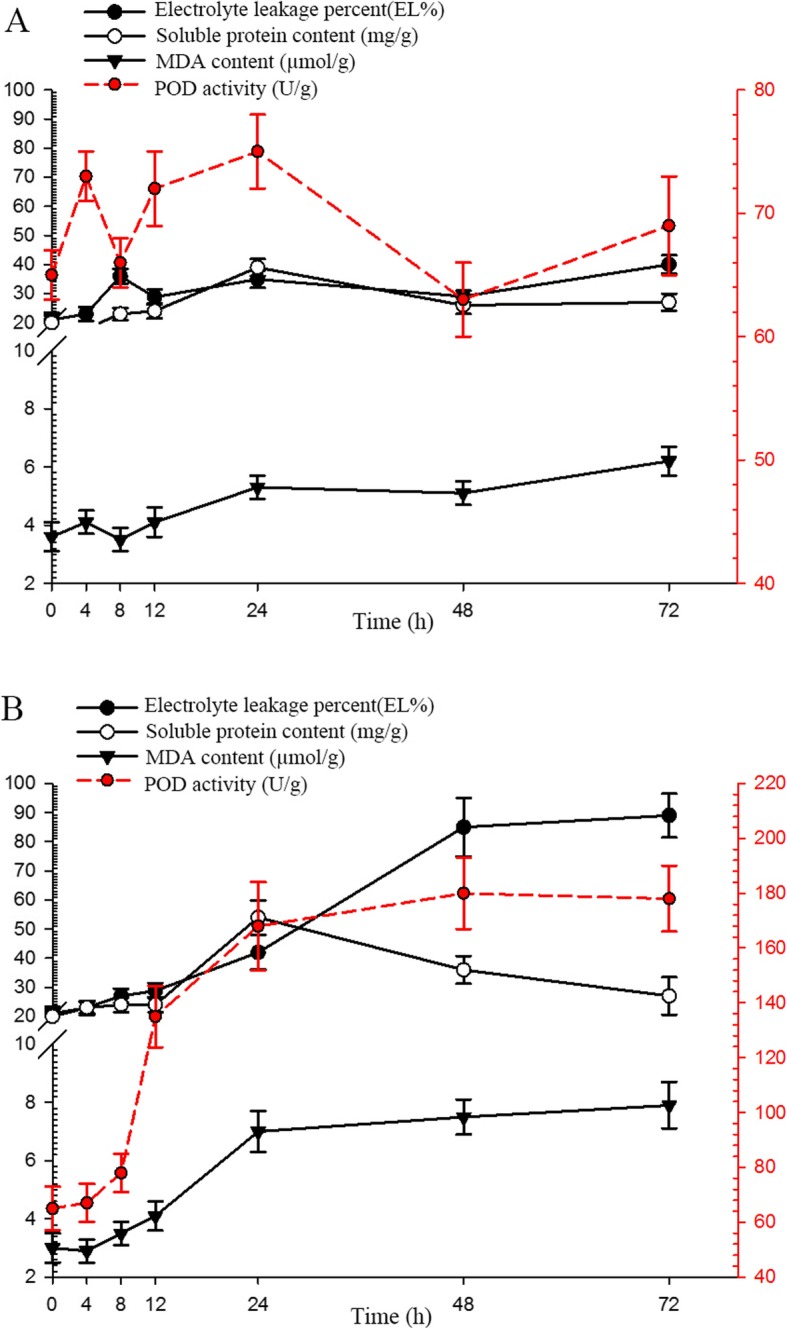
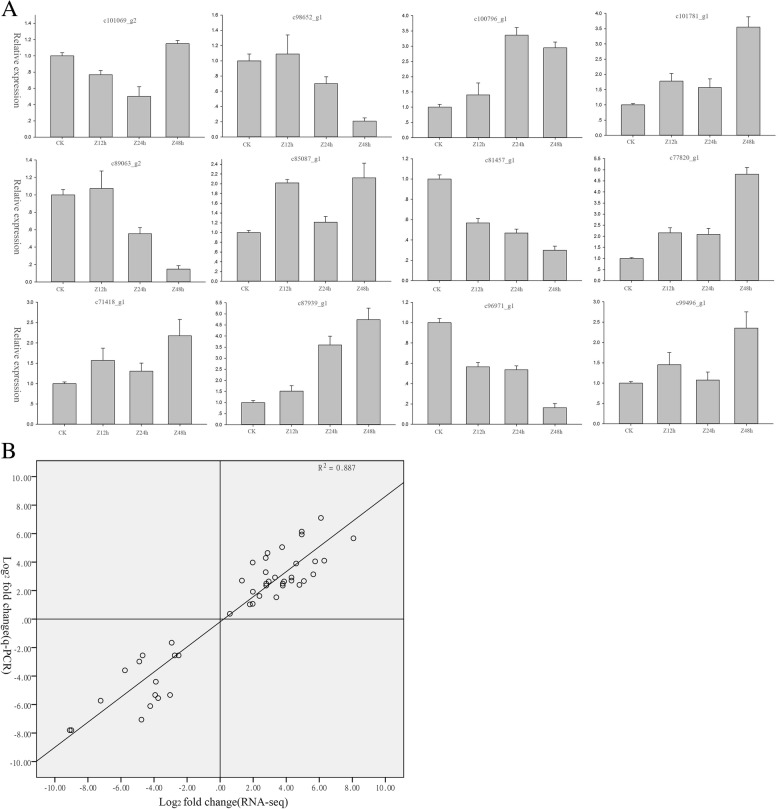
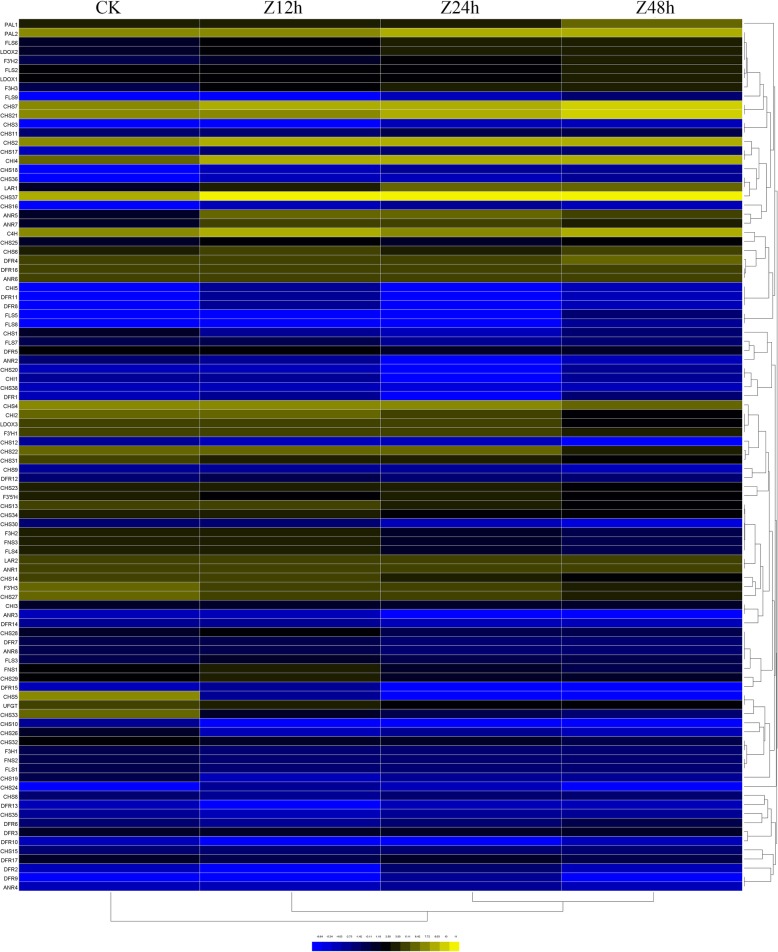
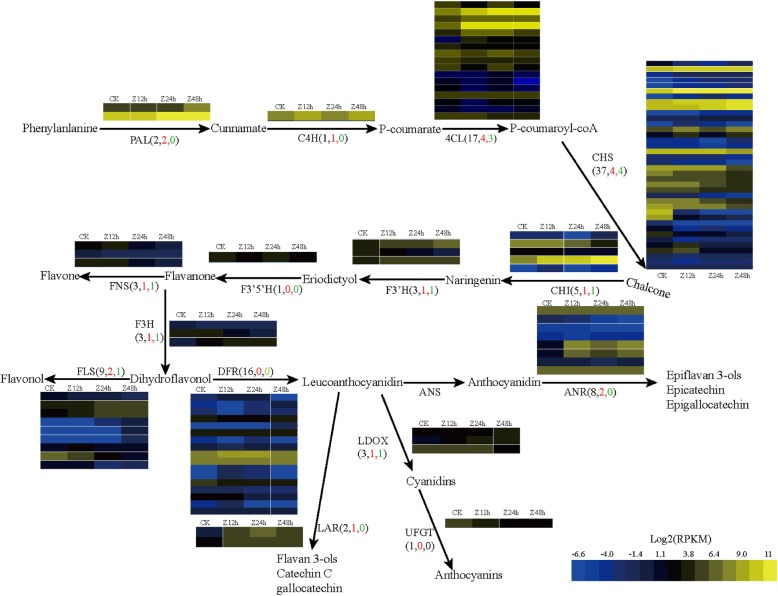
The electrolyte leakage, POD activity, soluble protein, and MDA content showed a linear sustained increase under cold stress. The critical period of cold damage in T. hemsleyanum was from 12 h to 48 h. Expression profiles revealed 18,104 differentially expressed genes (DEGs) among these critical time points. Most of the cold regulated DEGs were early-response genes. A total of 114 unigenes were assigned to the flavonoid biosynthetic pathway. Fourteen genes most likely to encode flavonoid biosynthetic enzymes were identified. Flavonols of T. hemsleyanum might play a crucial role in combating cold stress. Genes encoding PAL, 4CL, CHS, ANR, FLS, and LAR were significantly up-regulated by cold stress, which could result in a significant increase in crucial flavonols (catechin, epicatechin, rutin, and quercetin) in T. hemsleyanum.
Overall, our results show that the expression of genes related to flavonol biosynthesis as well as flavonol content increased in T. hemsleyanum under cold stress. These findings provide valuable information regarding the transcriptome changes in response to cold stress and give a clue for identifying candidate genes as promising targets that could be used for improving cold tolerance via molecular breeding. The study also provides candidate genes involved in flavonoid biosynthesis and may be useful for clarifying the biosynthetic pathway of flavonoids in T. hemsleyanum.
Tetrastigma hemsleyanum Diels et Gilg 是一种有价值的药用植物,其主要生物活性成分为类黄酮。冷敏性是限制植物生长和发育的主要环境因素。但是,该植物对冷敏感的机制尚不清楚。此外,关于 T. hemsleyanum 中参与类黄酮生物合成的基因的信息还不够,无法了解其生理和药用作用的机制。
在冷胁迫下,电解质渗漏、POD 活性、可溶性蛋白和 MDA 含量呈线性持续增加。T. hemsleyanum 冷害的关键时期为 12-48 小时。表达谱显示,在这些关键时间点之间有 18104 个差异表达基因(DEGs)。大多数冷调控的 DEGs 是早期反应基因。共有 114 个基因被分配到类黄酮生物合成途径中。鉴定出 14 个可能编码类黄酮生物合成酶的基因。T. hemsleyanum 中的类黄酮醇可能在抵御冷胁迫中起关键作用。基因编码 PAL、4CL、CHS、ANR、FLS 和 LAR 均受冷胁迫显著上调,这可能导致 T. hemsleyanum 中关键类黄酮醇(儿茶素、表儿茶素、芦丁和槲皮素)含量显著增加。
总的来说,我们的研究结果表明,在冷胁迫下,T. hemsleyanum 中与类黄酮醇生物合成相关的基因表达及其类黄酮醇含量增加。这些发现为冷胁迫响应的转录组变化提供了有价值的信息,并为识别候选基因提供了线索,这些候选基因有望成为通过分子育种提高耐冷性的有前途的靶点。该研究还提供了参与类黄酮生物合成的候选基因,可能有助于阐明 T. hemsleyanum 中类黄酮的生物合成途径。