Neuroprotection Research Laboratory, Departments of Radiology and Neurology, Massachusetts General Hospital, Harvard Medical School, Charlestown, Massachusetts, USA.
Tissue Engineering Laboratories, VA Boston Healthcare System, Boston, Massachusetts, USA.
Stem Cells Transl Med. 2019 Dec;8(12):1242-1248. doi: 10.1002/sctm.19-0159. Epub 2019 Sep 4.
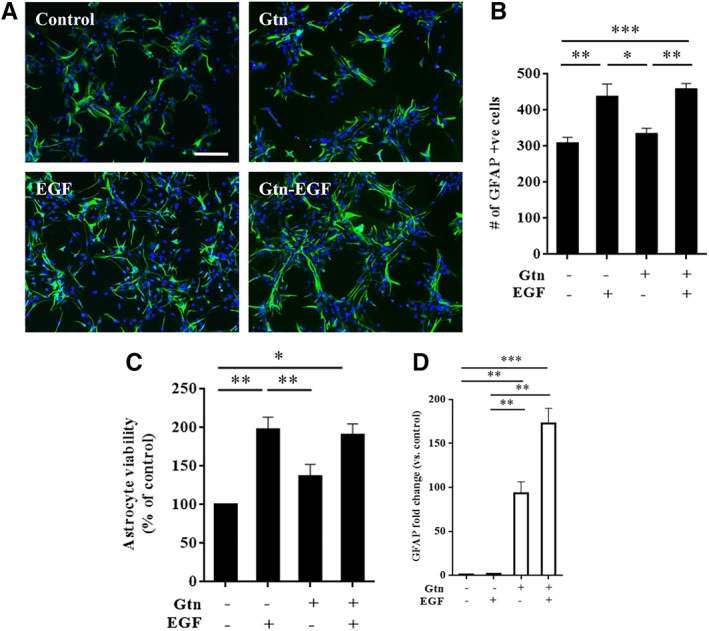
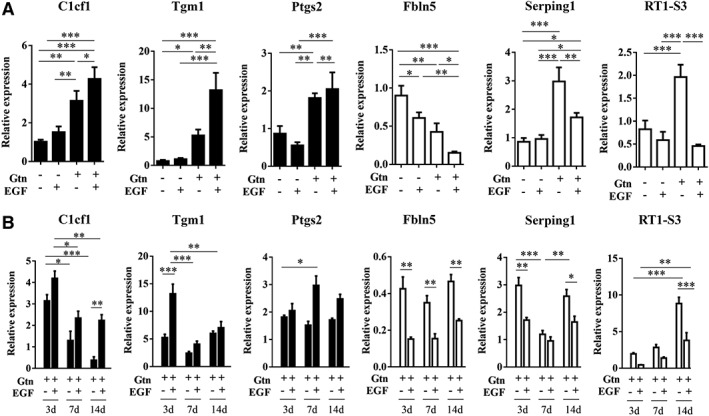
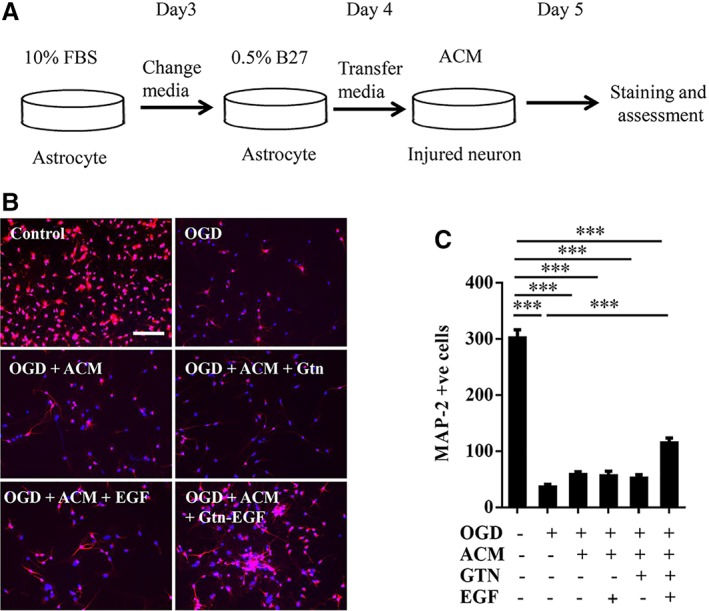
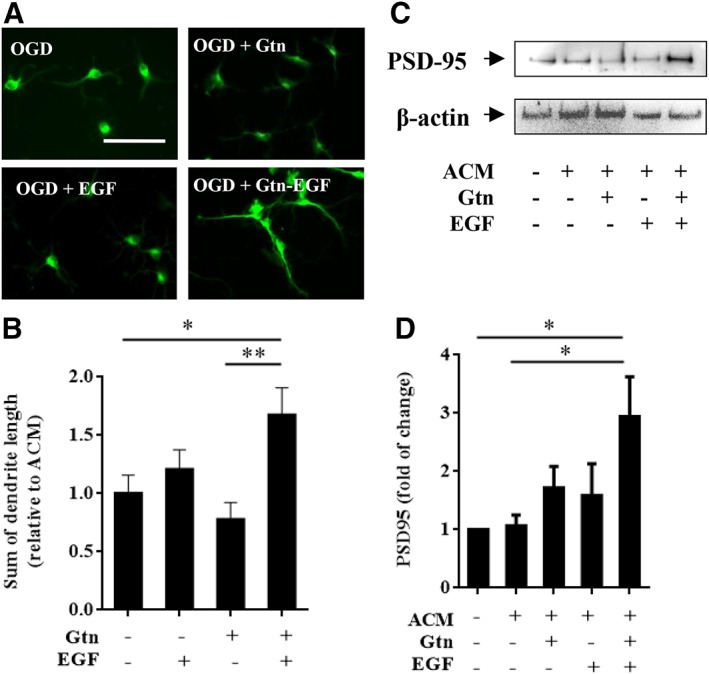
Biomaterials provide novel platforms to deliver stem cell and growth factor therapies for central nervous system (CNS) repair. The majority of these approaches have focused on the promotion of neural progenitor cells and neurogenesis. However, it is now increasingly recognized that glial responses are critical for recovery in the entire neurovascular unit. In this study, we investigated the cellular effects of epidermal growth factor (EGF) containing hydrogels on primary astrocyte cultures. Both EGF alone and EGF-hydrogel equally promoted astrocyte proliferation, but EGF-hydrogels further enhanced astrocyte activation, as evidenced by a significantly elevated Glial fibrillary acidic protein (GFAP) gene expression. Thereafter, conditioned media from astrocytes activated by EGF-hydrogel protected neurons against injury and promoted synaptic plasticity after oxygen-glucose deprivation. Taken together, these findings suggest that EGF-hydrogels can shift astrocytes into neuro-supportive phenotypes. Consistent with this idea, quantitative-polymerase chain reaction (qPCR) demonstrated that EGF-hydrogels shifted astrocytes in part by downregulating potentially negative A1-like genes (Fbln5 and Rt1-S3) and upregulating potentially beneficial A2-like genes (Clcf1, Tgm1, and Ptgs2). Further studies are warranted to explore the idea of using biomaterials to modify astrocyte behavior and thus indirectly augment neuroprotection and neuroplasticity in the context of stem cell and growth factor therapies for the CNS. Stem Cells Translational Medicine 2019;8:1242&1248.
生物材料为中枢神经系统(CNS)修复提供了输送干细胞和生长因子疗法的新平台。这些方法中的大多数都集中在促进神经祖细胞和神经发生上。然而,现在越来越多的人认识到胶质细胞反应对于整个神经血管单元的恢复至关重要。在这项研究中,我们研究了含有表皮生长因子(EGF)的水凝胶对原代星形胶质细胞培养物的细胞影响。EGF 单独和 EGF-水凝胶都同样促进了星形胶质细胞的增殖,但 EGF-水凝胶进一步增强了星形胶质细胞的激活,这表现为胶质纤维酸性蛋白(GFAP)基因表达显著升高。此后,EGF-水凝胶激活的星形胶质细胞条件培养基可保护神经元免受损伤,并促进缺氧-葡萄糖剥夺后的突触可塑性。综上所述,这些发现表明 EGF-水凝胶可以将星形胶质细胞转变为支持神经的表型。与这一观点一致,定量聚合酶链反应(qPCR)表明,EGF-水凝胶通过下调潜在的负 A1 样基因(Fbln5 和 Rt1-S3)和上调潜在有益的 A2 样基因(Clcf1、Tgm1 和 Ptgs2)在一定程度上改变了星形胶质细胞。需要进一步的研究来探索利用生物材料改变星形胶质细胞行为的想法,从而间接地增强干细胞和生长因子疗法治疗 CNS 中的神经保护和神经可塑性。《干细胞转化医学》2019 年;8:1242&1248。