Laboratorio de Desarrollo Sustentable y Gestión Ambiental del Territorio (LDSGAT), Instituto de Ecología y Ciencias Ambientales (IECA), Facultad de Ciencias, Universidad de la República, Iguá 4225, 11400, Montevideo, Uruguay.
Departamento de Biología Animal, Grupo de Biogeografía, Diversidad y Conservación, Facultad de Ciencias, Universidad de Málaga, Bulevar Louis Pasteur, 31, 29010, Málaga, Spain.
Parasit Vectors. 2019 Sep 5;12(1):428. doi: 10.1186/s13071-019-3691-5.
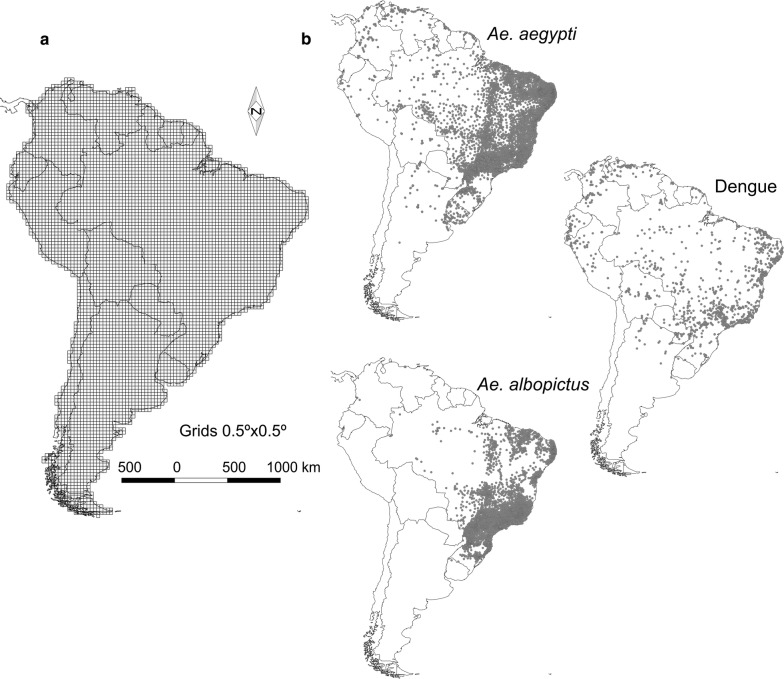
Over the last decade, reports about dengue cases have increase worldwide, which is particularly worrisome in South America due to the historic record of dengue outbreaks from the seventeenth century until the first half of the twentieth century. Dengue is a viral disease that involves insect vectors, namely Aedes aegypti and Ae. albopictus, which implies that, to prevent and combat outbreaks, it is necessary to understand the set of ecological and biogeographical factors affecting both the vector species and the virus.
We contribute with a methodology based on fuzzy logic that is helpful to disentangle the main factors that determine favorable environmental conditions for vectors and diseases. Using favorability functions as fuzzy logic modelling technique and the fuzzy intersection, union and inclusion as fuzzy operators, we were able to specify the territories at biogeographical risk of dengue outbreaks in South America.
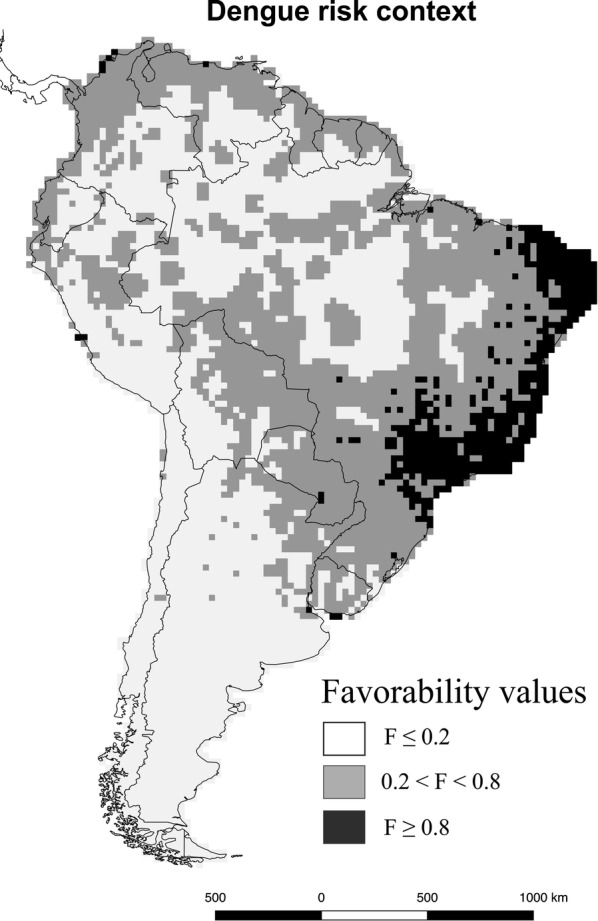
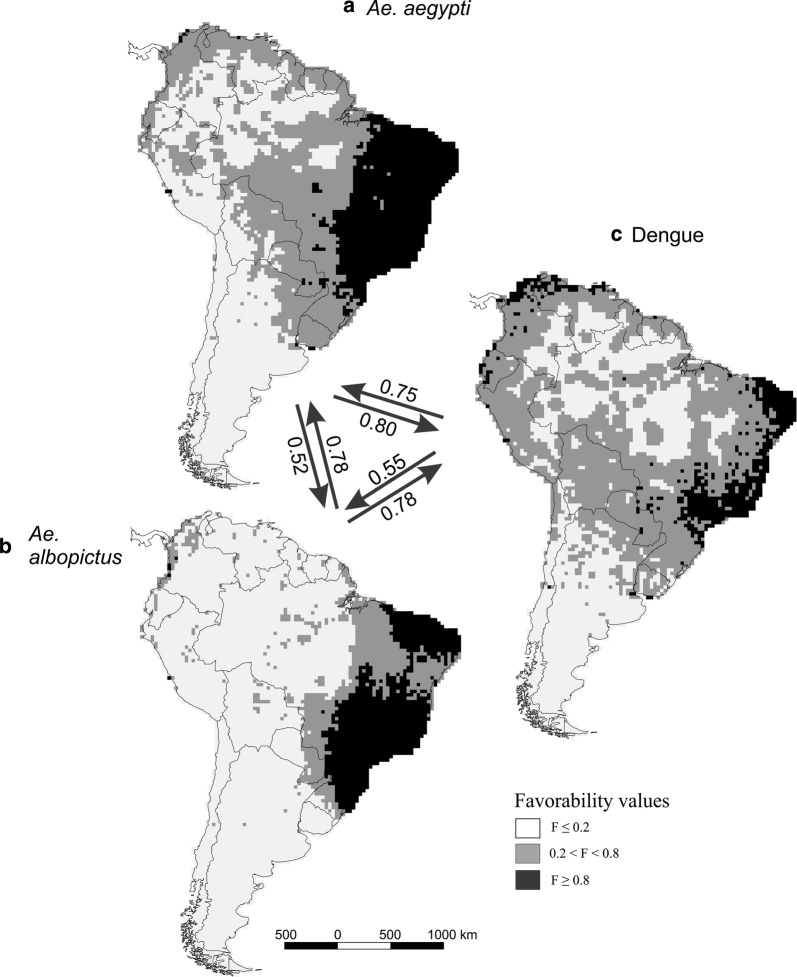
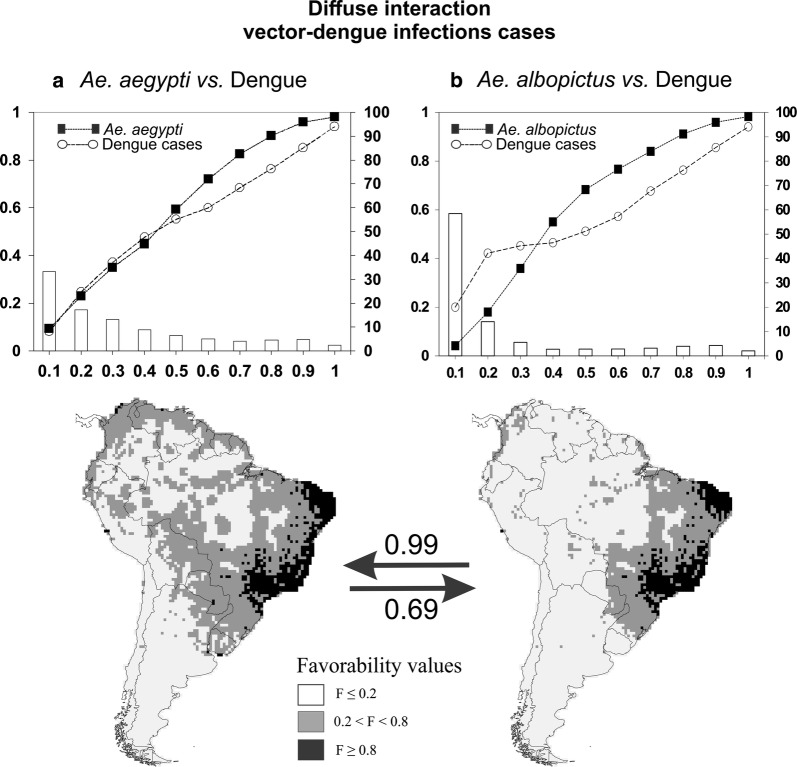
Our results indicate that the distribution of Ae. aegypti mostly encompasses the biogeographical framework of dengue in South America, which suggests that this species is the principal vector responsible for the geographical extent of dengue cases in the continent. Nevertheless, the intersection between the favorability for dengue cases and the union of the favorability for any of the vector species provided a comprehensive map of the biogeographical risk for dengue.
Fuzzy logic is an appropriate conceptual and operational tool to tackle the nuances of the vector-illness biogeographical interaction. The application of fuzzy logic may be useful in decision-making by the public health authorities to prevent, control and mitigate vector-borne diseases.
在过去的十年中,全球范围内有关登革热病例的报告有所增加,这在南美洲尤为令人担忧,因为从 17 世纪到 20 世纪上半叶,该地区有过历史上爆发登革热的记录。登革热是一种由蚊虫传播的病毒疾病,主要媒介为埃及伊蚊和白纹伊蚊,这意味着要预防和控制疫情,就必须了解影响这两种媒介物种和病毒的一系列生态和生物地理因素。
我们提出了一种基于模糊逻辑的方法,有助于理清决定媒介和疾病有利环境条件的主要因素。我们使用有利性函数作为模糊逻辑建模技术,使用模糊交集、并集和包含作为模糊运算符,确定了南美洲存在登革热疫情生物地理风险的地区。
我们的结果表明,埃及伊蚊的分布范围主要涵盖了南美洲登革热的生物地理框架,这表明该物种是导致该大陆登革热病例地理分布的主要媒介。然而,登革热病例的有利性与任何媒介物种的有利性的并集的交集提供了登革热生物地理风险的综合地图。
模糊逻辑是处理媒介-疾病生物地理相互作用细微差别的合适的概念和操作工具。模糊逻辑的应用可能有助于公共卫生当局做出决策,以预防、控制和减轻媒介传播疾病。