Ear Institute, University College London, London, WC1X 8EE, UK.
Department of Psychological Sciences, Birkbeck College, London, WC1E 7HX, UK.
Nat Commun. 2019 Sep 6;10(1):4030. doi: 10.1038/s41467-019-12048-1.
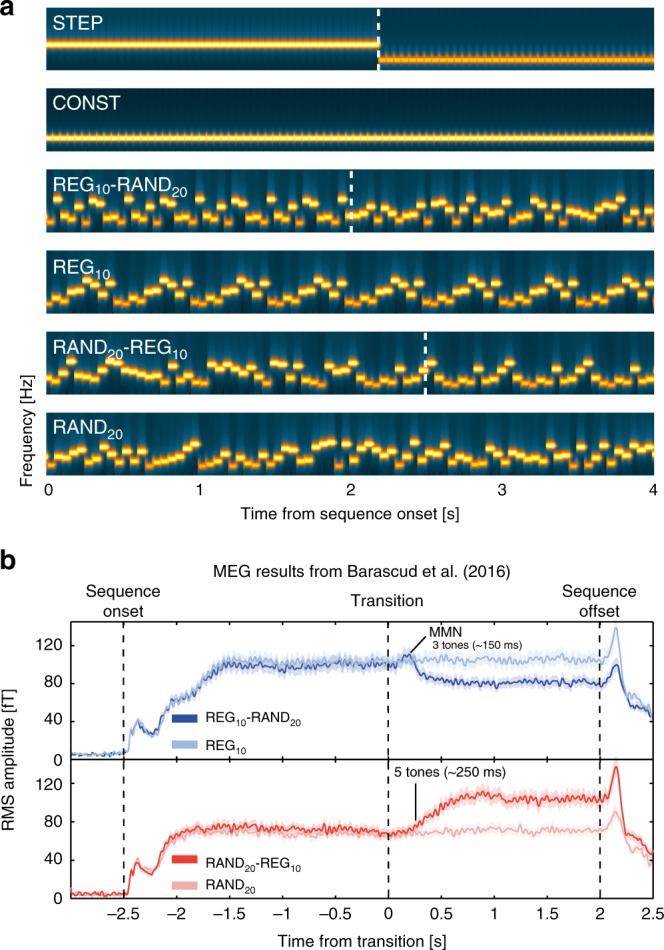
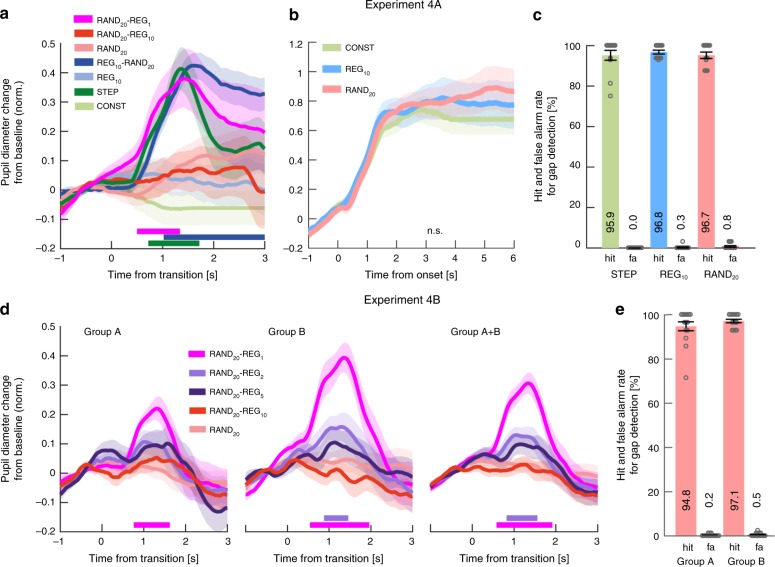
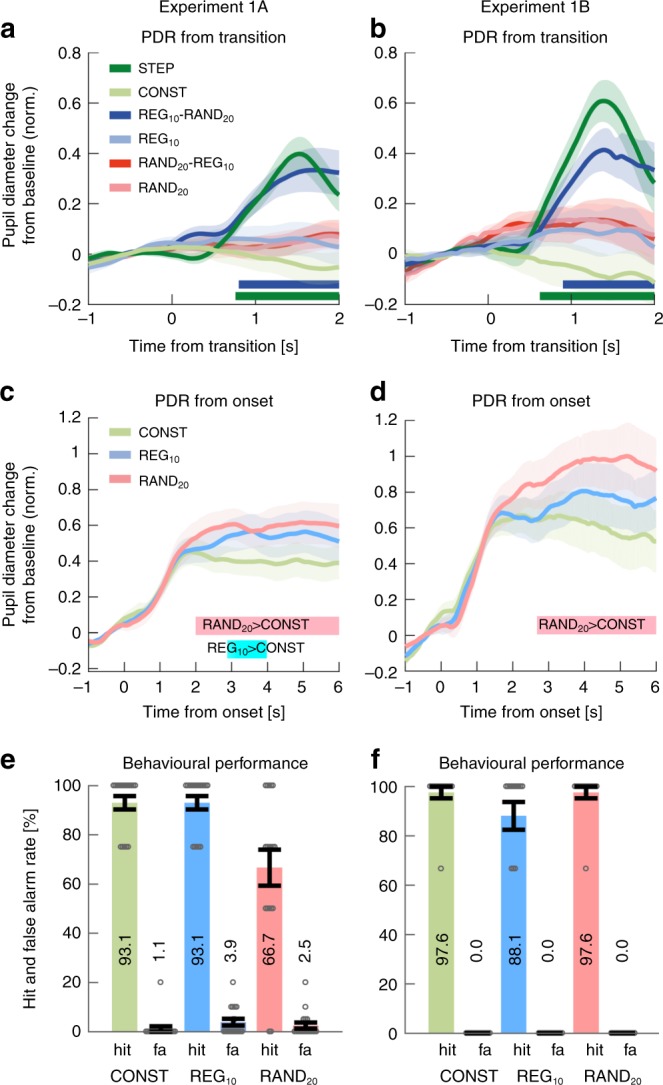
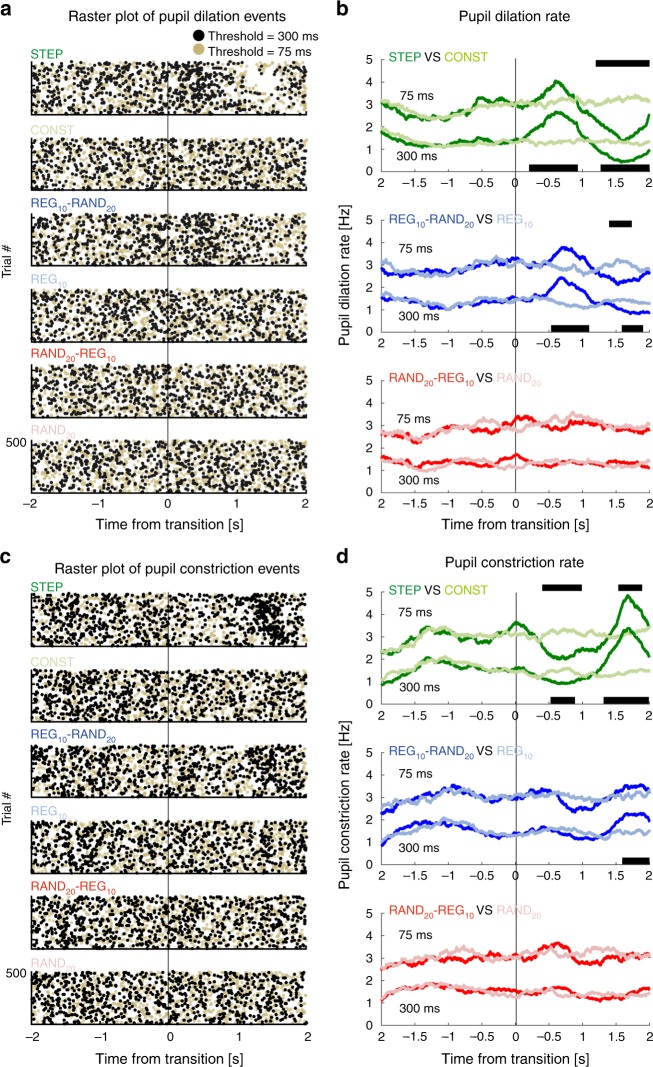
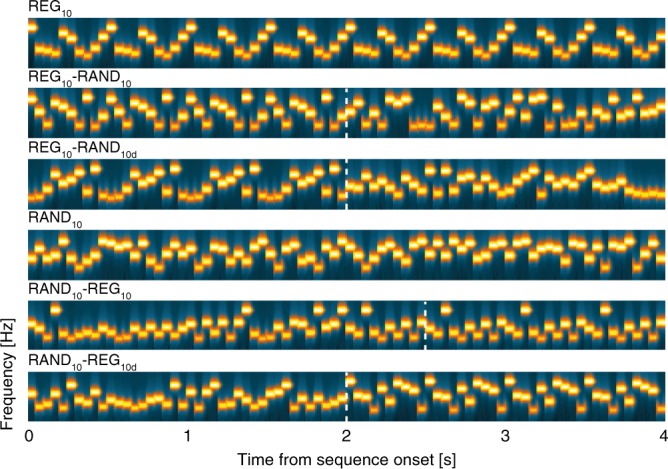
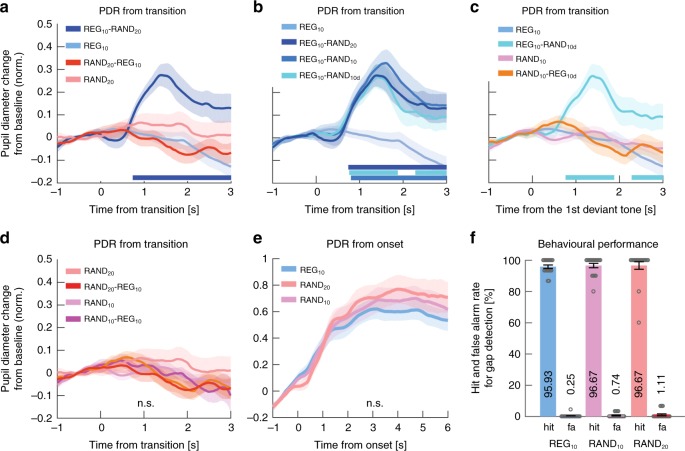
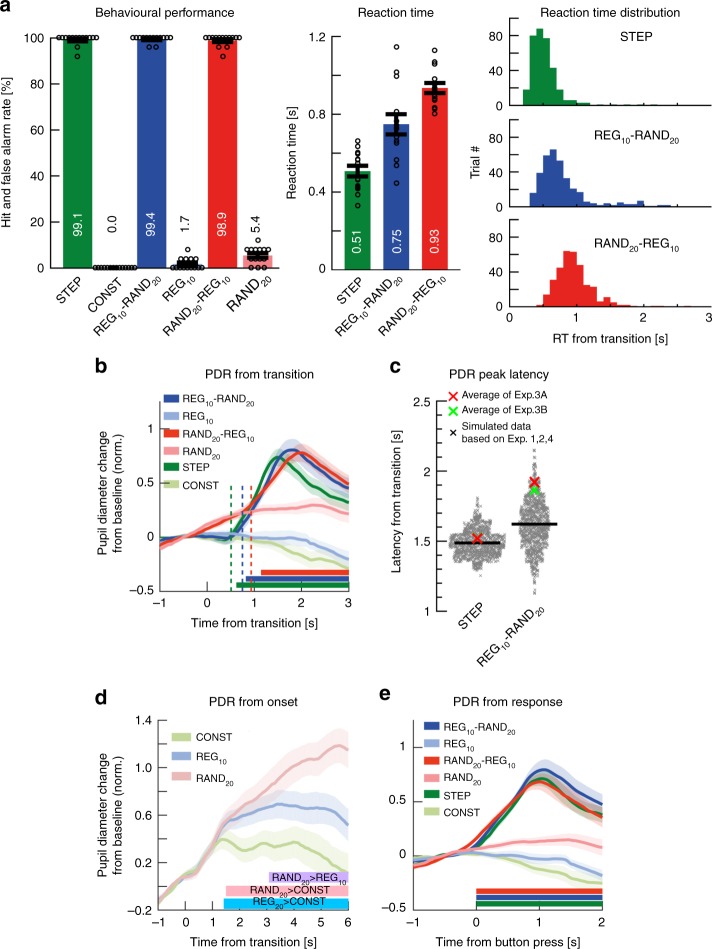
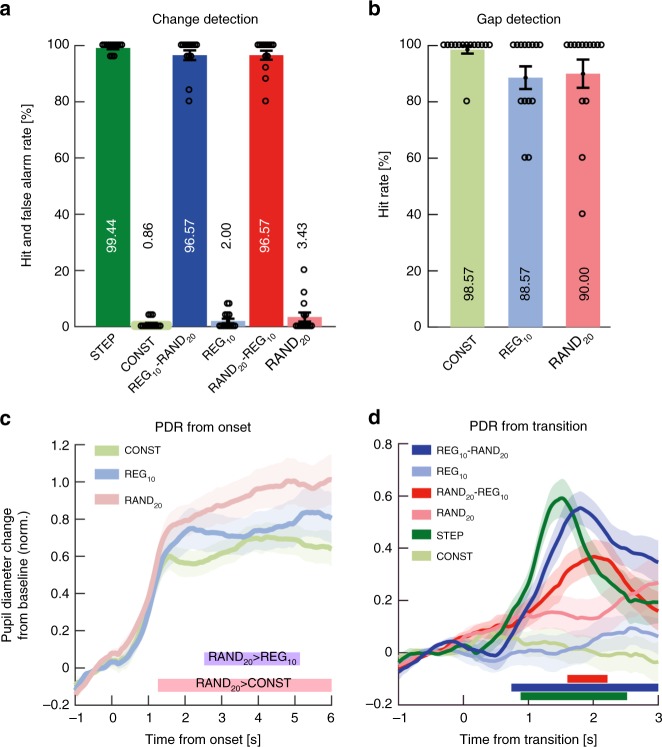
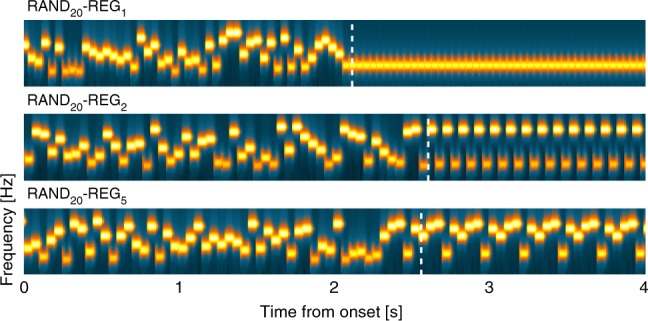
The ability to track the statistics of our surroundings is a key computational challenge. A prominent theory proposes that the brain monitors for unexpected uncertainty - events which deviate substantially from model predictions, indicating model failure. Norepinephrine is thought to play a key role in this process by serving as an interrupt signal, initiating model-resetting. However, evidence is from paradigms where participants actively monitored stimulus statistics. To determine whether Norepinephrine routinely reports the statistical structure of our surroundings, even when not behaviourally relevant, we used rapid tone-pip sequences that contained salient pattern-changes associated with abrupt structural violations vs. emergence of regular structure. Phasic pupil dilations (PDR) were monitored to assess Norepinephrine. We reveal a remarkable specificity: When not behaviourally relevant, only abrupt structural violations evoke a PDR. The results demonstrate that Norepinephrine tracks unexpected uncertainty on rapid time scales relevant to sensory signals.
跟踪周围环境统计数据的能力是一项关键的计算挑战。一个有影响力的理论提出,大脑会监测意外的不确定性——即与模型预测有很大偏差的事件,这表明模型出现了故障。去甲肾上腺素被认为在这个过程中起着关键作用,它充当中断信号,启动模型重置。然而,证据来自于参与者主动监测刺激统计数据的范式。为了确定去甲肾上腺素是否会常规报告我们周围环境的统计结构,即使与行为无关,我们使用了快速的音调序列,其中包含了与突然的结构违反相比显著的模式变化与规则结构的出现。监测瞳孔扩张(PDR)以评估去甲肾上腺素。我们揭示了一个显著的特异性:当与行为无关时,只有突然的结构违反才会引起 PDR。研究结果表明,去甲肾上腺素在与感觉信号相关的快速时间尺度上跟踪意外的不确定性。