Wong Matthew Wai Kin, Braidy Nady, Pickford Russell, Sachdev Perminder Singh, Poljak Anne
Centre for Healthy Brain Ageing, School of Psychiatry, Faculty of Medicine, University of New South Wales, Sydney, NSW, Australia.
Bioanalytical Mass Spectrometry Facility, University of New South Wales, Sydney, NSW, Australia.
Front Neurol. 2019 Aug 21;10:879. doi: 10.3389/fneur.2019.00879. eCollection 2019.
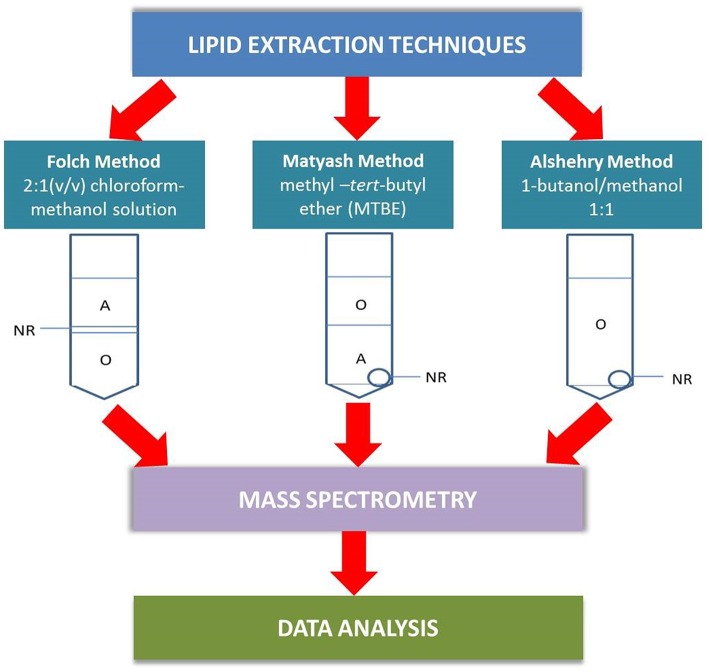
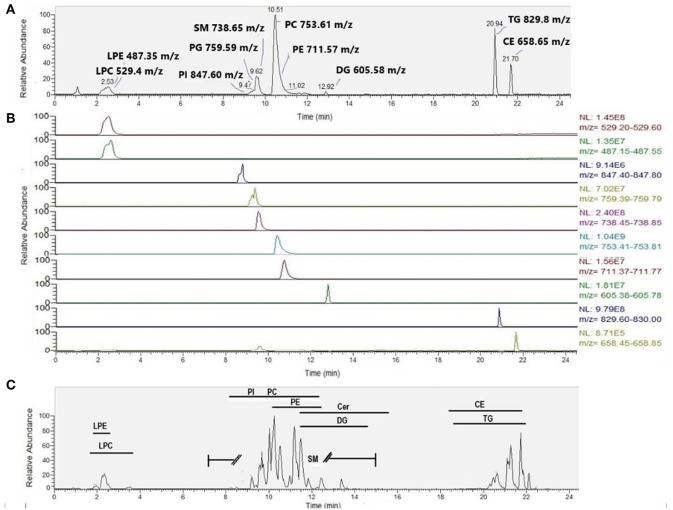
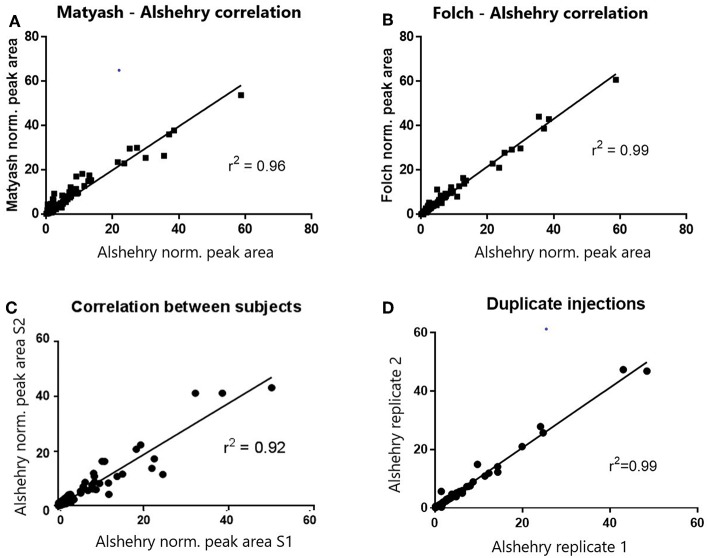
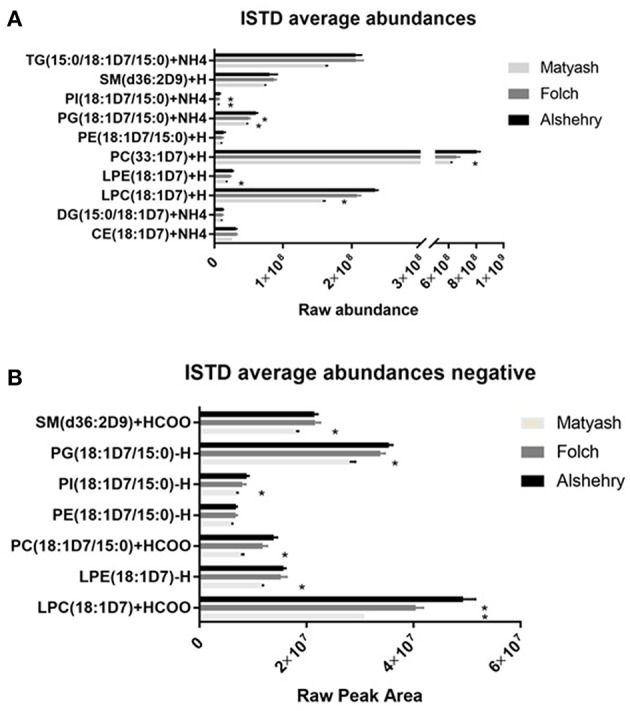
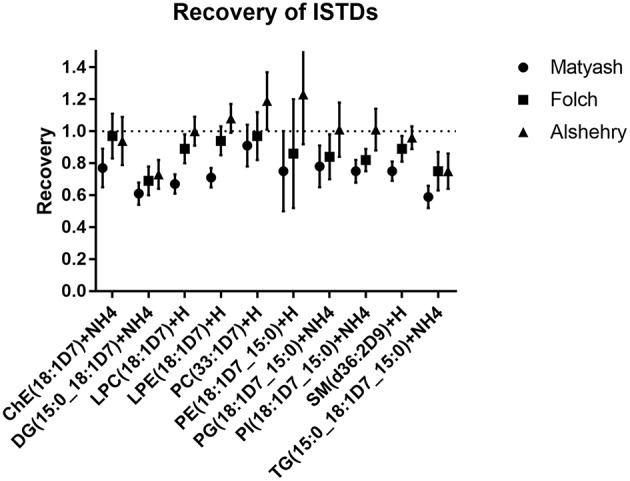
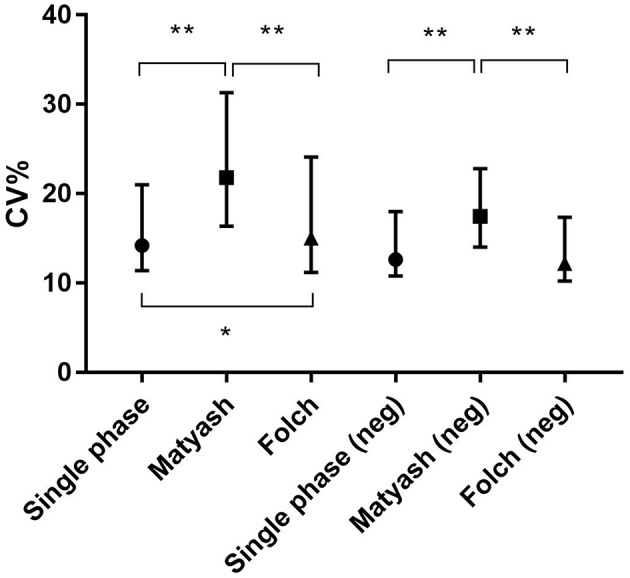
Lipidomic profiling of plasma is an emerging field, given the importance of lipids in major cellular pathways, and is dependent on efficient lipid extraction protocols. Recent attention has turned to plasma lipidomics as a means to identify potential diagnostic and prognostic biomarkers related to dementia, neuropsychiatric health and disease. Although several solvent-based lipid extraction protocols have been developed and are currently in use, novel and more efficient methods could greatly simplify lipid analysis in plasma and warrant investigation. Human plasma from normolipidemic adult volunteers was collected to evaluate three different solvent extraction protocols, including the classical Folch method, the methanol/tert-butyl methyl ether (MTBE) (Matyash) method, and a recent single-phase methanol/1-butanol (Alshehry) method. Extracted lipids were analyzed using liquid chromatography mass spectrometry (LC-MS) in positive and negative ion mode. Overall, more than 500 different lipids were identified in positive and negative ion mode combined. Our data show that the single phase Alshehry method was as effective as the Folch and Matyash methods in extracting most lipid classes and was more effective in extraction of polar lipids. Normalized peak areas of the Alshehry method were highly and positively correlated with both the Folch and Matyash methods ( = 0.99 and 0.97, respectively). Within- and between- subject correlations were = 0.99 and 0.96, respectively. Median intra-assay coefficient of variation (CV%) in positive mode was 14.1, 15.1, and 21.8 for the Alshehry, Folch and Matyash methods, respectively. Median Alshehry inter-assay CV (collected over 5 separate days) was 14.4%. In conclusion, the novel Alshehry method was at least as good as, if not better than the established biphasic extraction methods in detecting a wide range of lipid classes, using as little as 10 μL of plasma, and was highly reproducible, safer and more environmentally-friendly as it doesn't require chloroform.
鉴于脂质在主要细胞通路中的重要性,血浆脂质组学分析是一个新兴领域,且依赖于高效的脂质提取方案。最近,人们将注意力转向血浆脂质组学,将其作为识别与痴呆、神经精神健康和疾病相关的潜在诊断和预后生物标志物的一种手段。尽管已经开发并正在使用几种基于溶剂的脂质提取方案,但新颖且更高效的方法可能会极大地简化血浆中的脂质分析,值得进行研究。收集了血脂正常的成年志愿者的人血浆,以评估三种不同的溶剂提取方案,包括经典的Folch法、甲醇/叔丁基甲基醚(MTBE)(Matyash)法和最近的单相甲醇/1-丁醇(Alshehry)法。使用液相色谱质谱(LC-MS)在正离子和负离子模式下分析提取的脂质。总体而言,在正离子和负离子模式下共鉴定出500多种不同的脂质。我们的数据表明,单相Alshehry法在提取大多数脂质类别方面与Folch法和Matyash法一样有效,并且在提取极性脂质方面更有效。Alshehry法的归一化峰面积与Folch法和Matyash法均高度正相关(分别为r = 0.99和0.97)。受试者内和受试者间的相关性分别为r = 0.99和0.96。在正离子模式下,Alshehry法、Folch法和Matyash法的测定内变异系数(CV%)中位数分别为14.1、15.1和21.8。Alshehry法的测定间CV(在5个不同日期收集)中位数为14.4%。总之,新颖的Alshehry法在检测多种脂质类别方面至少与既定的双相提取法一样好,甚至可能更好,它仅需10μL血浆,并且具有高度可重复性、更安全且更环保,因为它不需要氯仿。