Meigh Neil J, Keogh Justin W L, Schram Ben, Hing Wayne A
1Faculty of Health Sciences and Medicine, Bond University, Institute of Health & Sport, Gold Coast, Queensland 4226 Australia.
2Sports Performance Research Centre New Zealand, AUT University, Auckland, New Zealand.
BMC Sports Sci Med Rehabil. 2019 Sep 3;11:19. doi: 10.1186/s13102-019-0130-z. eCollection 2019.
A scoping review of scientific literature on the effects of kettlebell training. There are no authoritative guidelines or recommendations for using kettlebells within a primary care setting. Our review objectives were to identify the extent, range and nature of the available evidence, to report on the types of evidence currently available to inform clinical practice, to synthesise key concepts, and identify gaps in the research knowledge base.
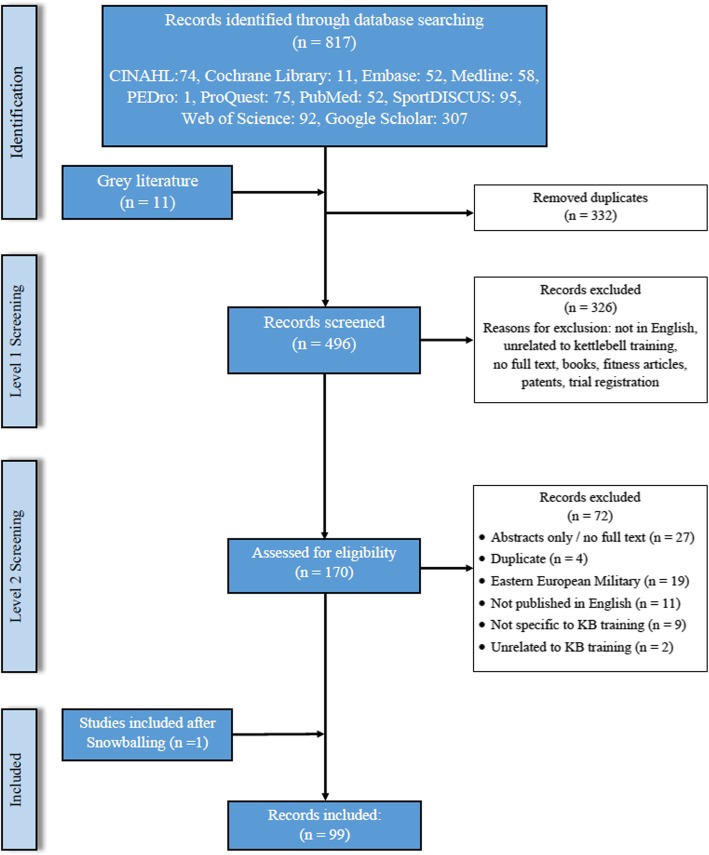
Following the PRISMA-ScR Checklist, we conducted a search of 10 electronic databases from inception to 1 February 2019. There were no exclusions in searching for publications. A single reviewer screened the literature and abstracted data from relevant publications. Articles were grouped and charted by concepts and themes relevant to primary care, and narratively synthesised. Effect sizes from longitudinal studies were identified or calculated, and randomised controlled trials assessed for methodological quality.
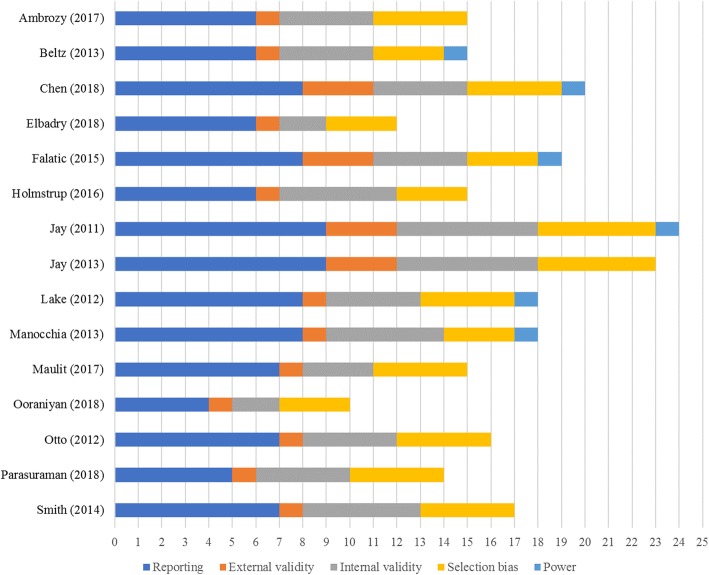
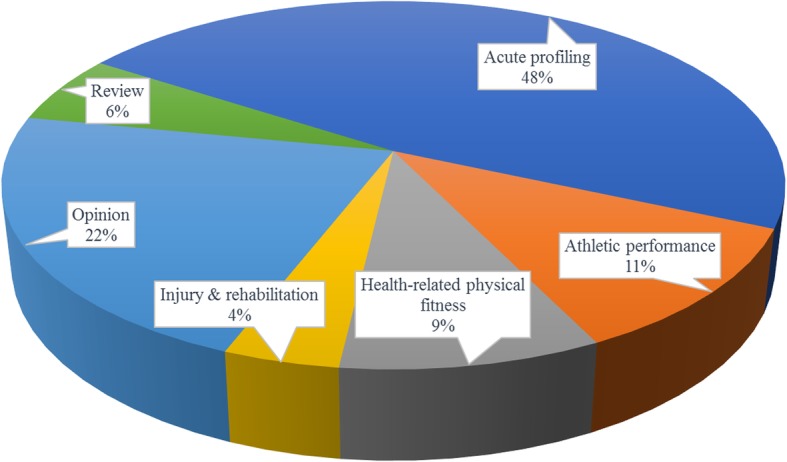
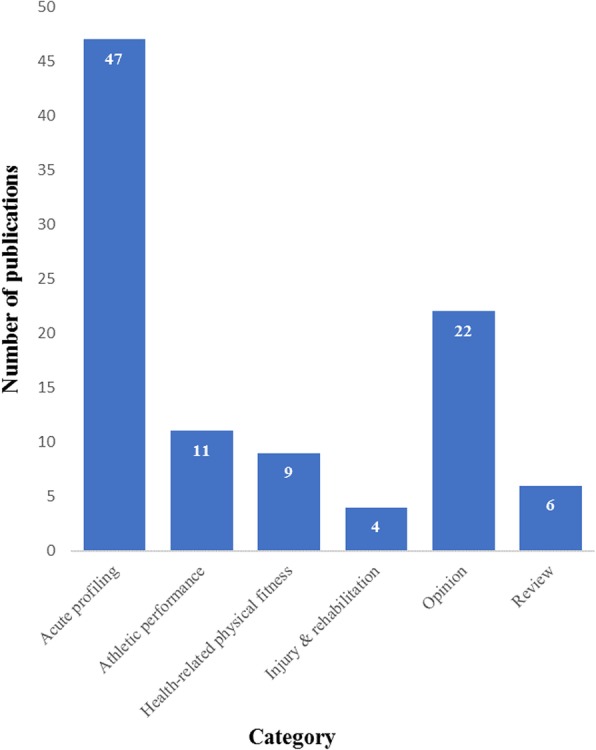
Eight hundred and twenty-nine records were identified to 1 February 2019. Four hundred and ninety-six were screened and 170 assessed for eligibility. Ninety-nine publications met the inclusion criteria. Effect sizes were typically trivial to small. One trial used a pragmatic hardstyle training program among healthy college-age participants. Two trials reported the effects of kettlebell training in clinical conditions. Thirty-three studies explicitly used 'hardstyle' techniques and 4 investigated kettlebell sport. Also included were 6 reviews, 22 clinical/expert opinions and 3 case reports of injury. Two reviewers independently evaluated studies using a modified Downs & Black checklist.
A small number of longitudinal studies, which are largely underpowered and of low methodological quality, provide the evidence-informed therapist with little guidance to inform the therapeutic prescription of kettlebells within primary care. Confidence in reported effects is low to very low. The strength of recommendation for kettlebell training improving measures of physical function is weak, based on the current body of literature. Further research on reported effects is warranted, with inclusion of clinical populations and investigations of musculoskeletal conditions common to primary care. There is a need for an externally valid, standardised approach to the training and testing of kettlebell interventions, which better informs the therapeutic use of kettlebells in primary care.
对有关壶铃训练效果的科学文献进行的范围综述。在初级保健环境中使用壶铃尚无权威性指南或建议。我们的综述目标是确定现有证据的范围、广度和性质,报告目前可用于为临床实践提供信息的证据类型,综合关键概念,并找出研究知识库中的空白。
按照PRISMA-ScR清单,我们对10个电子数据库进行了从建库至2019年2月1日的检索。在检索出版物时没有排除标准。由一名评审员筛选文献并从相关出版物中提取数据。文章按照与初级保健相关的概念和主题进行分组和制表,并进行叙述性综合分析。确定或计算纵向研究的效应量,并评估随机对照试验的方法学质量。
截至2019年2月1日共识别出829条记录。筛选了496条记录,170条记录进行了资格评估。99篇出版物符合纳入标准。效应量通常较小。一项试验在健康的大学年龄参与者中使用了实用的硬式训练计划。两项试验报告了壶铃训练在临床情况下的效果。33项研究明确使用了“硬式”技术,4项研究调查了壶铃运动。还包括6篇综述、22篇临床/专家意见和3篇损伤病例报告。两名评审员使用改良的唐斯和布莱克清单独立评估研究。
少数纵向研究,大多样本量不足且方法学质量较低,为循证治疗师在初级保健中为壶铃治疗处方提供的指导很少。对报告效应的信心很低到非常低。基于目前的文献,壶铃训练改善身体功能指标的推荐强度较弱。有必要对报告的效应进行进一步研究,纳入临床人群并调查初级保健中常见的肌肉骨骼疾病。需要一种外部有效的、标准化的方法来进行壶铃干预的训练和测试,以便更好地为初级保健中壶铃的治疗应用提供信息。