School of Behavioural and Health Sciences, Australian Catholic University, Melbourne, Victoria, Australia.
Faculty of Health Sciences and Medicine, Institute of Health & Sport, Bond University, Gold Coast, Queensland, Australia.
PeerJ. 2022 Nov 21;10:e14370. doi: 10.7717/peerj.14370. eCollection 2022.
Research into the kettlebell swing has increased in the last decade. There has been a paucity of literature assessing an individual's ability to perform the kettlebell swing exercise. The purpose of this study was to determine the test-retest reliability of the one and five repetition maximum (1RM and 5RM) kettlebell swing.
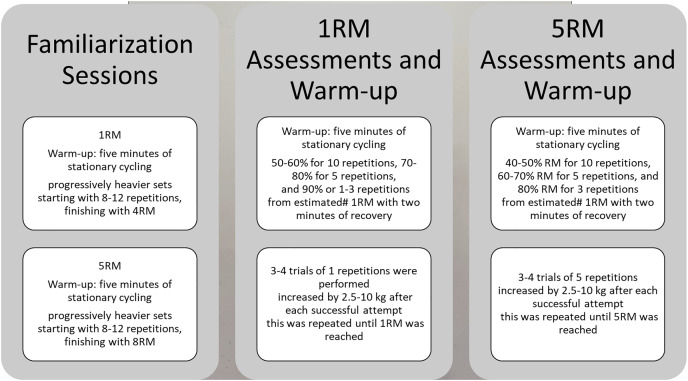
MATERIALS & METHODS: Twenty four recreational resistance-trained participants performed an isometric mid-thigh pull (IMTP) and two familiarization sessions followed by three test sessions for each RM load approximately one week apart, using a custom-built plate-loaded kettlebell. On each test occasion, subjects completed a series of warm-up sets followed by 3-4 progressively heavier kettlebell swings to a standardized height until 1RM or 5RM was reached. Test-retest reliability was calculated using the intra-class correlation (ICC) and typical error was represented as the coefficient of variation (CV%) with 90% confidence limits (90% CL). The smallest worthwhile change (SWC%) representing the smallest change of practical importance, was calculated as 0.2 × between-subject standard deviation. The relationship of kettlebell swing performance and maximum strength was determined by Pearson correlation with ±90% CL between the absolute peak force recorded during IMTP and 1RM or 5RM.
Results demonstrated a high test-retest reliability for both the 1RM (ICC = 0.97, 90% CL [0.95-0.99]; CV = 2.7%, 90% CL [2.2-3.7%]) and 5RM (ICC = 0.98, 90% CL [0.96-0.99]; CV = 2.4%, 90% CL [1.9-3.3%]), respectively. The CV% was lower than the SWC for both the 1RM (SWC = 2.8%, 90% CL [1.9-3.5]) and 5RM (SWC = 2.9%, 90% CL [1.9-3.6]) kettlebell swing. The correlation between IMTP absolute peak force and the 1RM (r = 0.69, 90% CL 0.43-0.83) was large and very large for the 5RM (r = 0.75, 90% CL [0.55-0.87]).
These results demonstrate the stability of 1RM and 5RM kettlebell swing performance after two familiarization sessions. Practitioners can be confident that changes in kettlebell swing 1RM and 5RM performance of >3.6 kg represent a practically important difference, which is the upper limit of the 90% CL.
过去十年,对壶铃摆动的研究有所增加。评估个体进行壶铃摆动运动能力的文献相对较少。本研究的目的是确定 1RM 和 5RM 壶铃摆动的测试-重测信度。
24 名有经验的抗阻训练参与者进行等长大腿中部拉伸(IMTP)和两次熟悉训练,然后在大约一周的时间内,使用定制的板式壶铃进行三次 RM 负荷测试。在每次测试中,受试者先完成一组热身运动,然后进行 3-4 组逐渐加重的壶铃摆动,直到达到 1RM 或 5RM。使用组内相关系数(ICC)计算测试-重测信度,典型误差表示为变异系数(CV%),置信区间为 90%(90% CL)。最小有意义变化(SWC%)代表实际重要性的最小变化,计算为 0.2×组间标准差。通过 Pearson 相关性确定壶铃摆动表现与最大力量之间的关系,IMTP 期间记录的绝对峰值力与 1RM 或 5RM 的±90% CL 之间的关系。
结果表明,1RM(ICC = 0.97,90% CL [0.95-0.99];CV = 2.7%,90% CL [2.2-3.7%])和 5RM(ICC = 0.98,90% CL [0.96-0.99];CV = 2.4%,90% CL [1.9-3.3%])的测试-重测信度均较高。1RM(SWC = 2.8%,90% CL [1.9-3.5])和 5RM(SWC = 2.9%,90% CL [1.9-3.6])的 CV%均低于 SWC。IMTP 绝对峰值力与 1RM 的相关性较大(r = 0.69,90% CL 0.43-0.83),与 5RM 的相关性非常大(r = 0.75,90% CL [0.55-0.87])。
这些结果表明,经过两次熟悉训练后,1RM 和 5RM 壶铃摆动性能稳定。从业者可以相信,壶铃摆动 1RM 和 5RM 性能的变化超过 3.6 公斤代表了实际重要的差异,这是 90% CL 的上限。