Leibniz Research Centre for Working Environment and Human Factors (IfADo) at TU Dortmund, Dortmund, Germany.
Sci Rep. 2019 Sep 11;9(1):13086. doi: 10.1038/s41598-019-49503-4.
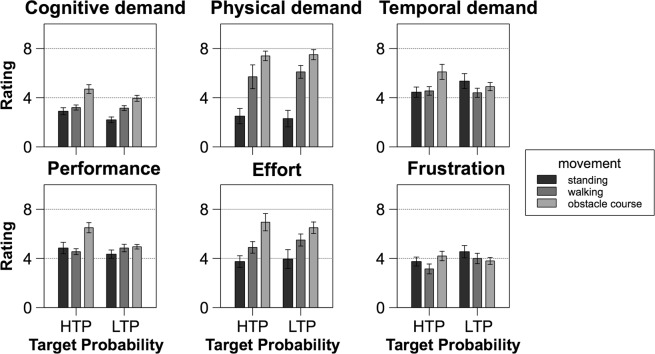
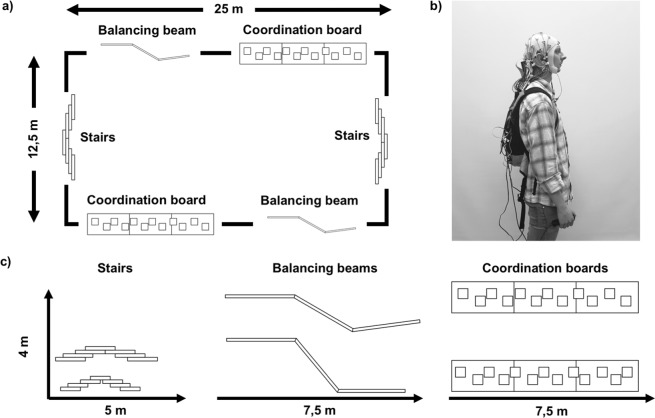
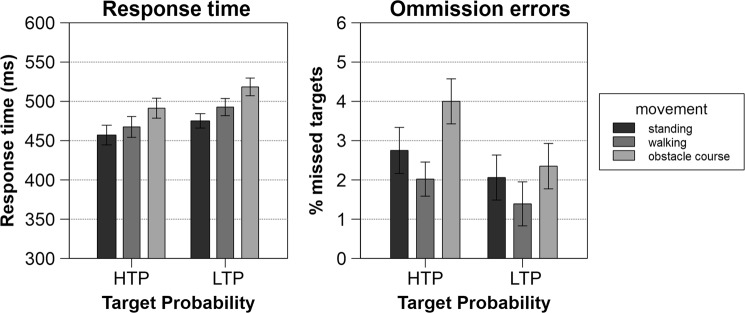
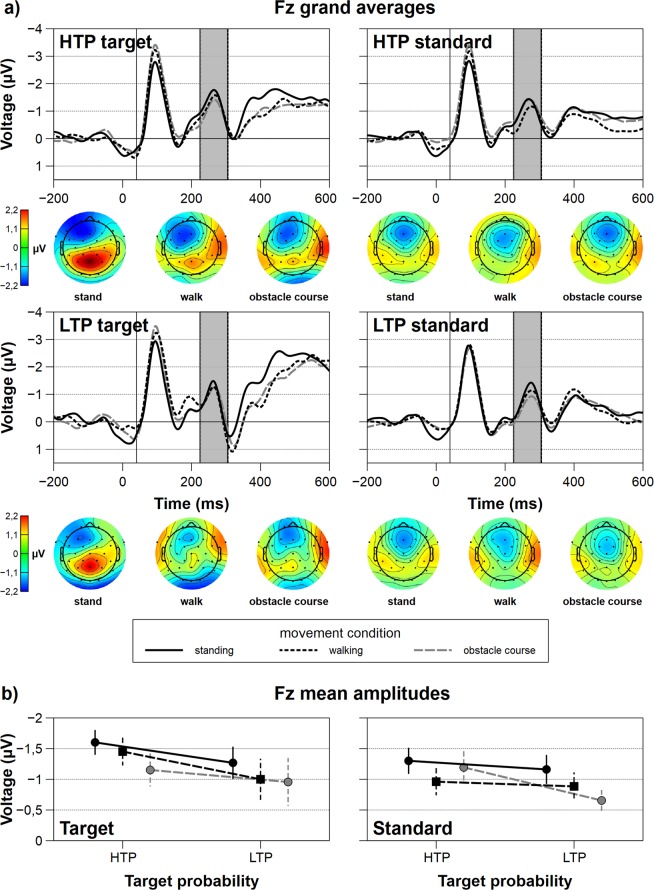
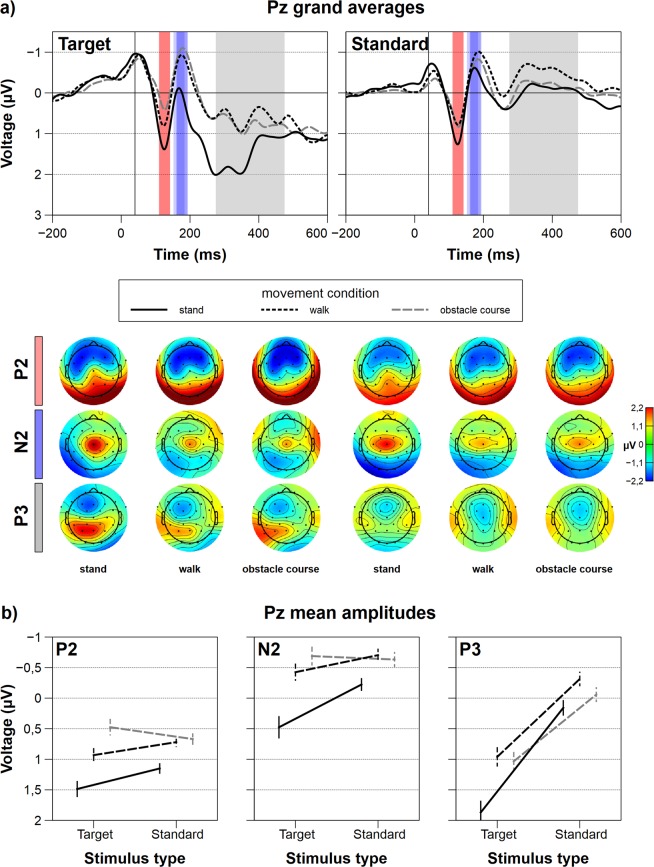
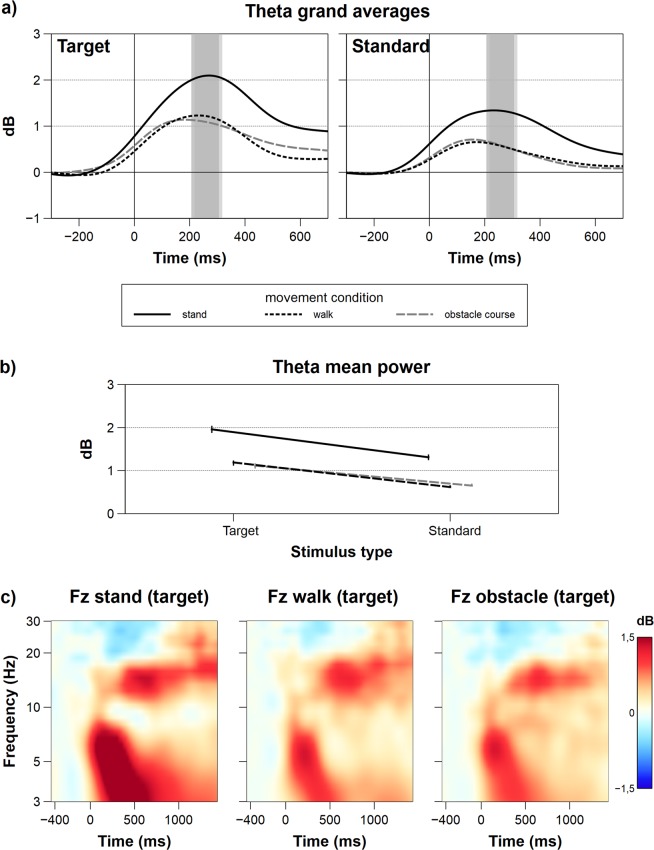
Oftentimes we find ourselves in situations in which we need to perform concurrent motor and cognitive tasks like simple locomotion while being cognitively involved. In the present study, we investigated in how far cognitive and motor functioning interfere in an outdoor environment. Our participants performed an auditory oddball task while concurrently completing various motor tasks on the outside premises of our institute. Beside behavioural responses and subjective workload ratings, we also analysed electrophysiological data recorded with a 30-channel mobile EEG montage. We observed an increase of subjective workload and decrease of performance with increasing movement complexity. Accordingly, we also found a decrease in the parietal P3 amplitude as well as in frontal midline Theta power with higher motor load. These results indicate that an increased movement complexity imposes a higher workload to the cognitive system, which, in turn, effectively reduces the availability of cognitive resources for the cognitive task. Overall this experiment demonstrates the feasibility of transferring classical paradigms of cognitive research to real-world settings. The findings support the notion of shared resources for motor and cognitive functions by demonstrating distinct modulations of correlates of cognitive processes across different motor tasks.
我们经常发现自己处于需要同时执行运动和认知任务的情况,例如在认知参与的情况下进行简单的运动。在本研究中,我们调查了认知和运动功能在户外环境中是如何相互干扰的。我们的参与者在我们研究所的户外场所同时执行听觉Oddball 任务和各种运动任务。除了行为反应和主观工作量评分外,我们还分析了使用 30 通道移动 EEG 导联记录的电生理数据。我们观察到随着运动复杂性的增加,主观工作量增加,性能下降。相应地,我们还发现随着更高的运动负荷,顶区 P3 振幅和额中线Theta 功率下降。这些结果表明,运动复杂性的增加给认知系统带来了更高的工作量,这反过来又有效地减少了认知任务的认知资源可用性。总的来说,这个实验证明了将认知研究的经典范式转移到真实环境中的可行性。研究结果通过在不同的运动任务中对认知过程的相关因素进行明显的调制,支持运动和认知功能共享资源的观点。