Pascual Sonia, Miralles Cayetano, Bernabé Juan M, Irurzun Javier, Planells Mariana
Liver Unit, Hospital General Universitario de Alicante, Alicante 03010, Spain.
Radiology Department, Hospital General Universitario de Alicante, Alicante 03010, Spain.
World J Clin Cases. 2019 Aug 26;7(16):2269-2286. doi: 10.12998/wjcc.v7.i16.2269.
Hepatocellular carcinoma (HCC) appears in most of cases in patients with advanced liver disease and is currently the primary cause of death in this population. Surveillance of HCC has been proposed and recommended in clinical guidelines to obtain earlier diagnosis, but it is still controversial and is not accepted worldwide.
To review the actual evidence to support the surveillance programs in patients with cirrhosis as well as the diagnosis procedure.
Systematic review of recent literature of surveillance (tools, interval, cost-benefit, target population) and the role of imaging diagnosis (radiological non-invasive diagnosis, optimal modality and agents) of HCC.
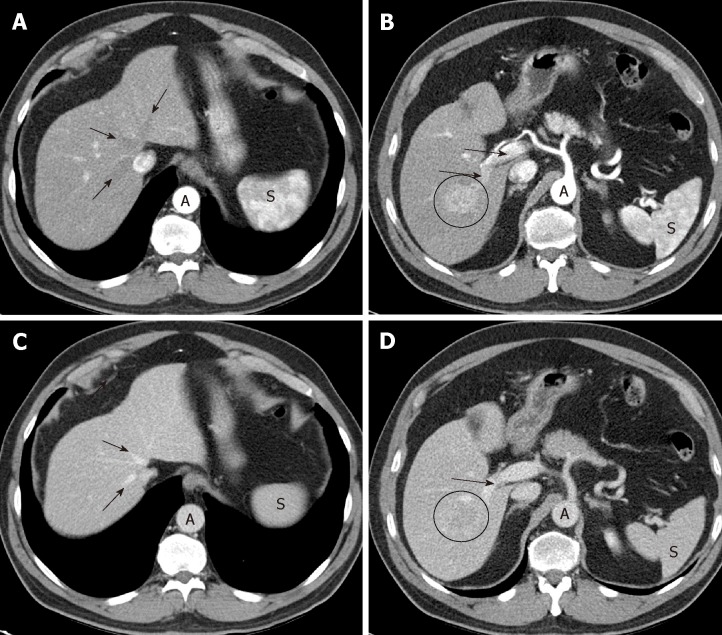
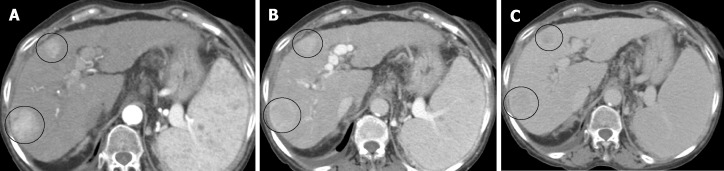
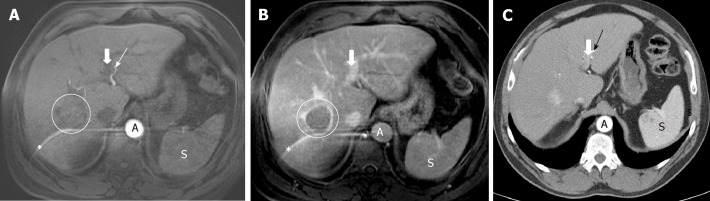
The benefits of surveillance of HCC, mainly with ultrasonography, have been assessed in several prospective and retrospective analysis, although the percentage of patients diagnosed in surveillance programs is still low. Surveillance of HCC permits diagnosis in early stages allows better access to curative treatment and increases life expectancy in patients with cirrhosis. HCC is a tumor with special radiological characteristics in computed tomography and magnetic resonance imaging, which allows highly accurate diagnosis without routine biopsy confirmation. The actual recommendation is to perform biopsy only in indeterminate nodules.
The evidence supports the recommendation of performing surveillance of HCC in patients with cirrhosis susceptible of treatment, using ultrasonography every 6 mo. The diagnosis evaluation of HCC can be established based on noninvasive imaging criteria in patients with cirrhosis.
肝细胞癌(HCC)大多出现在晚期肝病患者中,目前是该人群的主要死因。临床指南已提议并推荐对HCC进行监测以实现早期诊断,但这仍存在争议且未被全球广泛接受。
回顾支持肝硬化患者监测计划及诊断程序的实际证据。
系统回顾近期关于监测(工具、间隔时间、成本效益、目标人群)以及HCC影像诊断(放射学非侵入性诊断、最佳方式及试剂)作用的文献。
尽管在监测计划中确诊患者的比例仍然较低,但已在多项前瞻性和回顾性分析中评估了主要通过超声对HCC进行监测的益处。对HCC进行监测可在早期实现诊断,使患者能更好地接受根治性治疗并延长肝硬化患者的预期寿命。HCC在计算机断层扫描和磁共振成像中具有特殊的放射学特征,无需常规活检确认即可进行高度准确的诊断。目前的建议是仅对不确定的结节进行活检。
有证据支持对适合治疗的肝硬化患者每6个月使用超声进行一次HCC监测的建议。对于肝硬化患者,可基于非侵入性影像标准进行HCC的诊断评估。