Institute of Cognitive Neurology and Dementia Research (IKND), Otto-von-Guericke University, 39120 Magdeburg, Germany,
German Center for Neurodegenerative Diseases (DZNE), 39120 Magdeburg, Germany.
J Neurosci. 2019 Oct 30;39(44):8788-8797. doi: 10.1523/JNEUROSCI.1279-19.2019. Epub 2019 Sep 20.
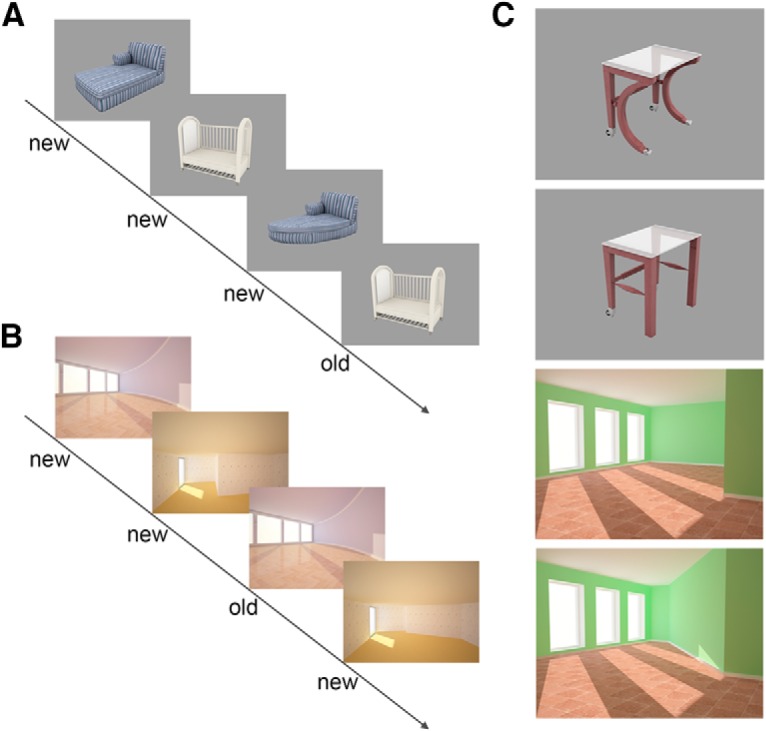
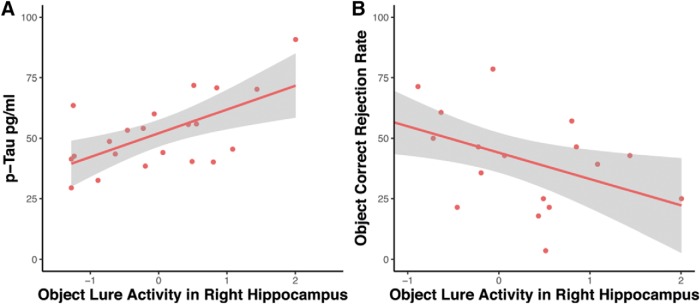
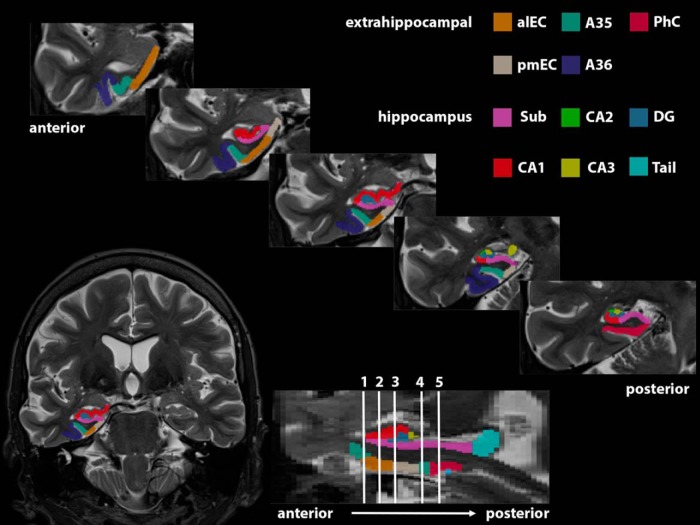
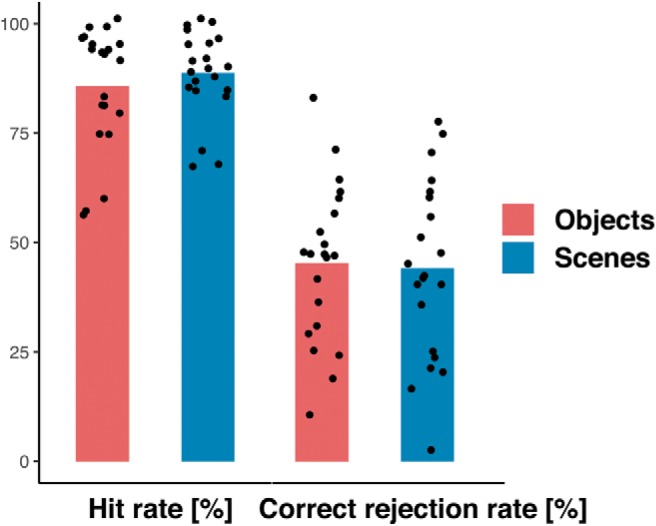
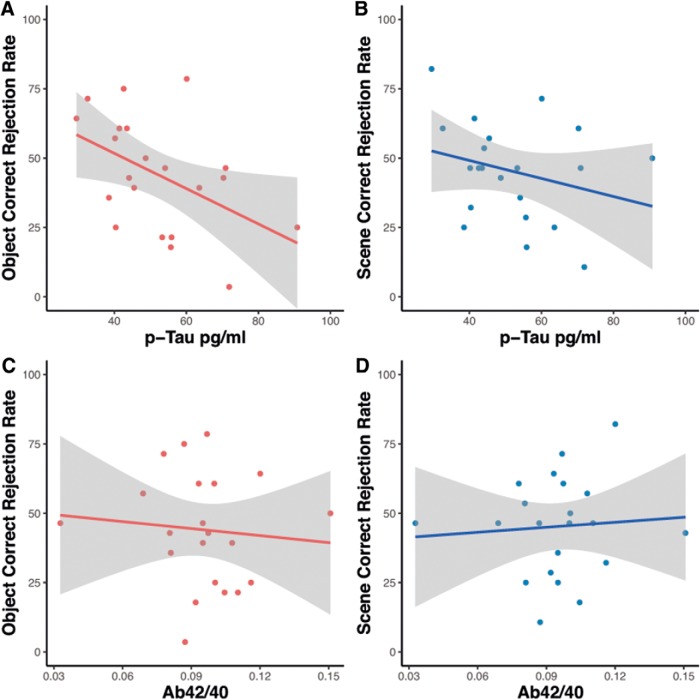
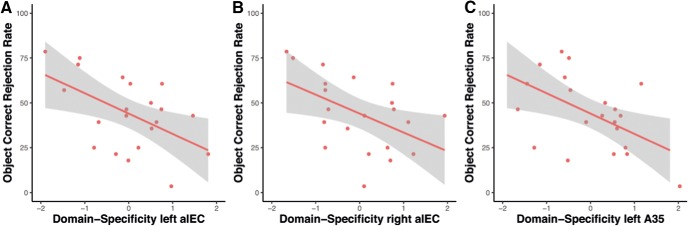
Mnemonic discrimination, the ability to distinguish similar events in memory, relies on subregions in the human medial temporal lobes (MTLs). Tau pathology is frequently found within the MTL of older adults and therefore likely to affect mnemonic discrimination, even in healthy older individuals. The MTL subregions that are known to be affected early by tau pathology, the perirhinal-transentorhinal region (area 35) and the anterior-lateral entorhinal cortex (alEC), have recently been implicated in the mnemonic discrimination of objects rather than scenes. Here we used an object-scene mnemonic discrimination task in combination with fMRI recordings and analyzed the relationship between subregional MTL activity, memory performance, and levels of total and phosphorylated tau as well as Aβ42/40 ratio in CSF. We show that activity in alEC was associated with mnemonic discrimination of similar objects but not scenes in male and female cognitively unimpaired older adults. Importantly, CSF tau levels were associated with increased fMRI activity in the hippocampus, and both increased hippocampal activity as well as tau levels were associated with mnemonic discrimination of objects, but again not scenes. This suggests that dysfunction of the alEC-hippocampus object mnemonic discrimination network might be a marker for tau-related cognitive decline. Subregions in the human medial temporal lobe are critically involved in episodic memory and, at the same time, affected by tau pathology. Impaired object mnemonic discrimination performance as well as aberrant activity within the entorhinal-hippocampal circuitry have been reported in earlier studies involving older individuals, but it has thus far remained elusive whether and how tau pathology is implicated in this specific impairment. Using task-related fMRI in combination with measures of tau pathology in CSF, we show that measures of tau pathology are associated with increased hippocampal activity and reduced mnemonic discrimination of similar objects but not scenes. This suggests that object mnemonic discrimination tasks could be promising markers for tau-related cognitive decline.
记忆辨别能力,即区分记忆中相似事件的能力,依赖于人类内侧颞叶(MTL)的亚区。tau 病理学在老年人的 MTL 中经常被发现,因此可能会影响记忆辨别能力,即使在健康的老年人中也是如此。tau 病理学早期受影响的 MTL 亚区,即旁海马-前外侧内嗅皮层(area 35)和前外侧内嗅皮层(alEC),最近被牵连到物体而非场景的记忆辨别中。在这里,我们使用物体-场景记忆辨别任务结合 fMRI 记录,并分析了 MTL 亚区活动、记忆表现以及 CSF 中总 tau 和磷酸化 tau 以及 Aβ42/40 比值之间的关系。我们表明,在认知无障碍的老年男性和女性中,alEC 的活动与相似物体的记忆辨别有关,但与场景无关。重要的是,CSF tau 水平与海马体 fMRI 活动的增加有关,而海马体活动的增加以及 tau 水平的增加都与物体的记忆辨别有关,但与场景无关。这表明 alEC-海马体物体记忆辨别网络的功能障碍可能是 tau 相关认知衰退的一个标志。人类内侧颞叶的亚区对情景记忆至关重要,同时也受到 tau 病理学的影响。在涉及老年人的早期研究中,已经报道了记忆辨别任务表现受损以及内嗅-海马电路活动异常,但迄今为止,tau 病理学是否以及如何参与这种特定的损伤仍不清楚。我们使用任务相关 fMRI 结合 CSF 中的 tau 病理学测量,表明 tau 病理学的测量与海马体活动增加和相似物体的记忆辨别能力降低有关,但与场景无关。这表明物体记忆辨别任务可能是 tau 相关认知衰退的有前途的标志物。