Department of Environmental Health, Harvard University T.H Chan School of Public Health, Boston, MA 02215, USA.
Division of Food and Nutrition Sciences, School of Applied Health Sciences and Wellness and Diabetes Institute, Ohio University, Athens, OH 45701, USA.
Nutrients. 2019 Sep 19;11(9):2250. doi: 10.3390/nu11092250.
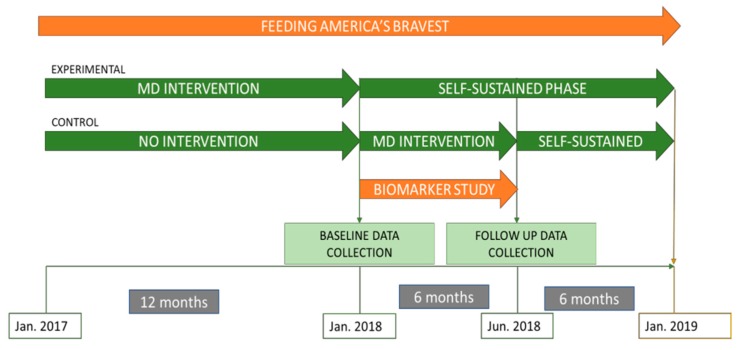
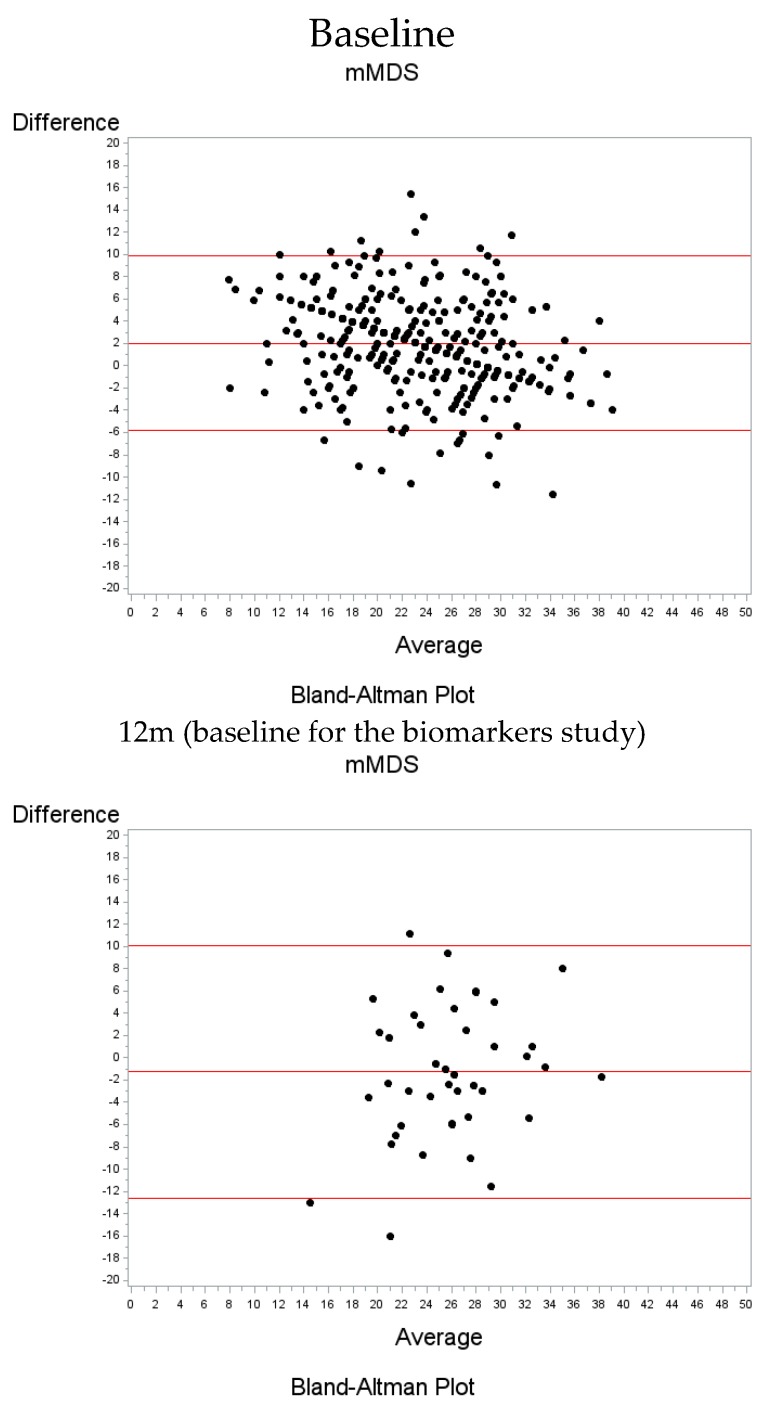
Collecting dietary intake data is associated with challenges due to the subjective nature of self-administered instruments. Biomarkers may objectively estimate the consumption of specific dietary items or help assess compliance in dietary intervention studies. Our aim was to use a panel of plasma and urine biomarkers to assess the validity of self-reported dietary intake using a modified Mediterranean Diet Scale (mMDS) among firefighters participating in Feeding America's Bravest (FAB), an MD cluster-randomized controlled trial. In our nested biomarker pilot study, participants were randomly selected from both the MD intervention group ( = 24) and the control group ( = 24) after 12-months of dietary intervention. At baseline data collection for the pilot study (t = 12-months of FAB), participants in the control group crossed-over to receive the MD intervention (active intervention) for 6-months. Participants in the intervention group continued in a self-sustained continuation phase (SSP) of the intervention. Food frequency questionnaires (FFQ), 13-item-mMDS questionnaires, 40 plasma fatty acids, inflammatory biomarkers and urinary hydroxytyrosol and tyrosol were analyzed at both time points. Spearman's correlation, -tests and linear regression coefficients were calculated using SAS software. Overall, the mMDS derived from the FFQ was highly correlated with the specific 13-domain-mMDS (r = 0.74). The concordance between the two questionnaires for low and high adherence to MD was high for all the participants in the parent trial (κ = 0.76). After 6 months of intervention in the pilot study, plasma saturated fatty acid decreased in both groups (active intervention: -1.3 ± 1.7; = 0.002; SSP: -1.12 ± 1.90; = 0.014) and oleic acid improved in the SSP ( = 0.013). Intake of olive oil was positively associated with plasma omega-3 ( = 0.004) and negatively with TNF-α ( < 0.001) at baseline. Choosing olive oil as a type of fat was also associated with higher levels of plasma omega-3 ( = 0.019) at baseline and lower TNF-α ( = 0.023) at follow up. Intake of red and processed meats were associated with lower serum omega-3 ( = 0.04) and fish consumption was associated with lower IL-6 at baseline ( = 0.022). The overall mMDS was associated with an increase in plasma omega-3 ( = 0.021). Good correlation was found between nutrient intake from the FFQ and the corresponding plasma biomarkers (omega-3, EPA and DHA). In this MD randomized controlled trial, some key plasma biomarkers were significantly associated with key MD diet components and the overall mMDS supporting the validity of the mMDS questionnaire as well as compliance with the intervention.
收集饮食摄入量数据具有挑战性,因为自我管理工具具有主观性。生物标志物可以客观地估计特定饮食项目的消耗情况,或有助于评估饮食干预研究中的依从性。我们的目的是使用一组血浆和尿液生物标志物来评估消防员参与 Feeding America's Bravest(FAB)期间使用改良的地中海饮食量表(mMDS)报告的饮食摄入量的有效性,这是一项 MD 聚类随机对照试验。在我们的嵌套生物标志物试点研究中,在 12 个月的饮食干预后,从 MD 干预组(n = 24)和对照组(n = 24)中随机选择参与者。在试点研究的基线数据收集时(t = 12 个月的 FAB),对照组的参与者交叉接受 MD 干预(主动干预)6 个月。干预组的参与者继续进行干预的自我维持延续阶段(SSP)。在两个时间点分析了食物频率问卷(FFQ)、13 项 mMDS 问卷、40 种血浆脂肪酸、炎症生物标志物和尿羟基酪醇和酪醇。使用 SAS 软件计算 Spearman 相关系数、t 检验和线性回归系数。总体而言,FFQ 得出的 mMDS 与特定的 13 域-mMDS 高度相关(r = 0.74)。对于父母试验中的所有参与者,两种问卷对 MD 低和高依从性的一致性很高(κ = 0.76)。在试点研究的 6 个月干预后,两组的血浆饱和脂肪酸均减少(主动干预:-1.3 ± 1.7;p = 0.002;SSP:-1.12 ± 1.90;p = 0.014),SSP 中的油酸增加(p = 0.013)。橄榄油的摄入量与血浆 omega-3 呈正相关(p = 0.004),与 TNF-α 呈负相关(p < 0.001)。在基线时,选择橄榄油作为脂肪类型也与较高水平的血浆 omega-3(p = 0.019)和较低的 TNF-α(p = 0.023)相关。红肉类和加工肉类的摄入量与较低的血清 omega-3 相关(p = 0.04),鱼类的摄入量与较低的 IL-6 相关(p = 0.022)。总体 mMDS 与血浆 omega-3 的增加呈正相关(p = 0.021)。FFQ 中的营养素摄入量与相应的血浆生物标志物(omega-3、EPA 和 DHA)之间存在良好的相关性。在这项 MD 随机对照试验中,一些关键的血浆生物标志物与关键的 MD 饮食成分和总体 mMDS 显著相关,支持 mMDS 问卷的有效性以及对干预的依从性。