Department of Environmental Health Sciences, College of Public Health, The Ohio State University, Columbus, OH 43210, USA.
Department of Human Sciences, The Ohio State University, Columbus, OH 43210, USA.
Nutrients. 2022 Nov 4;14(21):4662. doi: 10.3390/nu14214662.
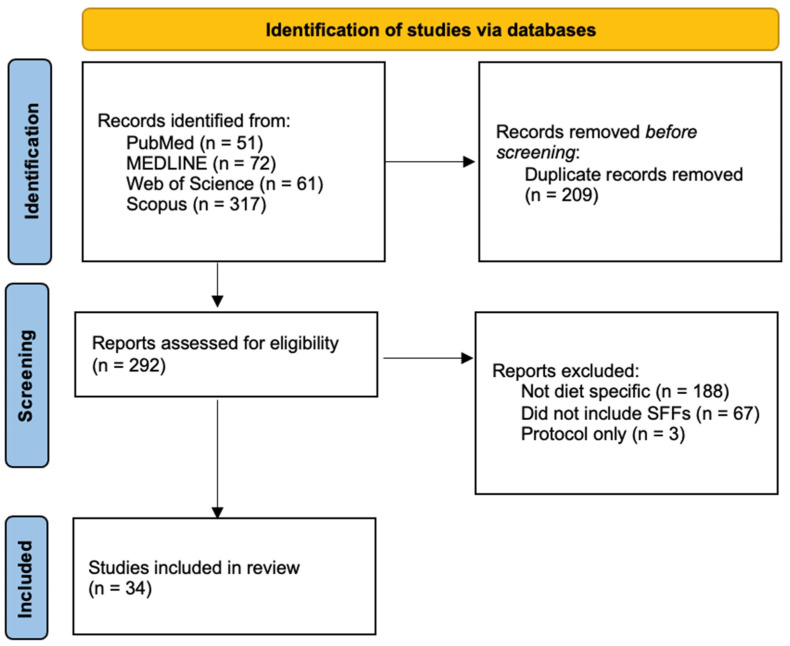
Structural firefighters (SFFs) are exposed to multiple occupational hazards that affect dietary behavior and can contribute to increased risks of cancer and cardiovascular disease compared to the United States' general population. Dietary behavior is a feasible modification for positive health outcomes. The objectives of this narrative review are to summarize the diet behavior of SFFs, review findings of diet interventions that positively modify diet behavior, identify research gaps, and suggest recommendations for addressing those gaps. PubMed, MEDLINE, Scopus, and CABI Web of Science were searched between February 2020 and June 2022 for peer-reviewed articles. The inclusion criteria were as follows: (1) study population must include SFFs; (2) investigate diet or diet intervention among SFFs; (3) report results specific to SFFs; and (4) be published in the English language. Thirty-four studies were included. Results indicate that SFFs recognize the importance of a healthy dietary pattern, but do not follow one, and that food choices are often influenced by colleagues. Diet interventions, such as the Mediterranean diet, were observed to have positive health improvements, such as improved lipid levels and lower CVD risk. Team counseling was found to be more effective for adopting healthier diets compared to one-on-one counseling; and general counseling was more effective than no counseling. A gap identified by this review is the lack of information concerning differences in dietary intake, diet quality, and dietary behaviors while on- and off-shift, and throughout the career. Diet is an important risk factor for occupational disease development; therefore, effective, consistent dietary interventions are necessary.
结构消防员(SFF)面临多种职业危害,这些危害会影响饮食行为,并可能导致癌症和心血管疾病的风险增加,高于美国一般人群。饮食行为是改善健康结果的可行方法。本综述的目的是总结 SFF 的饮食行为,综述积极改变饮食行为的饮食干预措施的发现,确定研究空白,并提出解决这些空白的建议。在 2020 年 2 月至 2022 年 6 月期间,在 PubMed、MEDLINE、Scopus 和 CABI Web of Science 上搜索同行评审文章。纳入标准如下:(1)研究人群必须包括 SFF;(2)研究 SFF 中的饮食或饮食干预;(3)报告特定于 SFF 的结果;(4)用英文发表。共纳入 34 项研究。结果表明,SFF 认识到健康饮食模式的重要性,但没有遵循这种模式,并且食物选择通常受到同事的影响。地中海饮食等饮食干预措施被观察到对健康有积极的改善,如改善血脂水平和降低 CVD 风险。与一对一咨询相比,团队咨询被发现更有利于采用更健康的饮食;一般咨询比没有咨询更有效。本综述发现的一个空白是缺乏有关轮班和非轮班期间以及整个职业生涯中饮食摄入、饮食质量和饮食行为差异的信息。饮食是职业疾病发展的重要危险因素;因此,需要有效的、一致的饮食干预措施。