Wang Pengfei, Qi Xiangbei, Xu Guohui, Liu Jianning, Guo Jichao, Li Xu, Ma Xinzhe, Sun Hui
Department of Neurosurgery, The Third Hospital, Hebei Medical University, Shijiazhuang 050051, China.
Department of Orthopaedics, The Third Hospital, Hebei Medical University, Shijiazhuang 050051, China.
Aging (Albany NY). 2019 Sep 26;11(18):7402-7415. doi: 10.18632/aging.102239.
Chemokines play a key role in post-traumatic inflammation and secondary injury after spinal cord injury (SCI). CCL28, the chemokine CC-chemokine ligand 28, is involved in the epithelial and mucosal immunity. However, whether CCL28 participates in the physiopathologic processes after SCI remains unclear.
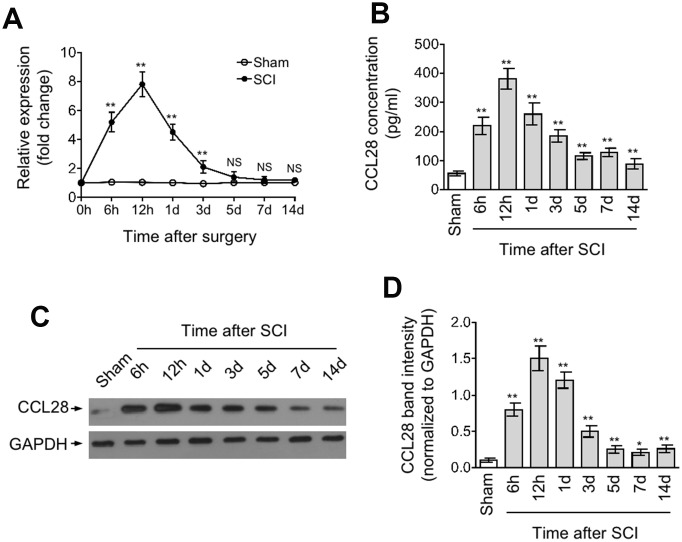
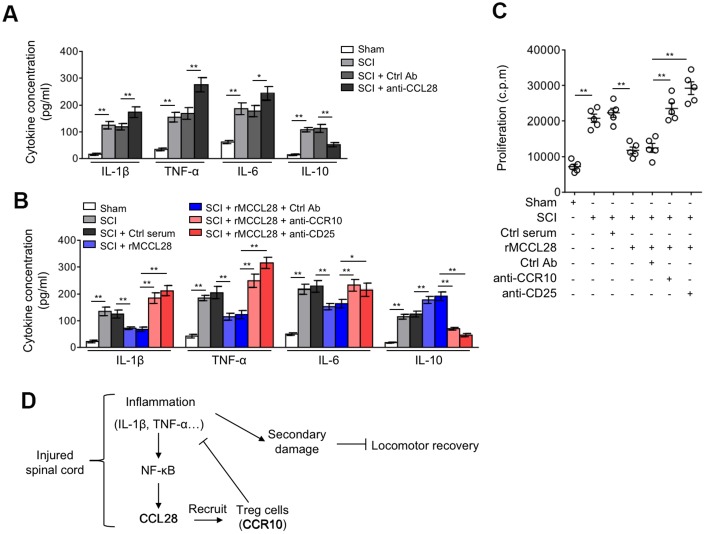
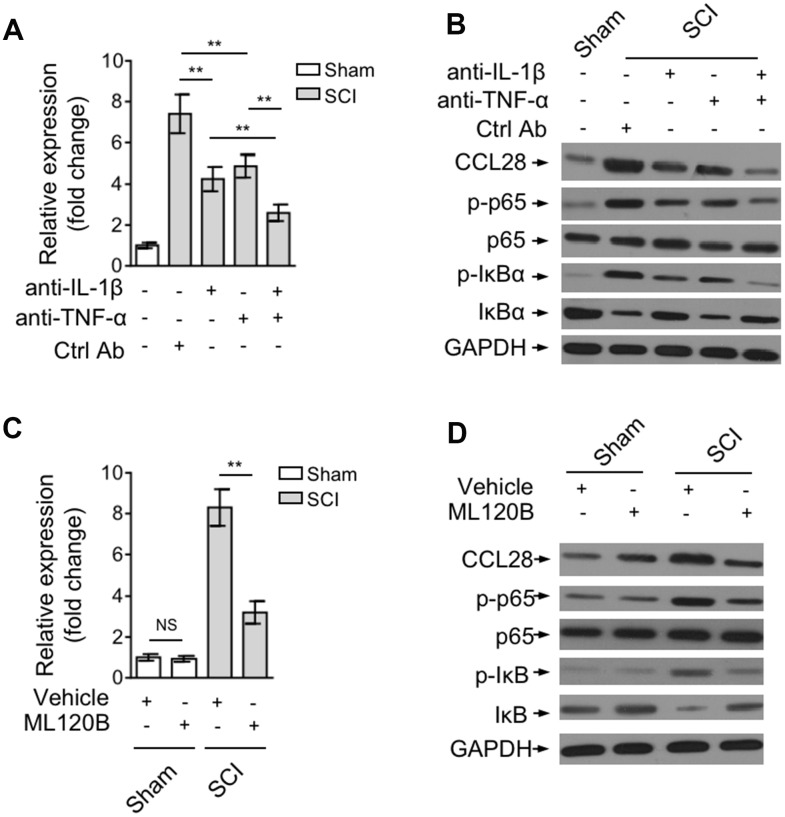
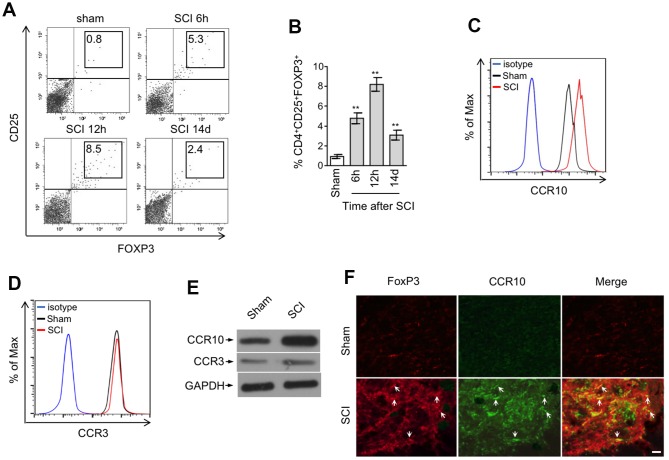
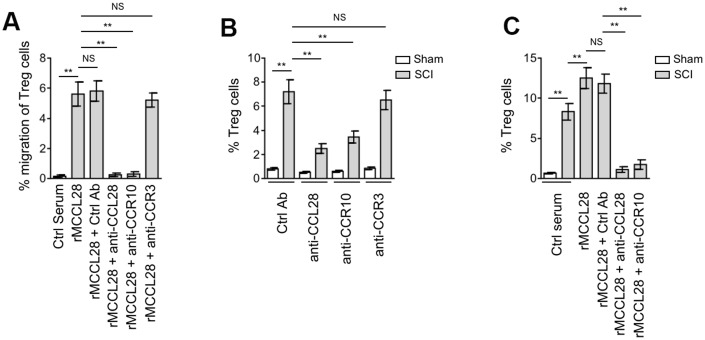
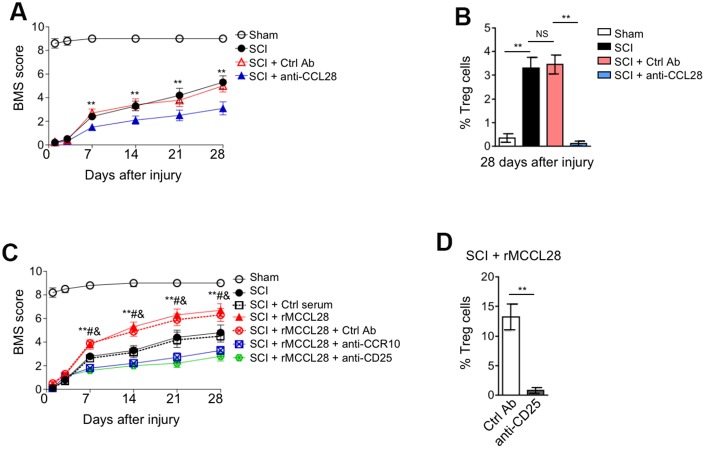
CCL28 is upregulated in the spinal cord after SCI. In addition, neutralizing antibodies against IL-1β or TNF-α, or treatment of ML120B, a selective inhibitor of IKK-β, remarkably decrease CCL28 upregulation, suggesting that CCL28 upregulation relies on NF-κB pathway activated by IL-1β and TNF-α after SCI. Moreover, CD4CD25FOXP3 regulatory T (Treg) cells that express CCR10, a receptor of CCL28, are enriched in the spinal cord after SCI. We further demonstrate that the spinal cord recruits Treg cells through CCL28-CCR10 axis, which in turn function to suppress immune response and promote locomotor recovery after SCI. In contrast, neutralizing CCL28 or CCR10 reduces Treg cell recruitment and delays locomotor recovery.
The neutralizing antibodies and recombinant CCL28 were injected intraspinally into the mice prior to SCI, which was established via hemitransection. RT-qPCR analysis was performed to determine transcript level, and Western blot analysis and ELISA assay were used to detect protein expression. Immune cells were analyzed by flow cytometry and visualized by immunofluorescence. The chemotaxis was assessed by transwell migration assay. The mouse locomotor activity was assessed via the Basso Mouse Scale (BMS) system.
These results indicate that NF-κB pathway-regulated CCL28 production plays a protective role after SCI through recruiting CCR10-expressing and immunosuppressive Treg cells, and suggest that interfering CCL28-CCR10 axis might be of potential clinical benefit in improving SCI recovery.
趋化因子在脊髓损伤(SCI)后的创伤后炎症和继发性损伤中起关键作用。CCL28,即趋化因子CC趋化因子配体28,参与上皮和黏膜免疫。然而,CCL28是否参与SCI后的病理生理过程仍不清楚。
SCI后脊髓中CCL28上调。此外,抗IL-1β或TNF-α的中和抗体,或IKK-β的选择性抑制剂ML120B的处理,显著降低CCL28的上调,表明SCI后CCL28的上调依赖于IL-1β和TNF-α激活的NF-κB通路。此外,表达CCL28受体CCR10的CD4CD25FOXP3调节性T(Treg)细胞在SCI后脊髓中富集。我们进一步证明脊髓通过CCL28-CCR10轴募集Treg细胞,这反过来又起到抑制免疫反应和促进SCI后运动功能恢复的作用。相反,中和CCL28或CCR10会减少Treg细胞募集并延迟运动功能恢复。
在通过半横断建立SCI之前,将中和抗体和重组CCL28脊髓内注射到小鼠体内。进行RT-qPCR分析以确定转录水平,使用蛋白质印迹分析和ELISA测定来检测蛋白质表达。通过流式细胞术分析免疫细胞并通过免疫荧光进行可视化。通过Transwell迁移试验评估趋化性。通过Basso小鼠量表(BMS)系统评估小鼠的运动活性。
这些结果表明,NF-κB通路调节的CCL28产生在SCI后通过募集表达CCR10的免疫抑制性Treg细胞发挥保护作用,并表明干扰CCL28-CCR10轴可能在改善SCI恢复方面具有潜在的临床益处。