Faculty of Medicine and Health, School of Pharmacy, The University of Sydney, Sydney, NSW 2006, Australia.
Faculty of Medicine and Health, School of Public Health, The University of Sydney, Sydney, NSW 2006, Australia.
Medicina (Kaunas). 2019 Sep 27;55(10):650. doi: 10.3390/medicina55100650.
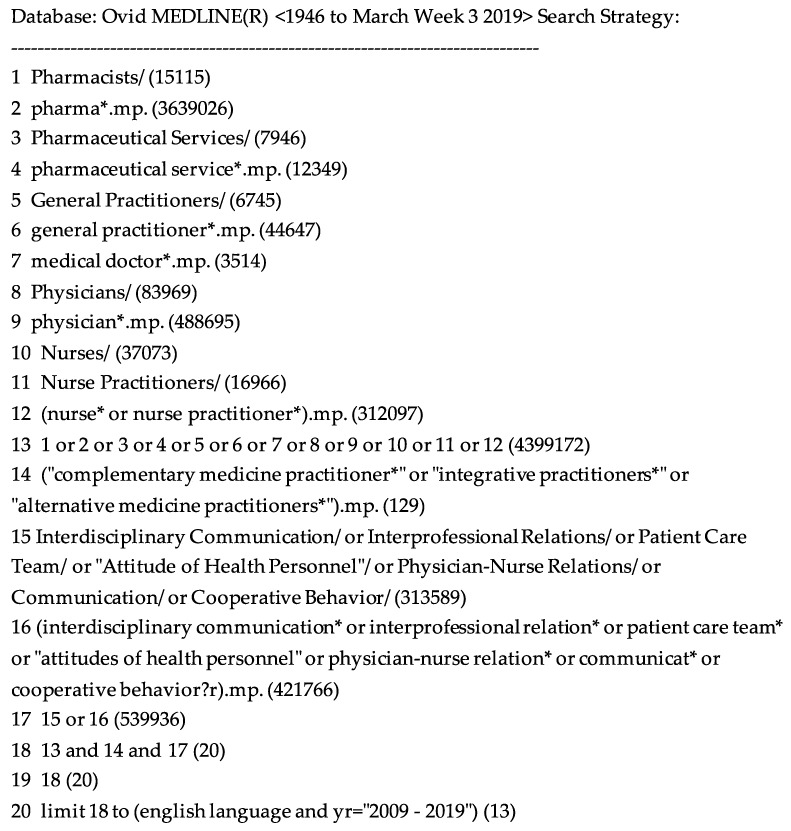
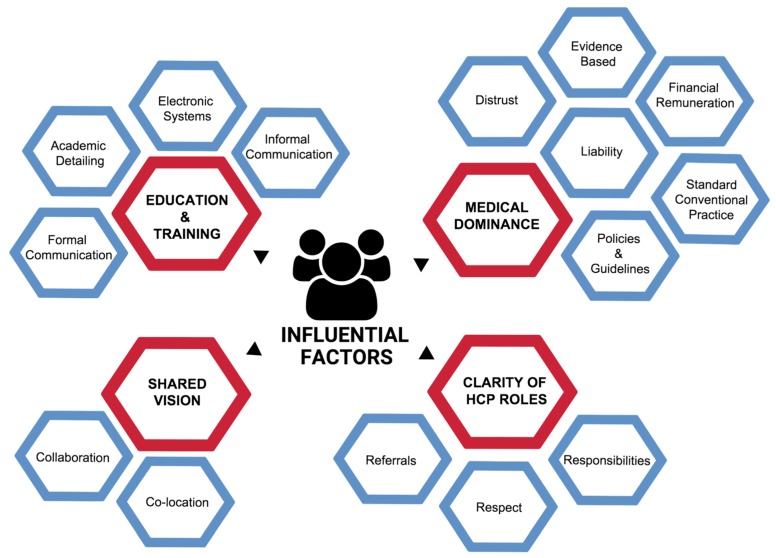
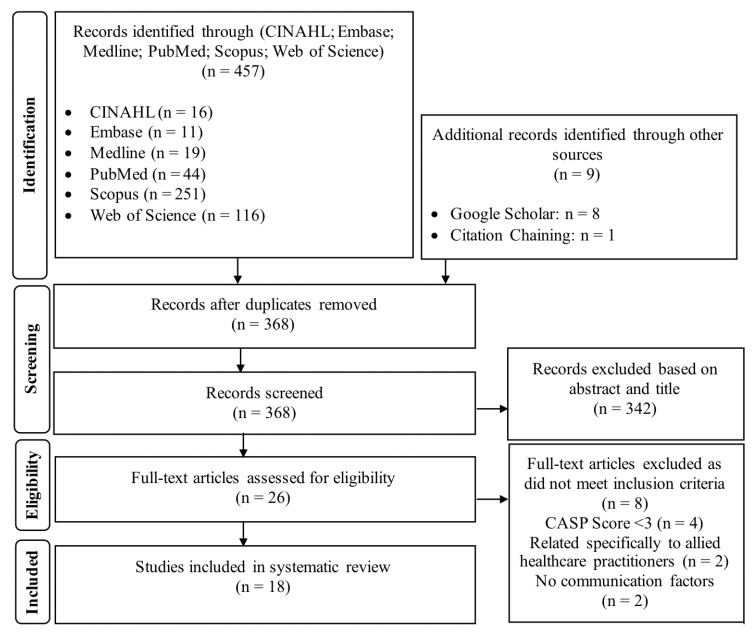
People have multi-faceted health care needs and consult a diverse range of health care practitioners (HCP) from both the conventional and complementary medicine healthcare sectors. The effective communication between HCP and with patients are obvious requisites to coordinating multidisciplinary care and shared decision making. Further, miscommunication is a leading cause of patient harm and is associated with reduced patient satisfaction, health literacy, treatment compliance and quality of life. In conventional healthcare settings, the differences in professional hierarchy, training, communication styles and culture are recognised communication barriers. Less is known about interprofessional communication (IPC) that includes traditional and complementary medicine (TCM) HCP. This review aims to summarise the experiences and perceptions of conventional and complementary HCP and identify factors that influence IPC. A qualitative rapid literature review was conducted. Six databases were searched to identify original research and systematic reviews published since 2009 and in English. Excluded were articles reporting original research outside of Australia that did not include TCM-HCP, already cited in a systematic review, or of low quality with a score of less than three on a critical appraisal skills programme (CASP) checklist. A thematic analysis of included studies was used to identify and explore important and recurring themes. From the conducted searches, 18 articles were included, 11 of which reported data on complementary HCP and seven were literature reviews. Four key themes were identified that impact IPC: medical dominance, clarity of HCP roles, a shared vision, and education and training. IPC within and between conventional and complementary HCP is impacted by interrelated factors. A diverse range of initiatives that facilitate interprofessional learning and collaboration are required to facilitate IPC and help overcome medical dominance and interprofessional cultural divides.
人们的医疗保健需求多方面,会向传统医学和补充医学领域的各种医疗保健从业者(HCP)进行咨询。HCP 与患者之间的有效沟通是协调多学科护理和共同决策的明显必要条件。此外,沟通不畅是导致患者伤害的主要原因,并且与患者满意度降低、健康素养降低、治疗依从性降低和生活质量降低有关。在传统医疗保健环境中,专业层次、培训、沟通方式和文化的差异被认为是沟通障碍。对于包括传统和补充医学(TCM)HCP 在内的跨专业沟通(IPC),了解较少。本综述旨在总结传统和补充 HCP 的经验和看法,并确定影响 IPC 的因素。进行了定性快速文献综述。检索了六个数据库,以确定自 2009 年以来发表的原始研究和系统评价,且语言为英语。排除了在澳大利亚以外的地区报告的原始研究,这些研究不包括 TCM-HCP,已经在系统评价中引用,或者是质量较低,批判性评估技能计划(CASP)检查表得分为低于三分的文章。对纳入研究进行主题分析,以确定和探讨重要和反复出现的主题。从进行的搜索中,纳入了 18 篇文章,其中 11 篇报告了补充 HCP 的数据,7 篇是文献综述。确定了四个影响 IPC 的关键主题:医学主导、HCP 角色的明确性、共同愿景以及教育和培训。传统和补充 HCP 内部和之间的 IPC 受到相互关联的因素的影响。需要各种促进跨专业学习和合作的举措,以促进 IPC 并帮助克服医学主导和跨专业文化差异。