Oliver Genevieve F, Orang Ayla V, Appukuttan Binoy, Marri Shashikanth, Michael Michael Z, Marsh Glenn A, Smith Justine R
Flinders University College of Medicine and Public Health, Flinders Medical Centre Room 4E-431, Flinders Drive, Bedford Park, SA, 5042, Australia.
Health and Biosecurity, Commonwealth Scientific and Industrial Research Organisation, 5 Portarlington Rd, Newcomb, VIC, 3219, Australia.
BMC Res Notes. 2019 Oct 1;12(1):639. doi: 10.1186/s13104-019-4671-8.
Survivors of Ebola virus disease (EVD) are at risk of developing blinding intraocular inflammation-or uveitis-which is associated with retinal pigment epithelial (RPE) scarring and persistence of live Zaire ebolavirus (EBOV) within the eye. As part of a large research project aimed at defining the human RPE cell response to being infected with EBOV, this work focused on the microRNAs (miRNAs) associated with the infection.
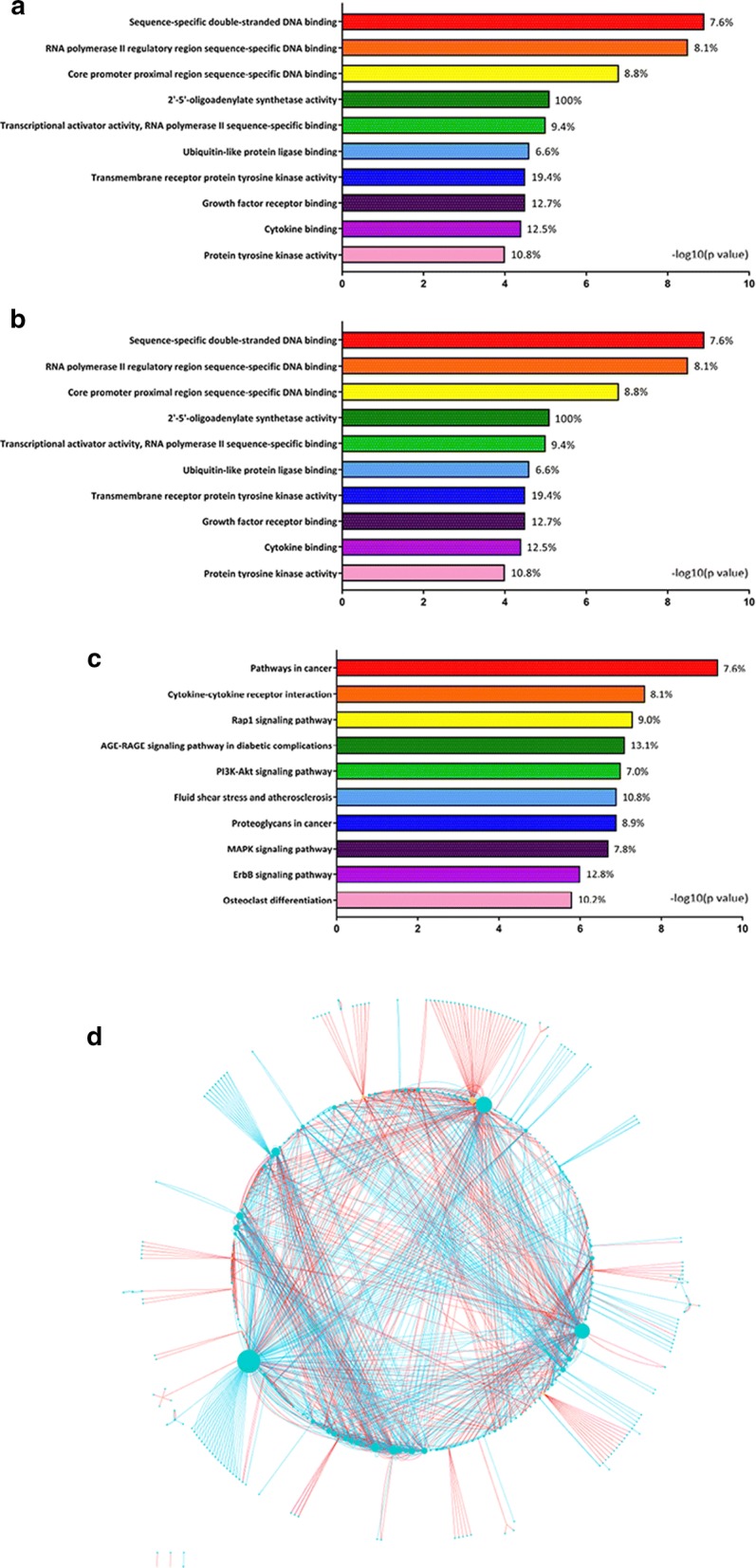
Using RNA-sequencing, we detected 13 highly induced and 2 highly repressed human miRNAs in human ARPE-19 RPE cells infected with EBOV, including hsa-miR-1307-5p, hsa-miR-29b-3p and hsa-miR-33a-5p (up-regulated), and hsa-miR-3074-3p and hsa-miR-27b-5p (down-regulated). EBOV-miR-1-5p was also found in infected RPE cells. Through computational identification of putative miRNA targets, we predicted a broad range of regulatory activities, including effects on innate and adaptive immune responses, cellular metabolism, cell cycle progression, apoptosis and autophagy. The most highly-connected molecule in the miR-target network was leucine-rich repeat kinase 2, which is involved in neuroinflammation and lysosomal processing. Our findings should stimulate new studies on the impact of miRNA changes in EBOV-infected RPE cells to further understanding of intraocular viral persistence and the pathogenesis of uveitis in EVD survivors.
埃博拉病毒病(EVD)幸存者有发生致盲性眼内炎症(即葡萄膜炎)的风险,这与视网膜色素上皮(RPE)瘢痕形成以及眼部存在活的扎伊尔埃博拉病毒(EBOV)有关。作为一项旨在确定人类RPE细胞对感染EBOV反应的大型研究项目的一部分,这项工作聚焦于与该感染相关的微小RNA(miRNA)。
通过RNA测序,我们在感染EBOV的人ARPE - 19 RPE细胞中检测到13种高度诱导和2种高度抑制的人类miRNA,包括hsa - miR - 1307 - 5p、hsa - miR - 29b - 3p和hsa - miR - 33a - 5p(上调),以及hsa - miR - 3074 - 3p和hsa - miR - 27b - 5p(下调)。在感染的RPE细胞中还发现了EBOV - miR - 1 - 5p。通过对假定的miRNA靶标的计算鉴定,我们预测了广泛的调控活性,包括对先天性和适应性免疫反应、细胞代谢、细胞周期进程、细胞凋亡和自噬的影响。miR - 靶标网络中连接性最高的分子是富含亮氨酸重复激酶2,其参与神经炎症和溶酶体加工。我们的发现应会激发关于EBOV感染的RPE细胞中miRNA变化影响的新研究,以进一步了解眼内病毒持续存在及EVD幸存者葡萄膜炎的发病机制。