Cheng Xue, Zhang Fan, Li Jingwei, Wang Gang
Department of Neurology, The First Affiliated Hospital of Jinzhou Medical University, Jinzhou City, Liaoning Province 121001, People's Republic of China.
Department of Neurology, Liaoning Health Industry Group Fuxin Mine General Hospital, Jinzhou City, Liaoning Province 121001, People's Republic of China.
Neuropsychiatr Dis Treat. 2019 Sep 16;15:2671-2680. doi: 10.2147/NDT.S215263. eCollection 2019.
Galuteolin is a substance extracted and purified from honeysuckle. The purpose of this study was to explore the protective effect of galuteolin on cerebral ischemia-reperfusion injury (CIRI) and reveal its potential molecular mechanism from the perspectives of anti-apoptosis, anti-oxidation, and anti-inflammation.
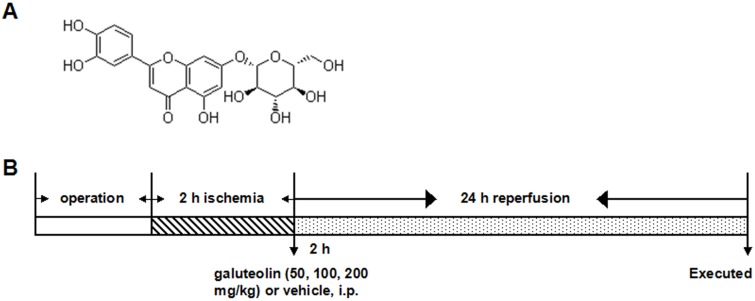
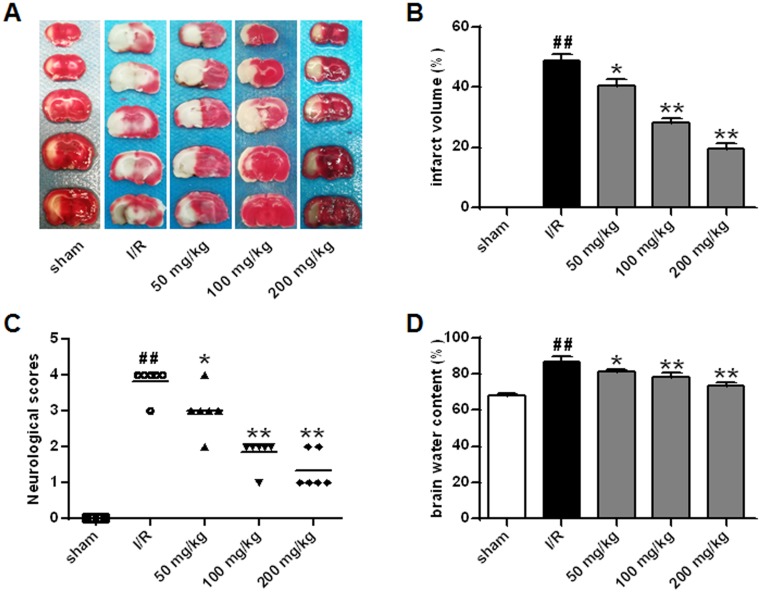
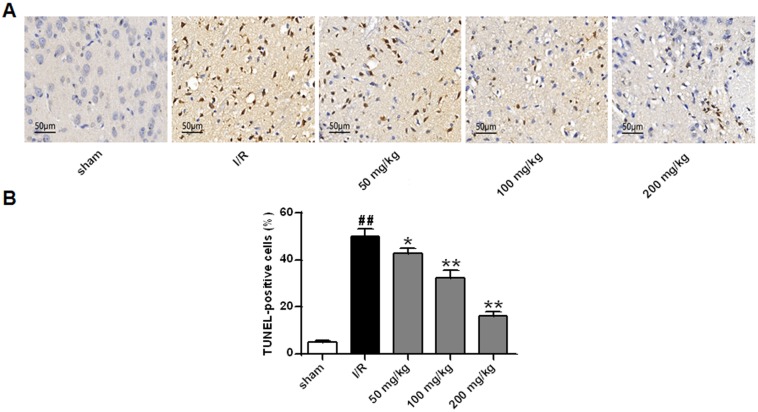
One hundred and fifty rats were randomly divided into five groups: sham group, ischemia-reperfusion (I/R) group, 50 mg/kg galuteolin group, 100 mg/kg galuteolin group, and 200 mg/kg galuteolin group. Middle cerebral artery occlusion (MCAO) was used to establish a rat CIRI model, different doses of galtenolin were intraperitoneal injected 2 hrs after ischemia, and then reperfusion was performed for 24 hrs. Neurological function and cerebral water content were determined, and cerebral infarct volume was evaluated by TTC staining. TUNEL staining was used to detect the apoptosis of nerve cells. Western Blot was used to detect the expressions of Akt, p-Akt, Sod1, Sod2, catalase, caspase-3, Bcl-2, and Bax. Lipid hydrogen peroxide (LPO) was determined by kit assay. The contents of vascular endothelial growth factor (VEGF) and pro-inflammatory cytokines IL-1β and TNF-α were determined by ELISA.
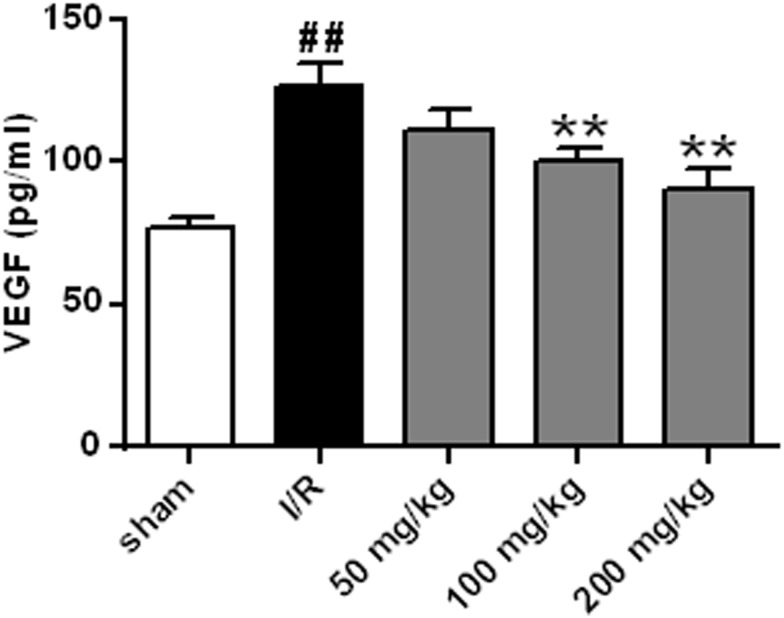
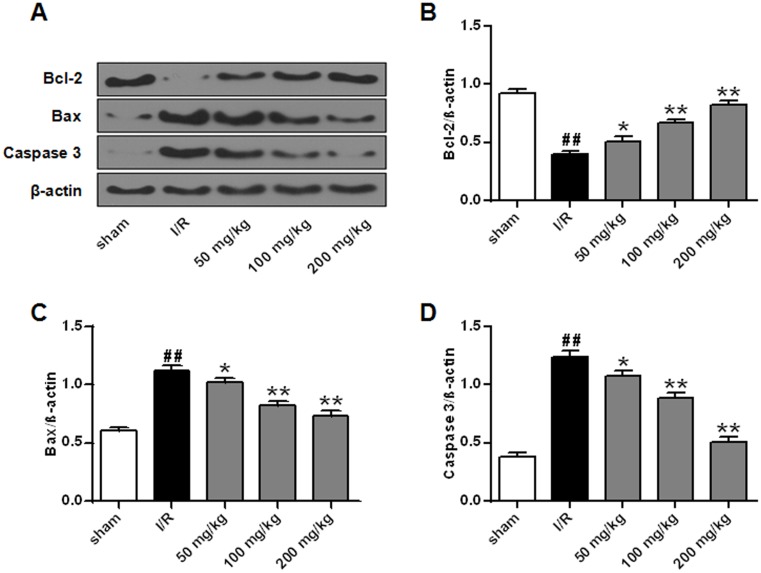
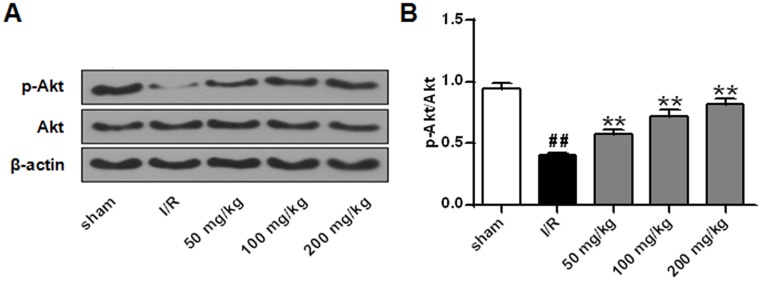
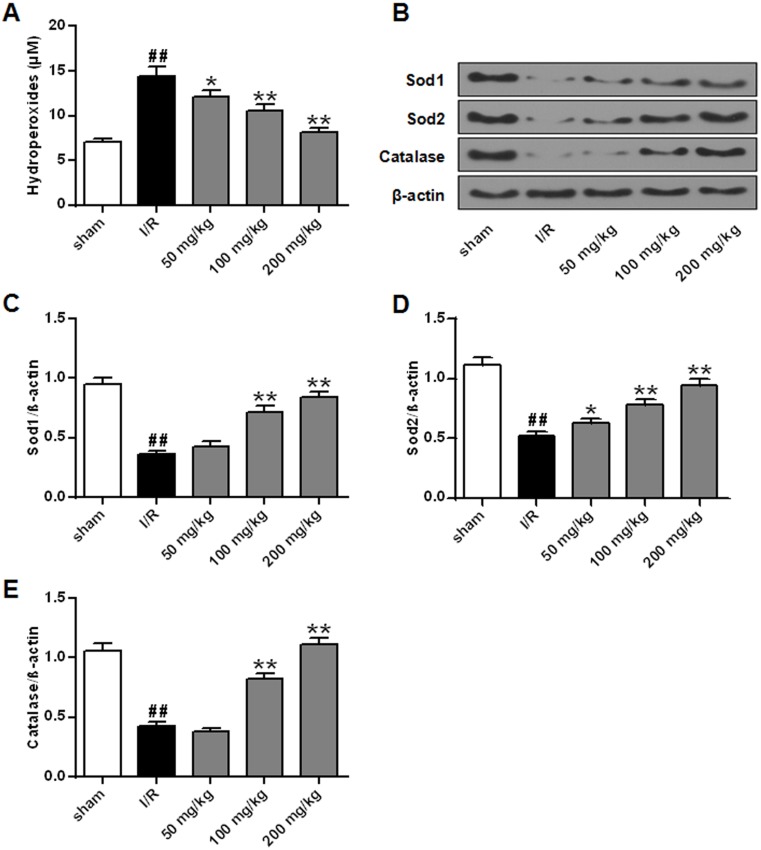
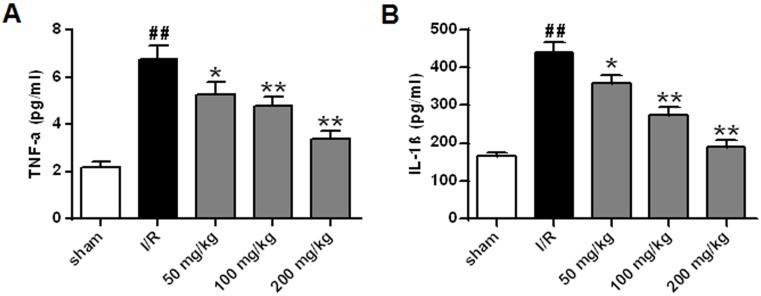
The results showed that galuteolin could significantly reduce the cerebral infarction volume, neurologic score, and cerebral water content in a dose-dependent manner. In addition, galuteolin obviously reduced the apoptosis rate of nerve cells and the expression levels of caspase-3 and Bax, meanwhile up-regulated the expression levels of p-Akt and Bcl-2. Furthermore, galuteolin apparently inhibited the levels of LPO, Sod1, Sod2, and catalase in the cerebral infarction tissues. Moreover, galuteolin also significantly reduced the levels of pro-inflammatory factors IL-1β and TNF-α in the cerebral infarction tissues. Finally, Galuteolin markedly inhibited the expression of VEGF in cerebral infarction tissues.
Galuteolin exerts neuroprotective effects against CIRI by inhibiting apoptosis, oxidation, and inflammation.
木犀草素是从金银花中提取纯化的一种物质。本研究旨在探讨木犀草素对脑缺血再灌注损伤(CIRI)的保护作用,并从抗凋亡、抗氧化和抗炎的角度揭示其潜在的分子机制。
将150只大鼠随机分为五组:假手术组、缺血再灌注(I/R)组、50mg/kg木犀草素组、100mg/kg木犀草素组和200mg/kg木犀草素组。采用大脑中动脉闭塞(MCAO)法建立大鼠CIRI模型,缺血2小时后腹腔注射不同剂量的木犀草素,然后再灌注24小时。测定神经功能和脑含水量,通过TTC染色评估脑梗死体积。采用TUNEL染色检测神经细胞凋亡。采用蛋白质免疫印迹法检测Akt、p-Akt、Sod1、Sod2、过氧化氢酶、caspase-3、Bcl-2和Bax的表达。采用试剂盒法测定脂质过氧化氢(LPO)。采用酶联免疫吸附测定法(ELISA)测定血管内皮生长因子(VEGF)和促炎细胞因子IL-1β和TNF-α的含量。
结果表明,木犀草素能以剂量依赖的方式显著降低脑梗死体积、神经功能评分和脑含水量。此外,木犀草素明显降低神经细胞凋亡率以及caspase-3和Bax的表达水平,同时上调p-Akt和Bcl-2的表达水平。此外,木犀草素明显抑制脑梗死组织中LPO、Sod1、Sod2和过氧化氢酶的水平。而且,木犀草素还显著降低脑梗死组织中促炎因子IL-1β和TNF-α的水平。最后,木犀草素明显抑制脑梗死组织中VEGF的表达。
木犀草素通过抑制凋亡、氧化和炎症对CIRI发挥神经保护作用。