Unitat de Tuberculosi Experimental, Fundació Institut Germans Trias i Pujol, CIBER Enfermedades Respiratorias, Universitat Autònoma de Barcelona, Badalona, Spain.
Front Immunol. 2019 Sep 11;10:2139. doi: 10.3389/fimmu.2019.02139. eCollection 2019.
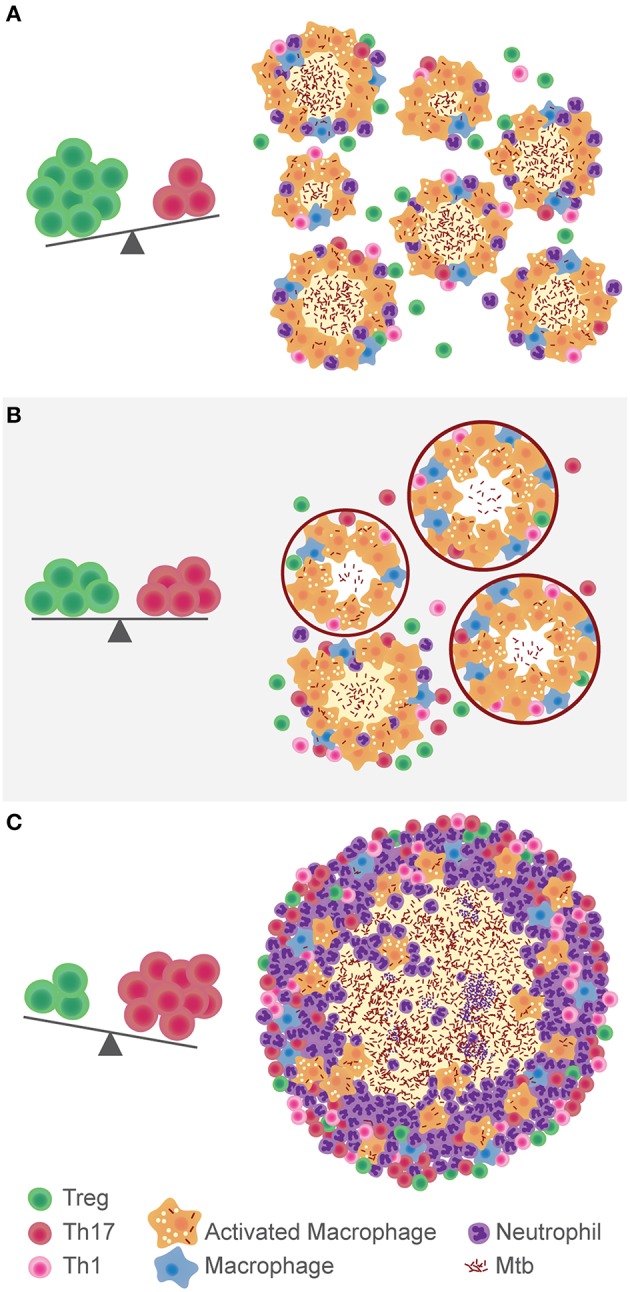
Anti-inflammatory regulatory T cells have lately attracted attention as part of the immune response to infection, where they counterbalance the protective but pro-inflammatory immune response mediated by Th17 cells and especially by the better-known Th1 cells. In chronic infectious diseases there is a delicate balance between pro- and anti-inflammatory responses. While Th1 and Th17 are needed in order to control infection by , the inflammatory onset can ultimately become detrimental for the host. In this review, we assess current information on the controversy over whether counterbalancing regulatory T cells are promoting pathogen growth or protecting the host.
抗炎调节性 T 细胞最近作为感染免疫反应的一部分引起了关注,在感染免疫反应中,它们平衡了由 Th17 细胞、尤其是由更为人熟知的 Th1 细胞介导的保护性但促炎的免疫反应。在慢性传染病中,促炎和抗炎反应之间存在着微妙的平衡。虽然 Th1 和 Th17 对于控制感染是必需的,但炎症的发生最终可能对宿主有害。在这篇综述中,我们评估了关于调节性 T 细胞是否促进病原体生长或保护宿主的争议的最新信息。