Micro Flow Chemistry and Synthetic Methodology, Department of Chemical Engineering and Chemistry , Eindhoven University of Technology , Het Kranenveld, Bldg 14 - Helix , 5600 MB Eindhoven , The Netherlands.
Acc Chem Res. 2019 Oct 15;52(10):2858-2869. doi: 10.1021/acs.accounts.9b00412. Epub 2019 Oct 1.
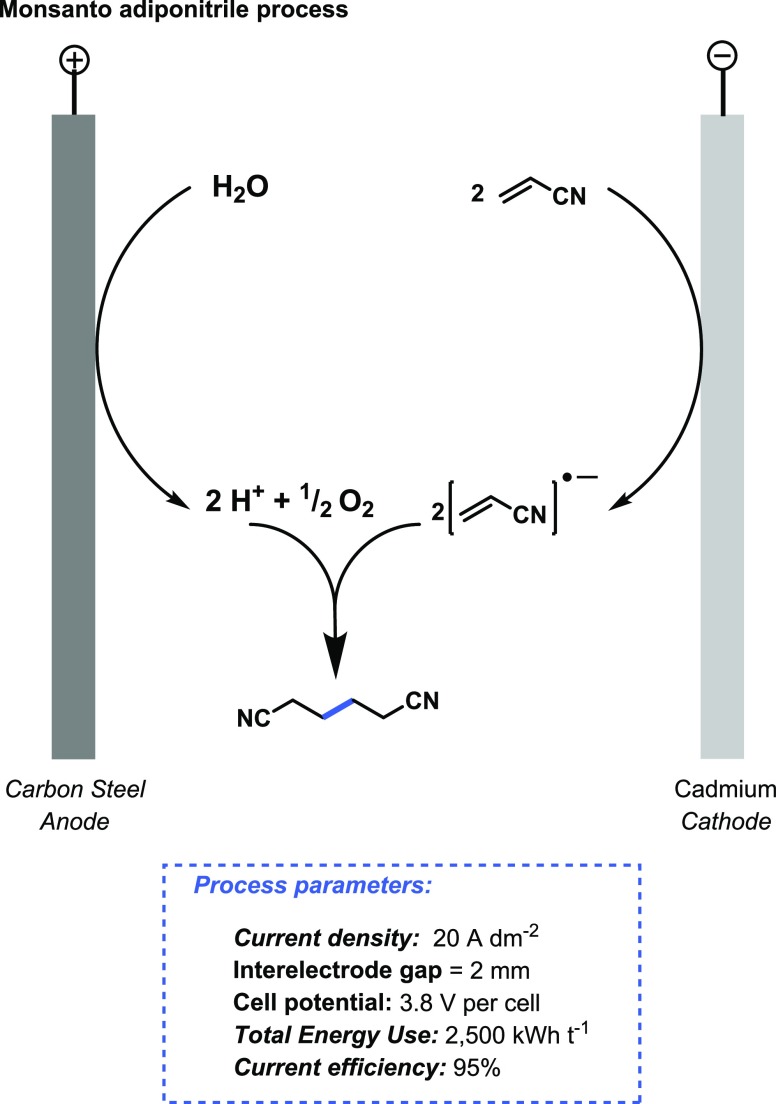
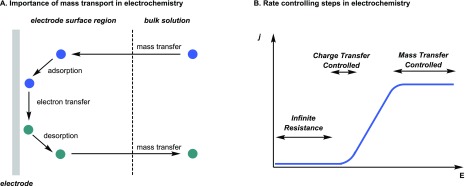
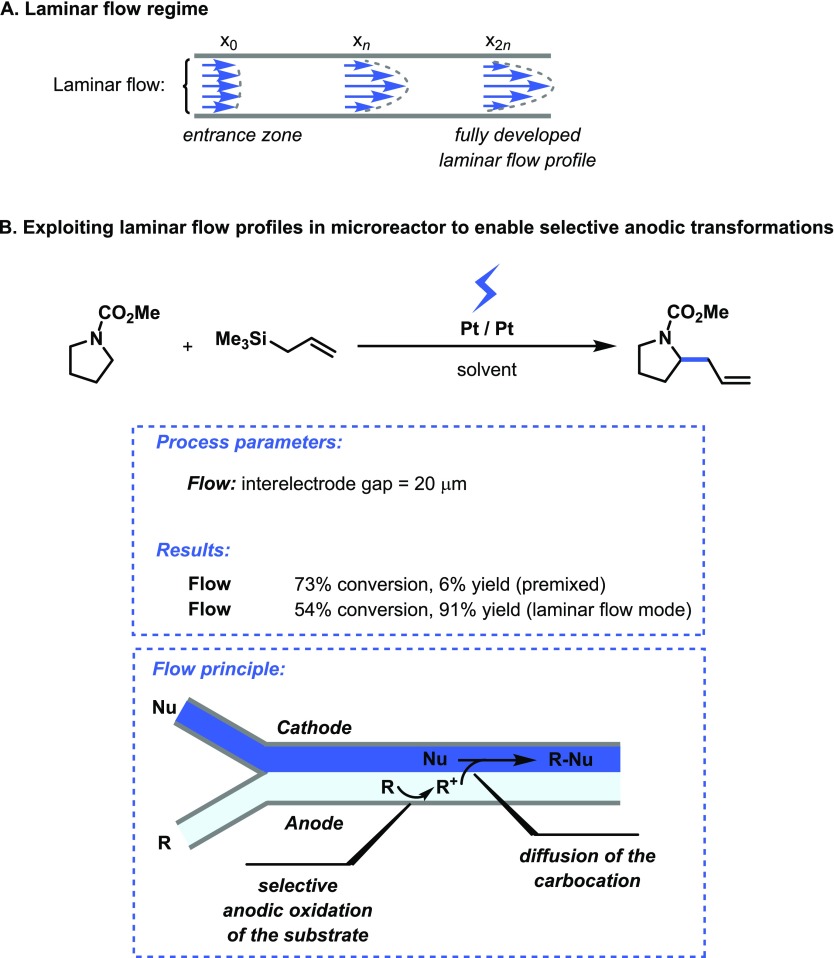
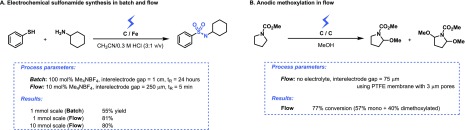
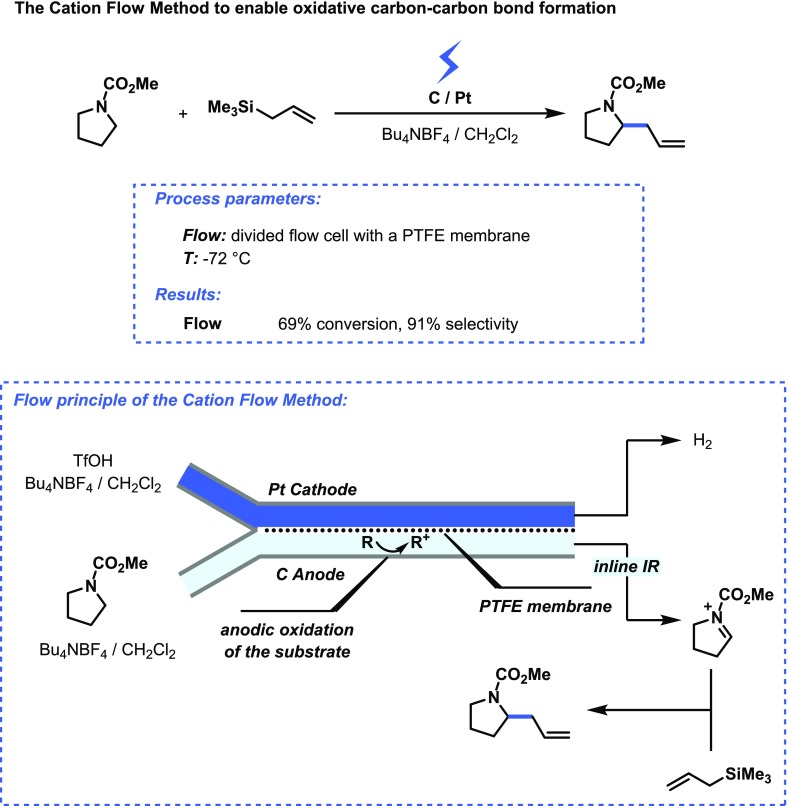
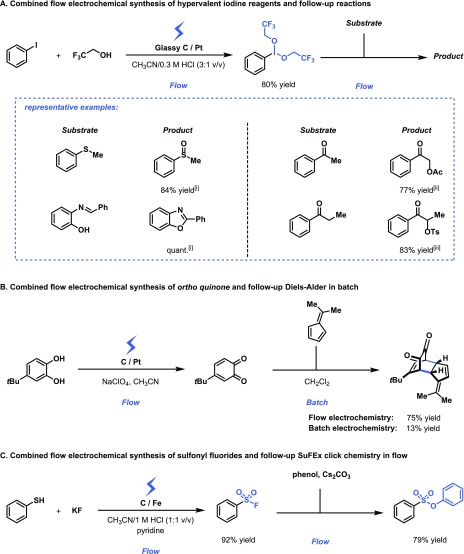
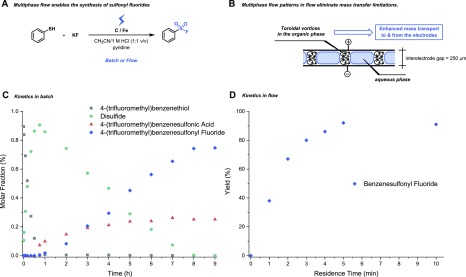
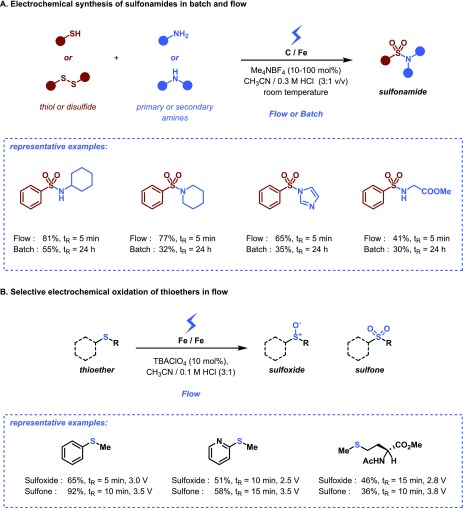
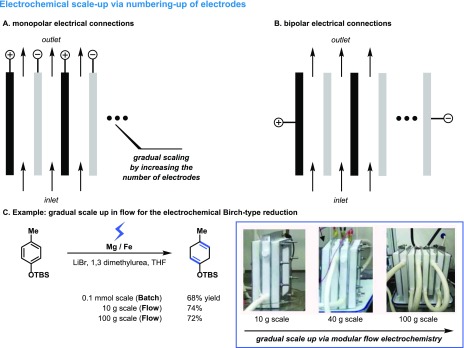
In the past decade, research into continuous-flow chemistry has gained a lot of traction among researchers in both academia and industry. Especially, microreactors have received a plethora of attention due to the increased mass and heat transfer characteristics, the possibility to increase process safety, and the potential to implement automation protocols and process analytical technology. Taking advantage of these aspects, chemists and chemical engineers have capitalized on expanding the chemical space available to synthetic organic chemists using this technology. Electrochemistry has recently witnessed a renaissance in research interests as it provides chemists unique and tunable synthetic opportunities to carry out redox chemistry using electrons as traceless reagents, thus effectively avoiding the use of hazardous and toxic reductants and oxidants. The popularity of electrochemistry stems also from the potential to harvest sustainable electricity, derived from solar and wind energy. Hence, the electrification of the chemical industry offers an opportunity to locally produce commodity chemicals, effectively reducing inefficiencies with regard to transportation and storage of hazardous chemicals. The combination of flow technology and electrochemistry provides practitioners with great control over the reaction conditions, effectively improving the reproducibility of electrochemistry. However, carrying out electrochemical reactions in flow is more complicated than just pumping the chemicals through a narrow-gap electrolytic cell. Understanding the engineering principles behind the observations can help researchers to exploit the full potential of the technology. Thus, the prime objective of this Account is to provide readers with an overview of the underlying engineering aspects which are associated with continuous-flow electrochemistry. This includes a discussion of relevant mass and heat transport phenomena encountered in electrochemical flow reactors. Next, we discuss the possibility to integrate several reaction steps in a single streamlined process and the potential to carry out challenging multiphase electrochemical transformations in flow. Due to the high control over mass and heat transfer, electrochemical reactions can be carried out with great precision and reproducibility which provide opportunities to enhance and tune the reaction selectivity. Finally, we detail on the scale-up potential of flow electrochemistry and the importance of small interelectrode gaps on pilot and industrial-scale electrochemical processes. Each principle has been illustrated with a relevant organic synthetic example. In general, we have aimed to describe the underlying engineering principles in simple words and with a minimum of equations to attract and engage readers from both a synthetic organic chemistry and a chemical engineering background. Hence, we anticipate that this Account will serve as a useful guide through the fascinating world of flow electrochemistry.
在过去的十年中,连续流动化学的研究在学术界和工业界的研究人员中得到了广泛关注。特别是,由于微通道反应器具有增强的质量和传热特性、提高过程安全性的可能性以及实施自动化协议和过程分析技术的潜力,因此受到了广泛关注。利用这些方面,化学家和化学工程师利用这项技术扩展了可供合成有机化学家使用的化学空间。电化学作为一种独特且可调的合成方法,它利用电子作为无痕迹试剂进行氧化还原反应,从而有效地避免使用危险和有毒的还原剂和氧化剂,最近在研究兴趣方面迎来了复兴。电化学的流行也源于从太阳能和风能中获取可持续电力的潜力。因此,化学工业的电气化提供了一个机会,可以在当地生产大宗商品化学品,有效地减少危险化学品运输和储存的效率低下问题。流动技术与电化学的结合为从业人员提供了对反应条件的极大控制,有效地提高了电化学的重现性。然而,在流动中进行电化学反应比仅仅将化学药品通过狭窄间隙电解池泵送要复杂得多。了解观察结果背后的工程原理可以帮助研究人员充分利用该技术的潜力。因此,本综述的主要目标是为读者提供与连续流动电化学相关的基础工程方面的概述。这包括讨论在电化学流动反应器中遇到的相关质量和传热现象。接下来,我们讨论了在单个流线型工艺中集成多个反应步骤的可能性,以及在流动中进行具有挑战性的多相电化学转化的可能性。由于对质量和热传递的高度控制,电化学反应可以以很高的精度和重现性进行,从而提供了增强和调整反应选择性的机会。最后,我们详细介绍了流动电化学的放大潜力以及小的电极间隙对中试和工业规模电化学过程的重要性。每个原理都通过相关的有机合成实例进行了说明。总的来说,我们旨在用简单的语言和最少的方程式来描述基本的工程原理,以吸引和吸引来自合成有机化学和化学工程背景的读者。因此,我们预计本综述将成为一个有趣的流动电化学世界的有用指南。