Department of NanoBiotechnology, NanoGlycobiology unit, Universität für Bodenkultur Wien, Muthgasse 11, A-1190 Vienna, Austria.
Department of Food Science and Technology, Food Biotechnology Laboratory, Muthgasse 11, Universität für Bodenkultur Wien, A-1190 Vienna, Austria.
Int J Mol Sci. 2019 Oct 5;20(19):4929. doi: 10.3390/ijms20194929.
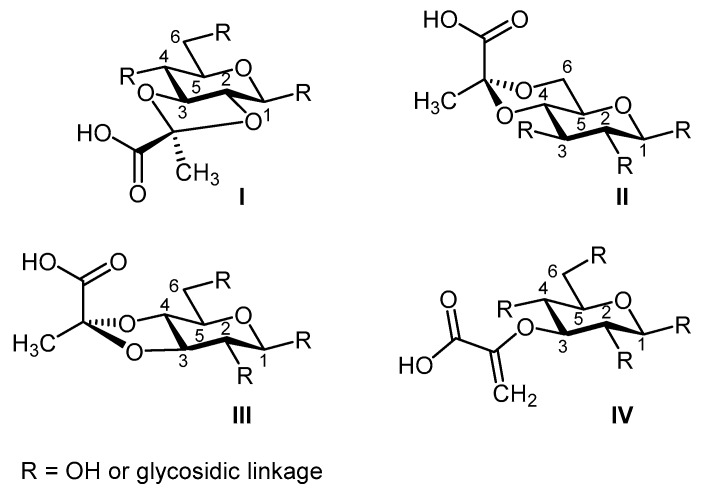
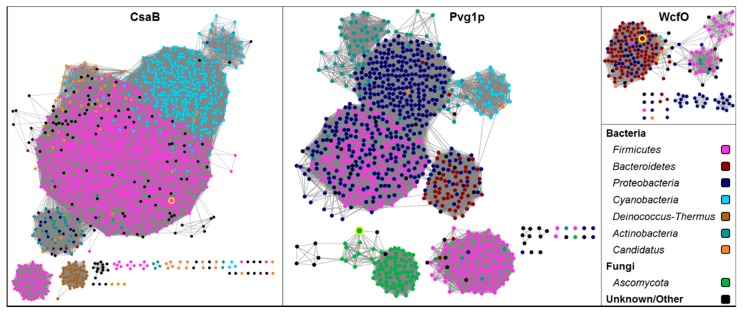
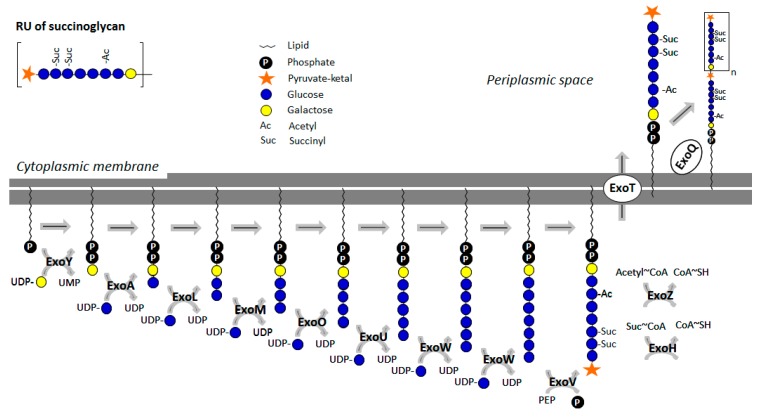
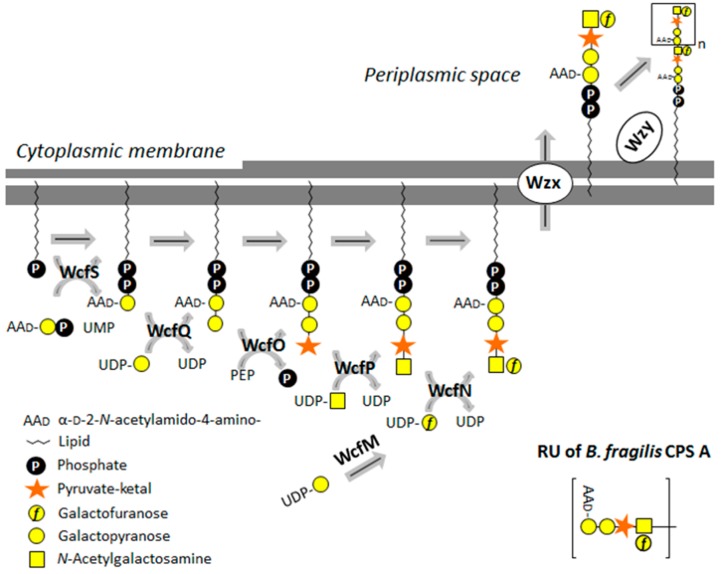
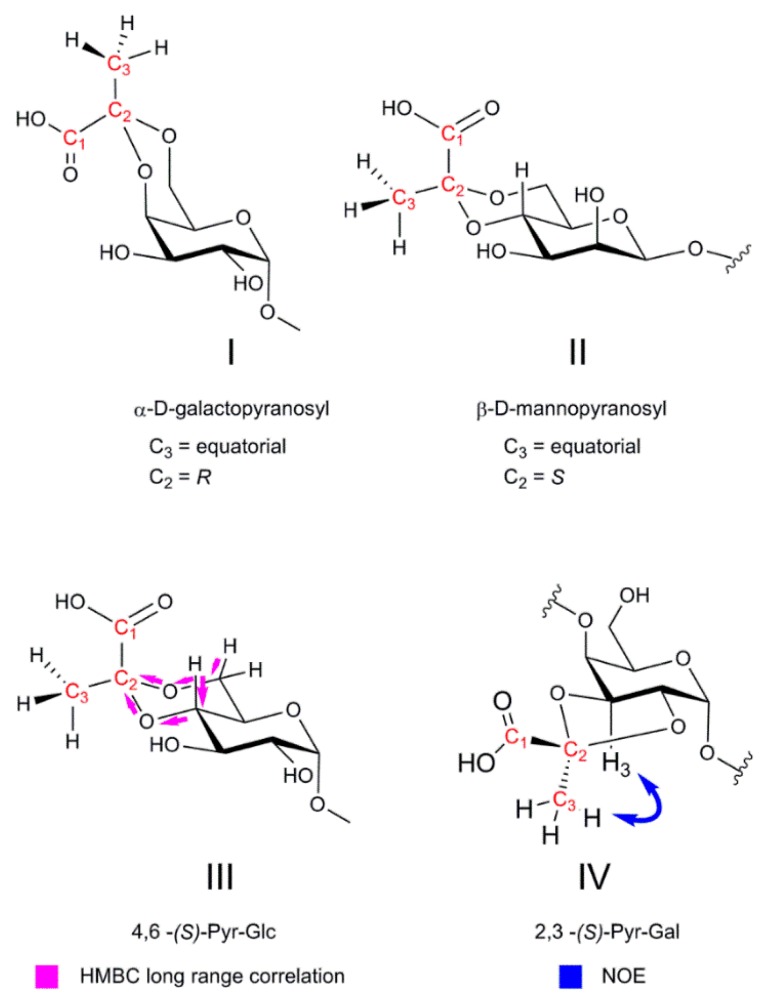
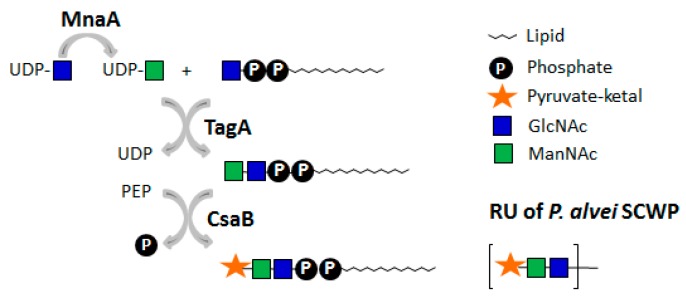
Glycoconjugates are the most diverse biomolecules of life. Mostly located at the cell surface, they translate into cell-specific "barcodes" and offer a vast repertoire of functions, including support of cellular physiology, lifestyle, and pathogenicity. Functions can be fine-tuned by non-carbohydrate modifications on the constituting monosaccharides. Among these modifications is pyruvylation, which is present either in enol or ketal form. The most commonly best-understood example of pyruvylation is enol-pyruvylation of -acetylglucosamine, which occurs at an early stage in the biosynthesis of the bacterial cell wall component peptidoglycan. Ketal-pyruvylation, in contrast, is present in diverse classes of glycoconjugates, from bacteria to algae to yeast-but not in humans. Mild purification strategies preventing the loss of the acid-labile ketal-pyruvyl group have led to a collection of elucidated pyruvylated glycan structures. However, knowledge of involved pyruvyltransferases creating a ring structure on various monosaccharides is scarce, mainly due to the lack of knowledge of fingerprint motifs of these enzymes and the unavailability of genome sequences of the organisms undergoing pyruvylation. This review compiles the current information on the widespread but under-investigated ketal-pyruvylation of monosaccharides, starting with different classes of pyruvylated glycoconjugates and associated functions, leading to pyruvyltransferases, their specificity and sequence space, and insight into pyruvate analytics.
糖缀合物是生命中最多样化的生物分子。它们主要位于细胞表面,转化为细胞特异性的“条形码”,并提供广泛的功能,包括支持细胞生理学、生活方式和致病性。功能可以通过构成单糖上的非碳水化合物修饰来微调。这些修饰之一是丙酮酸基化,它以烯醇或缩酮形式存在。最常被理解的丙酮酸基化例子是 -乙酰葡萄糖胺的烯醇丙酮酸基化,它发生在细菌细胞壁成分肽聚糖生物合成的早期阶段。相比之下,缩酮丙酮酸基化存在于从细菌到藻类到酵母的各种糖缀合物中,但不存在于人类中。温和的纯化策略可防止不稳定的酸性缩酮丙酮酸基的损失,从而导致一系列阐明的丙酮酸基化聚糖结构。然而,由于缺乏这些酶的指纹模体的知识以及经历丙酮酸基化的生物体的基因组序列不可用,因此参与在各种单糖上形成环结构的丙酮酸基转移酶的知识很少。这篇综述汇编了目前关于广泛但研究不足的单糖缩酮丙酮酸基化的信息,从不同类别的丙酮酸基化糖缀合物和相关功能开始,介绍相关的丙酮酸基转移酶、它们的特异性和序列空间,以及丙酮酸分析的见解。