B CUBE-Center for Molecular Bioengineering, Technische -Universität -Dresden, Dresden 01307, Germany.
Cluster of Excellence Physics of Life, Technische -Universität -Dresden, Dresden 01307, Germany.
Mol Biol Cell. 2019 Nov 15;30(24):2953-2968. doi: 10.1091/mbc.E19-05-0247. Epub 2019 Oct 10.
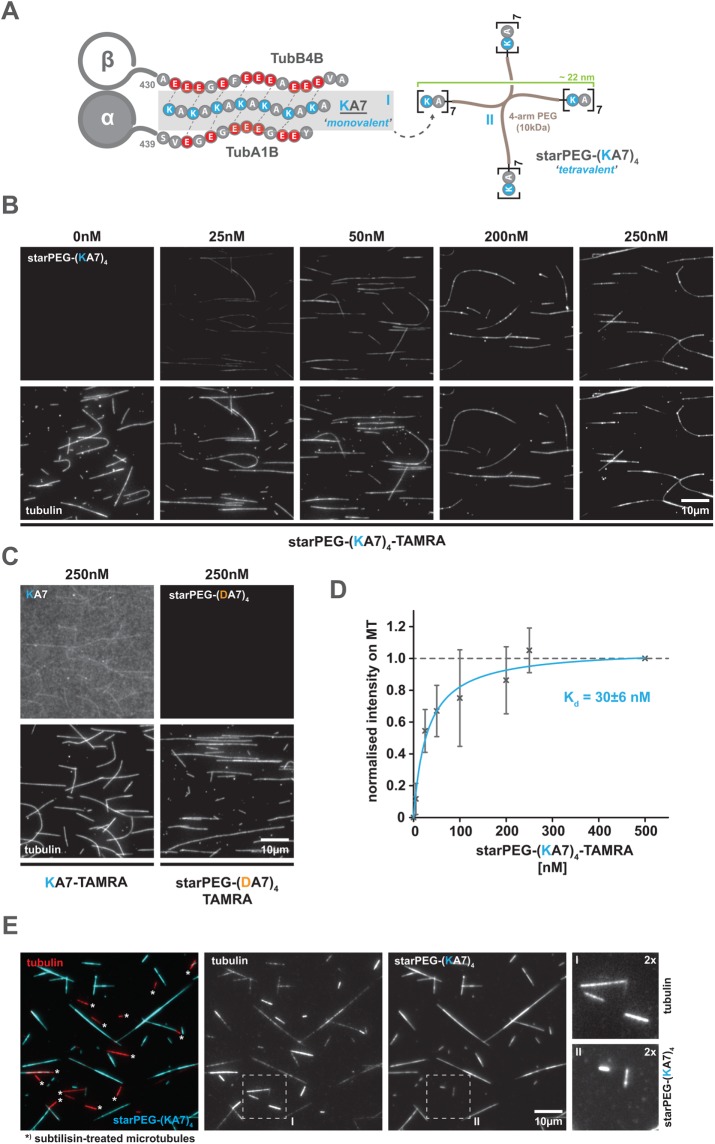
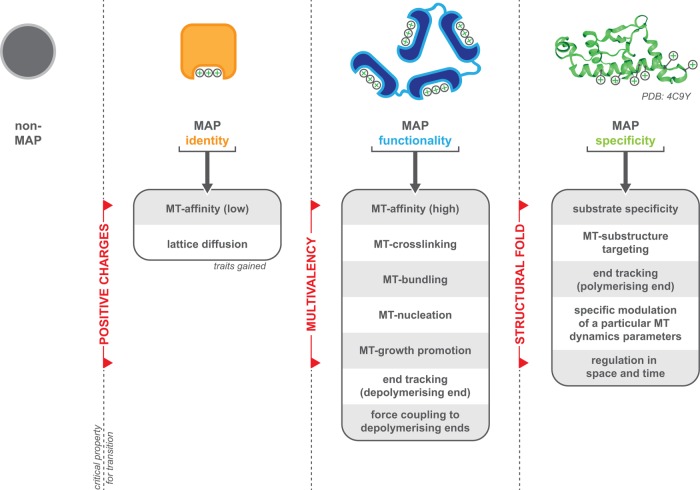
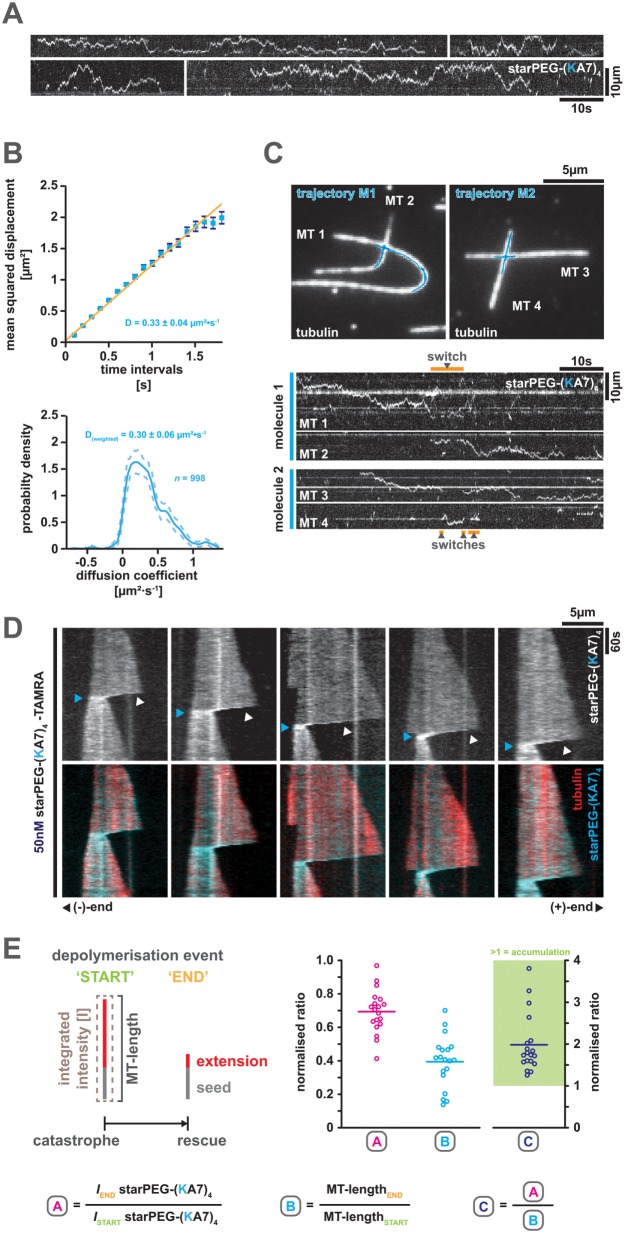
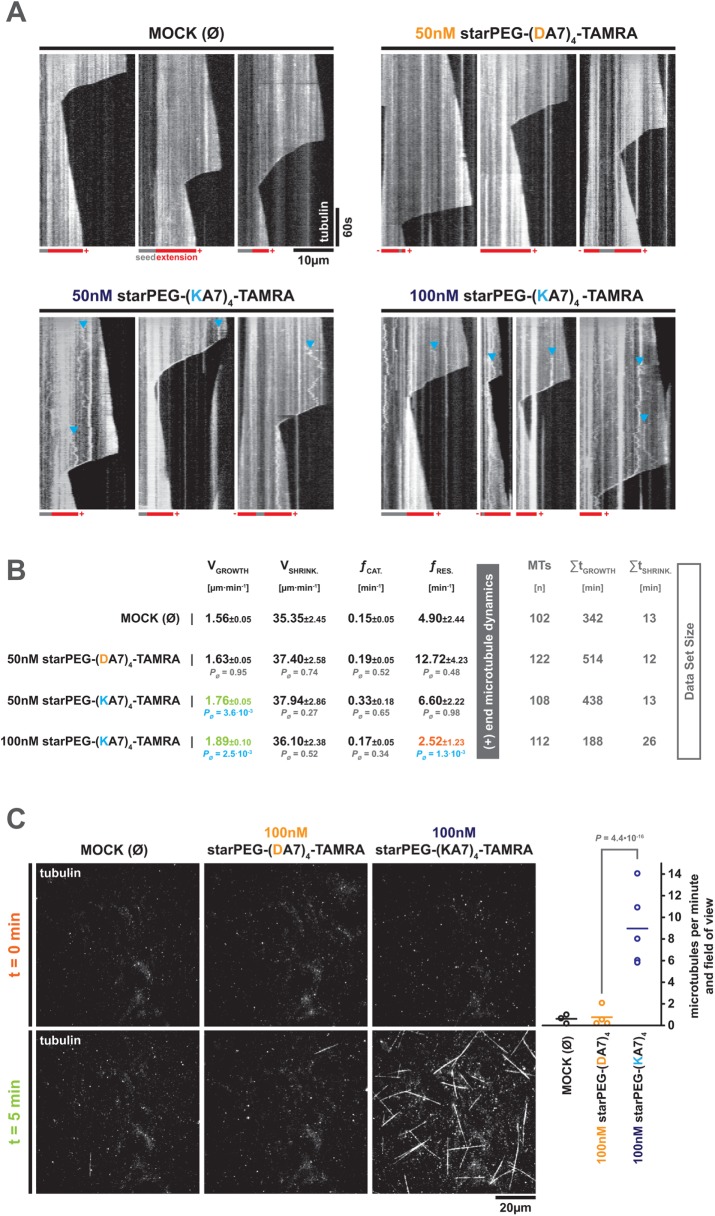
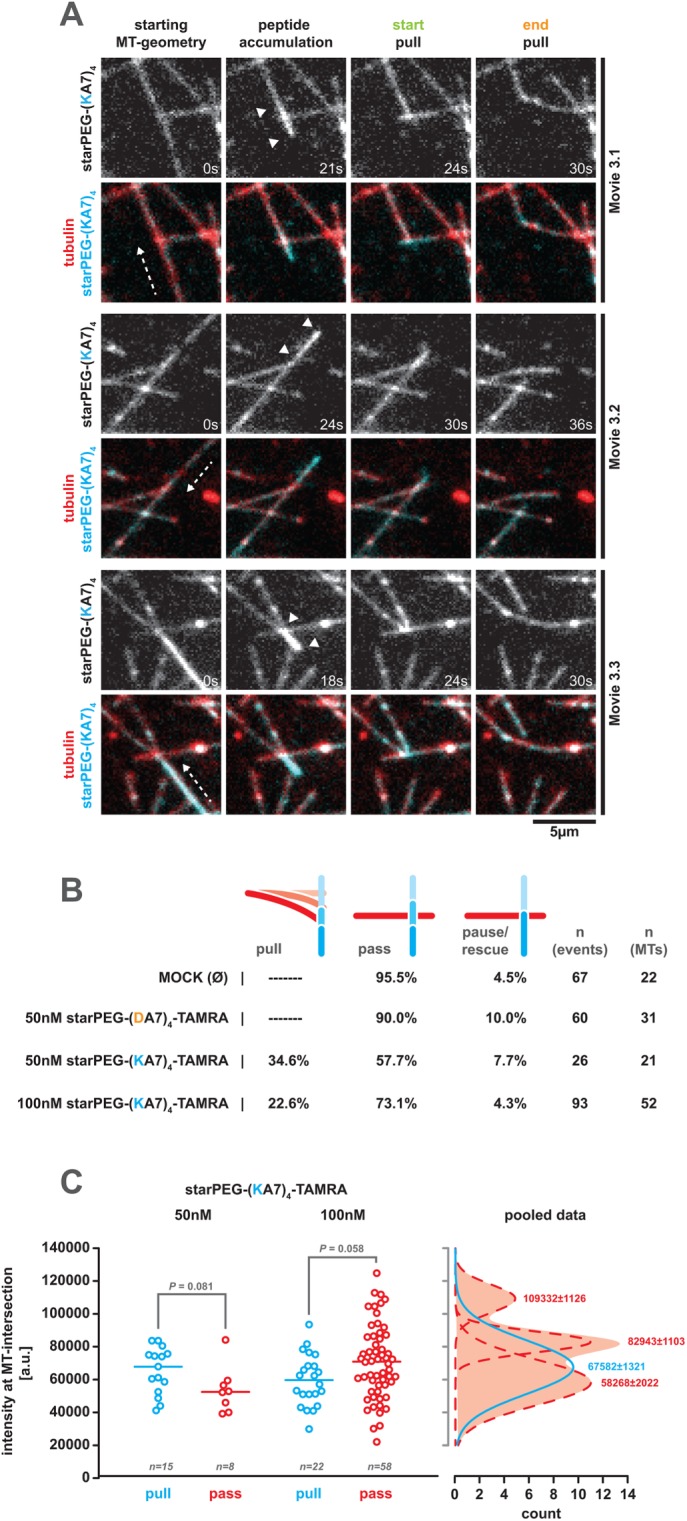
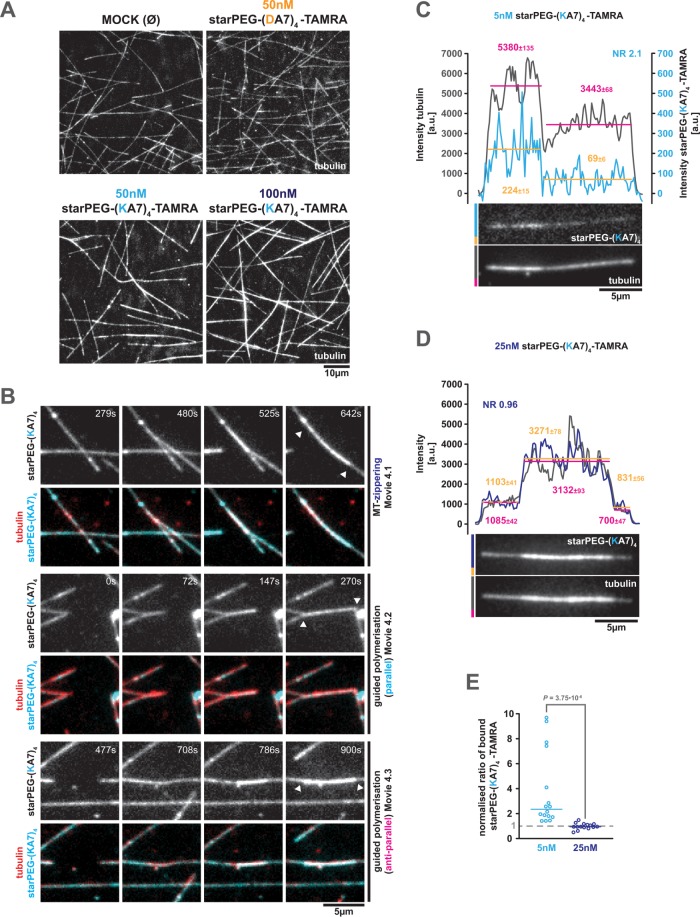
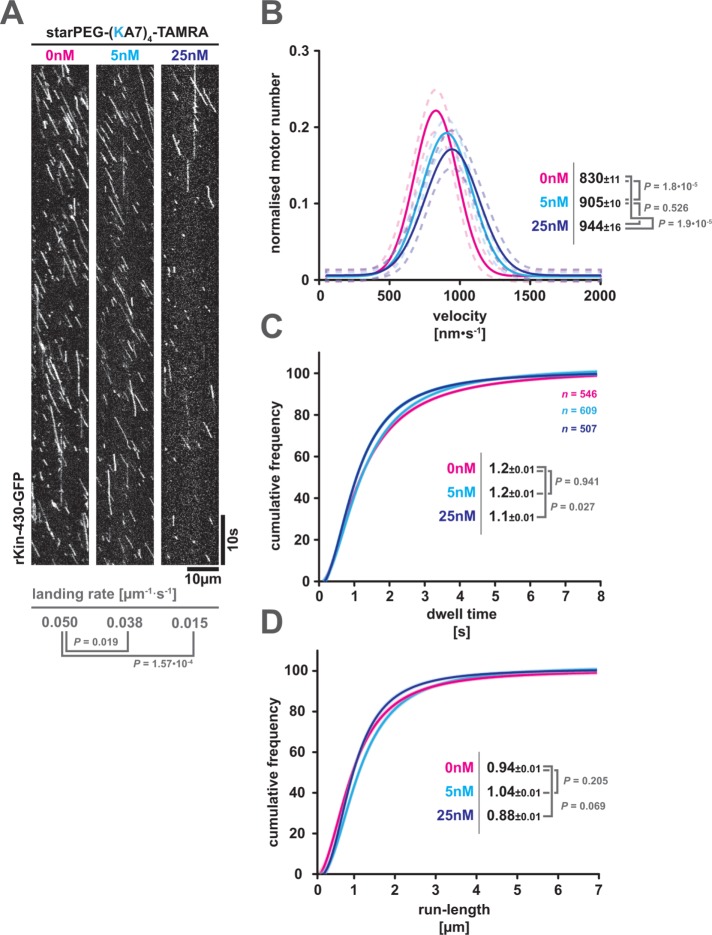
Microtubule-associated proteins (MAPs) are a functionally highly diverse class of proteins that help to adjust the shape and function of the microtubule cytoskeleton in space and time. For this purpose, MAPs structurally support microtubules, modulate their dynamic instability, or regulate the activity of associated molecular motors. The microtubule-binding domains of MAPs are structurally divergent, but often depend on electrostatic interactions with the negatively charged surface of the microtubule. This suggests that the surface exposure of positive charges rather than a certain structural fold is sufficient for a protein to associate with microtubules. Consistently, positively charged artificial objects have been shown to associate with microtubules and to diffuse along their lattice. Natural MAPs, however, show a more sophisticated functionality beyond lattice-diffusion. Here, we asked whether basic electrostatic interactions are sufficient to also support advanced MAP functionality. To test this hypothesis, we studied simple positively charged peptide sequences for the occurrence of typical MAP-like behavior. We found that a multivalent peptide construct featuring four lysine-alanine heptarepeats (starPEG-(KA7))-but not its monovalent KA7-subunits-show advanced, biologically relevant MAP-like behavior: starPEG-(KA7) binds microtubules in the low nanomolar range, diffuses along their lattice with the ability to switch between intersecting microtubules, and tracks depolymerizing microtubule ends. Further, starPEG-(KA7) promotes microtubule nucleation and growth, mediates depolymerization coupled pulling at plus ends, and bundles microtubules without significantly interfering with other proteins on the microtubule lattice (as exemplified by the motor kinesin-1). Our results show that positive charges and multivalency are sufficient to mimic advanced MAP-like behavior.
微管相关蛋白(MAPs)是一类功能高度多样化的蛋白,有助于在时空上调节微管细胞骨架的形状和功能。为此,MAPs 从结构上支持微管,调节其动态不稳定性,或调节相关分子马达的活性。MAPs 的微管结合域在结构上是不同的,但通常依赖于与微管带负电荷表面的静电相互作用。这表明,与微管结合的蛋白质表面暴露的正电荷而不是特定的结构折叠就足够了。一致地,带正电荷的人工物体已被证明与微管结合,并沿着它们的晶格扩散。然而,天然的 MAP 表现出比晶格扩散更复杂的功能。在这里,我们询问基本的静电相互作用是否足以支持先进的 MAP 功能。为了检验这一假设,我们研究了简单的带正电荷的肽序列,以观察其是否存在典型的 MAP 样行为。我们发现,一个具有四个赖氨酸-丙氨酸七肽重复(starPEG-(KA7))的多价肽构建体,但不是其单价 KA7 亚单位,表现出先进的、具有生物学相关性的 MAP 样行为:starPEG-(KA7)以低纳摩尔范围结合微管,沿着微管晶格扩散,具有在相交微管之间切换的能力,并跟踪去聚合的微管末端。此外,starPEG-(KA7)促进微管的核形成和生长,介导与去聚合端相关的拉动,以及捆绑微管,而不会显著干扰微管晶格上的其他蛋白质(如马达 kinesin-1)。我们的结果表明,正电荷和多价性足以模拟先进的 MAP 样行为。